Yarn & Tools
Crochet Hook Sizes Explained for Beginners
Confused by crochet hook sizes? Learn how mm sizing works, how to match hooks to yarn weight, and which size to start with as a beginner.
If you've picked up a hook and stared at the tiny letters and numbers stamped on the handle, you're not alone. Crochet hook sizing is one of those things that looks complicated at first glance but makes total sense once someone explains the system. This guide breaks it all down in plain language, so you can grab the right hook and start making things.
At a Glance
- Hooks are sized by shaft diameter. The number that matters everywhere is the millimeter (mm) measurement, not the US letter or number.
- A 5.0 mm (H/8) hook paired with smooth worsted weight yarn is the standard beginner combination.
- Steel hooks use a reverse numbering system: the higher the number, the smaller the hook.
- If your gauge swatch comes out too tight, size up; too loose, size down. Hook size is your main gauge adjustment tool.
- Material affects feel more than function: aluminum is the versatile default, wood adds grip, ergonomic handles help with longer sessions.
- No label on your yarn? You can still find the right hook range by measuring wraps per inch.
How Crochet Hook Sizing Actually Works
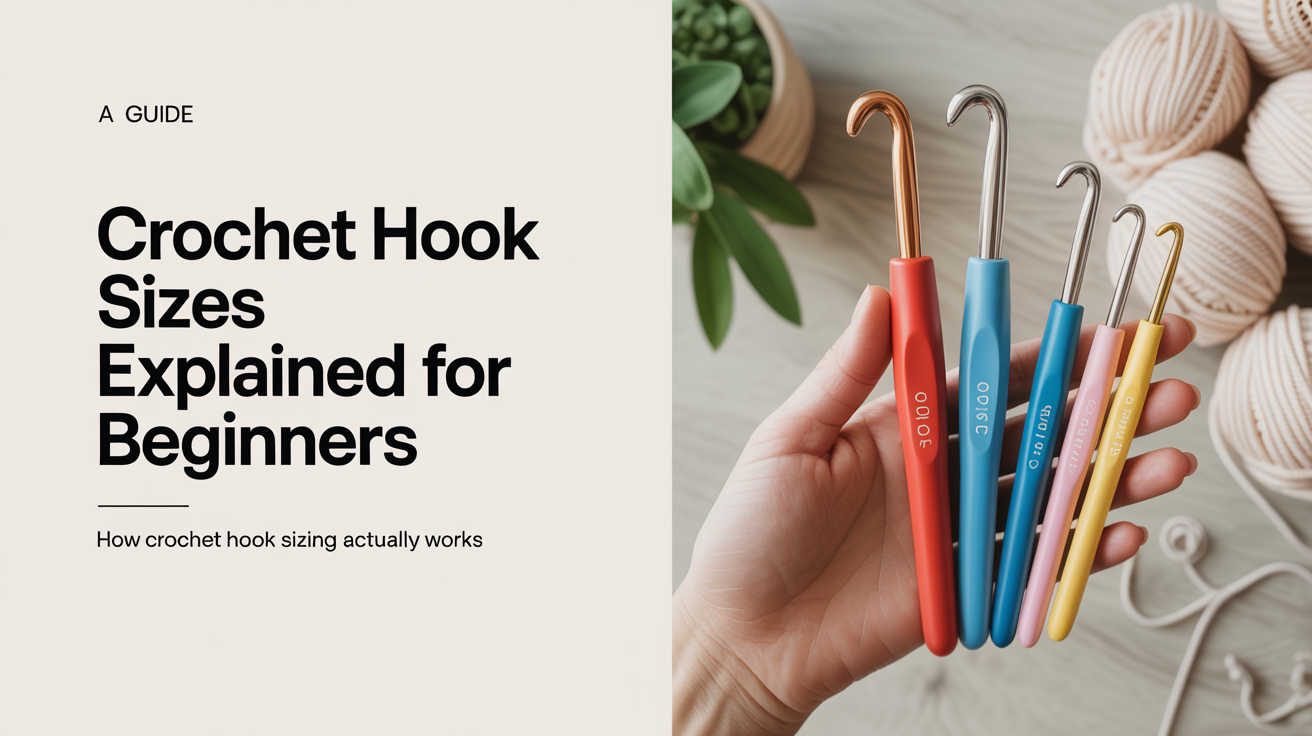
Crochet hooks are sized by the diameter of the shaft, the part that actually forms your stitches. The wider the shaft, the bigger the hook, and the bigger each stitch will be.
There are two sizing systems you'll run into:
- Metric (mm): The universal standard. Every hook in the world has a millimeter size, even if the label doesn't lead with it.
- US letter/number system: A naming convention used mostly in North America. The tricky part is that US letters don't map perfectly to mm across all brands, so two hooks labeled "J/10" from different manufacturers might not be exactly the same diameter.
The rule of thumb: always trust the mm measurement. It's the only number that means the same thing everywhere. The Craft Yarn Council's hook and needle size chart exists precisely because letter and number labels have drifted between manufacturers over the decades. The council's guidance is blunt about it: rely on the millimeter size, since that's the one accurate, standardized measurement.
Why US Letters Can Confuse You
You'll see hooks marked things like "G/6 – 4.0mm" or "H/8 – 5.0mm." The letter and number before the dash are the US designation; the mm after it is the real measurement. If a pattern says "use a size J hook," check the pattern's gauge section, it usually lists the mm equivalent. That number is what matters.
Crochet Hook Size Chart
Here's a reference table covering the most common sizes. The yarn weight column reflects the typical pairing, though you can always go up or down depending on the look you want.
| Metric (mm) | US Size | Typical Yarn Weight |
|---|---|---|
| 2.25 mm | B/1 | Lace, thread |
| 2.75 mm | C/2 | Fingering / sock |
| 3.25 mm | D/3 | Sport / fine |
| 3.50 mm | E/4 | Sport / DK |
| 3.75 mm | F/5 | DK / light worsted |
| 4.00 mm | G/6 | DK / worsted |
| 4.50 mm | 7 | Worsted |
| 5.00 mm | H/8 | Worsted |
| 5.50 mm | I/9 | Worsted / bulky |
| 6.00 mm | J/10 | Bulky |
| 6.50 mm | K/10½ | Bulky |
| 8.00 mm | L/11 | Super bulky |
| 9.00 mm | M/13 | Super bulky |
| 10.00 mm | N/15 | Jumbo |
| 15.00 mm | P/Q | Jumbo |
The sizes below 3.5 mm are mainly for fine thread crochet and lace, beautiful work, but fiddly. Beginners are happiest in the 4.5–6.0 mm range.
Steel Hooks Are a Different Animal
If you ever move into thread crochet, doilies, edgings, fine lace, you'll run into steel hooks, and their sizing works backward from everything above. Steel hook numbers run in reverse: a size 00 steel hook is the largest, and a size 14 is the smallest, the opposite direction from regular aluminum or plastic hooks. According to the Craft Yarn Council's steel hook and thread chart, the higher the steel hook number, the smaller the hook, and the same reversal applies to crochet thread: a size 10 thread is thicker than a size 30 thread. It's confusing the first time you meet it, but you won't need to worry about steel hooks until you're deliberately working with lace-weight thread.
| Steel Hook Size | Approx. mm | Notes |
|---|---|---|
| 00 | 3.50 mm | Largest steel size, close to a regular D/E hook |
| 1 | 2.75 mm | Common for medium-weight thread |
| 6 | 1.80 mm | Standard for size 10 crochet thread |
| 8 | 1.50 mm | Fine doily and edging work |
| 14 | 0.75 mm | Smallest, extremely fine lace |
Matching Your Hook to Your Yarn
Hook size and yarn weight go together. Using a hook that's too small for your yarn makes the fabric stiff and tight; too large and it turns loose and holey (which can be great for a shawl, not so great for a tote bag).
Every skein of yarn carries a recommended hook size on the label, usually printed right next to the little icon that looks like a crochet hook. That recommendation is a starting point, not a law. Learn more about decoding those labels in A Beginner's Guide to Reading a Yarn Label.
The Worsted-Weight Sweet Spot
Worsted weight yarn paired with a 5.0 mm (H/8) hook is the classic beginner combo for good reason:
- The yarn is thick enough to see your stitches clearly.
- The hook is a comfortable size to hold, not so tiny it's fiddly, not so large it feels unwieldy.
- Most beginner patterns are written for exactly this combination.
If you're starting from scratch, buy a ball of smooth worsted yarn in a light color and a 5.0 mm hook. You'll be able to see what your hook is doing, which matters a lot when you're learning.
Going Up or Down in Weight
Once you're comfortable, you'll work with other yarn weights. A lighter yarn like DK or sport calls for a smaller hook (3.5–4.0 mm). A chunky or bulky yarn needs a bigger hook (6.0 mm and up) to keep the fabric soft and flexible. For a full breakdown of the weight categories, see Yarn Weights Explained: From Lace to Bulky.
Finding Your Hook Size Without a Label
Inherited a stash of loose yarn with no ball band in sight? You can still work out roughly what hook range it needs. Wrap the yarn snugly around a pencil for a measured inch, counting how many wraps fit side by side without overlapping. The Craft Yarn Council's wraps-per-inch (WPI) method matches that count to a weight category: roughly 7 to 8 wraps per inch lands you in worsted-weight territory and points you toward a 5.0 to 5.5 mm hook, while 12 or more wraps per inch means you're holding something closer to fingering weight and a much smaller hook. It's not exact, wrapping tension varies, so always confirm with a quick swatch, but it beats guessing.
Hook Materials and Ergonomics
The material a hook is made from affects how it feels to use, and how long you can crochet before your hand gets tired.
Aluminum
The most common beginner hook. Aluminum hooks are affordable, slide smoothly through most yarns, and come in a wide size range. A basic set of aluminum hooks is a perfectly fine place to start.
Plastic and Resin
Lightweight and inexpensive. Plastic hooks are especially common in larger sizes (8 mm and above) where aluminum would be heavy. Some crafters find plastic slightly slower because yarn doesn't glide as freely, but it's a matter of personal feel.
Wood and Bamboo
Bamboo hooks have a little grip, which can help beginners who struggle with stitches sliding off the hook unexpectedly. They're warm in the hand and quiet. The downside: they can snag on fuzzy or splitty yarns.
Ergonomic Hooks
These have a wide, cushioned grip attached to a standard metal shaft. If you plan to crochet for more than 20 to 30 minutes at a stretch, an ergonomic handle makes a real difference, less pinching between thumb and forefinger, and less strain across a long project like a blanket. Many crafters switch to them after their first project or two, particularly if they deal with hand fatigue or grip conditions like arthritis. You don't need to spend a lot, mid-range ergonomic sets are widely available and very functional.
What Size Hook Should a Beginner Start With?
Start with a 5.0 mm (H/8) hook. Pair it with a smooth, light-colored worsted weight yarn. That combination gives you enough room to see your stitches and correct mistakes without wrestling a tiny hook or fighting bulky yarn.
Once you've finished your first few projects at that size, try a 4.0 mm (G/6) with a DK yarn, or jump up to a 6.0 mm (J/10) with a chunky yarn. Each step teaches you something new about how hook size changes the feel of the fabric.
For guidance on choosing your first yarn to go with that hook, the article on The Best Yarn for Beginners (and What to Avoid) covers exactly that.
Adjusting Hook Size for Gauge
Patterns list a gauge, something like "14 sc and 16 rows = 4 inches." If your swatch comes out smaller than that (your stitches are tighter), go up a hook size. If it comes out larger (your stitches are looser), go down a hook size. Changing hook size is the main tool you have for hitting gauge, and it works even if you keep the same yarn.
As a rough guide, moving one hook size up or down (say, from 5.0 mm to 5.5 mm) typically shifts a gauge swatch by about half a stitch per inch. That's usually enough to fix a small mismatch. If you're off by a full stitch or more, you may need to jump two sizes, or double check you're reading the pattern's gauge correctly in the first place.
Frequently Asked Questions
What is the most common crochet hook size for beginners?
A 5.0 mm (H/8) hook is the most recommended starting size. It's large enough to see clearly, comfortable to hold, and matches the worsted weight yarn that most beginner patterns use.
Do crochet hook sizes vary by brand?
The mm measurement is consistent across brands, a 5.0 mm hook from any manufacturer is 5.0 mm. The US letter or number label can vary slightly between older brands, which is why mm is the reliable standard.
Can I use a different hook size than the pattern says?
Yes, and sometimes you need to. If your gauge swatch shows your fabric is too tight, go up a size. Too loose, go down. The goal is to match the gauge listed in the pattern, not to use a specific hook number regardless of how your stitches turn out.
What's the difference between inline and tapered hooks?
These are two different shaft shapes. Inline hooks (like Bates-style) have a shaft and head that are the same diameter, with a defined throat. Tapered hooks (like Boye-style) have a head that tapers down to the shaft. Neither is better, it's personal preference, and many crocheters have a strong opinion about which they like. Try both if you can.
How many hooks do I actually need to start?
One is enough to begin. A single 5.0 mm hook and one skein of worsted yarn is all you need for your first project. Once you want to try different patterns, a basic set covering 3.5 mm to 8.0 mm gives you room to work with most yarn weights you'll encounter.
What's the difference between a regular hook and a steel crochet hook?
Regular hooks (aluminum, plastic, wood) run from about 2.25 mm up to 15 mm and beyond, and are used for standard yarn weights. Steel hooks are a separate, much smaller range, generally under 3.5 mm, purpose-built for crochet thread and fine lace work. Their numbering also runs backward from regular hooks: a larger steel number means a smaller hook. You won't need one until you're specifically working thread crochet.
How do I figure out my hook size if the yarn label is missing?
Wrap the yarn around a pencil for a measured inch and count how many strands fit snugly side by side. Roughly 7 to 8 wraps per inch suggests worsted weight and a 5.0 to 5.5 mm hook; more wraps per inch means a finer yarn and a smaller hook. Confirm with a quick swatch before committing to a project.