Yarn & Tools
The Best Yarn for Beginners (and What to Avoid)
Choosing the right yarn makes learning to knit or crochet so much easier. Here's what to look for and what to skip until you have more practice.
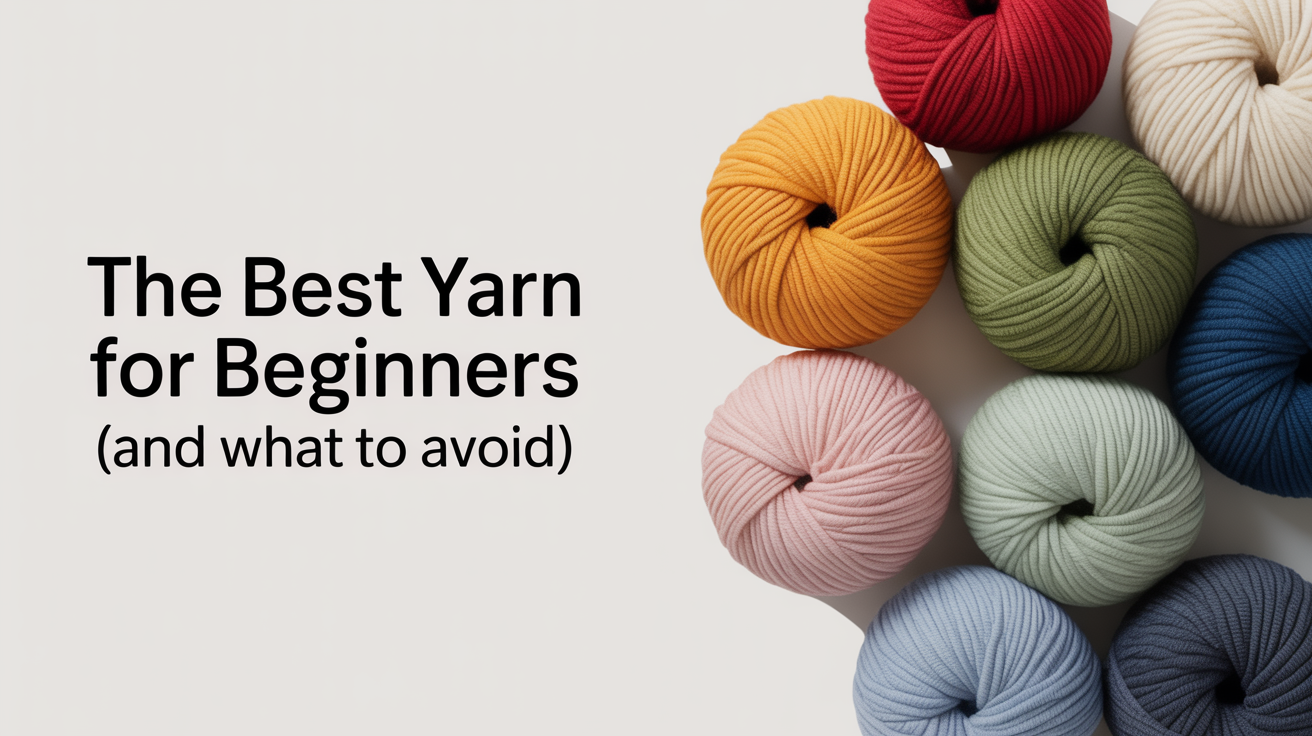
The yarn you start with matters more than most beginners expect. Pick the wrong one and every stitch feels like a battle. Pick the right one and you can actually see what your hands are doing, fix mistakes easily, and finish your first project feeling good about it.
The short answer: reach for a smooth, light-colored worsted-weight yarn in acrylic or easy-care wool. That combination solves almost every common beginner frustration before it starts.
Here's what that means in practice.
What Makes a Yarn Good for Beginners
Three things work together to make a yarn forgiving: how it feels on the needle or hook, how easy it is to see your stitches, and how much it tolerates mistakes.
Smooth Texture
A smooth yarn with a clear, visible twist slides off your needle or hook cleanly and lets you see each stitch as a defined loop. You can count your stitches, spot a dropped one, and insert your hook or needle in exactly the right place. Fuzzy or textured yarns hide all of that.
Run the yarn through your fingers before you buy it. It should feel consistent, without bumps or loops. If you can see the individual plies twisted together, that's a good sign.
Light, Solid Color
This is the single most overlooked tip for beginners. Dark yarn, navy, black, deep burgundy, hides your stitches in shadow. A pale or medium solid color (cream, light grey, soft blue, dusty rose) lets you see the structure of your work clearly under any light. You'll catch errors faster and feel more confident about what you're making.
Avoid variegated or multicolored yarns for your first few projects. The color changes are distracting, and they make it harder to see the stitch pattern.
Worsted or Aran Weight
Yarn weight refers to how thick the yarn is. Worsted and aran weights sit in the middle of the spectrum. They're substantial enough to see and handle easily, but not so bulky that tension becomes hard to manage. Most beginner patterns are written for these weights, so you'll have plenty of project options.
Very thin yarn (lace or fingering weight) is genuinely difficult to work with, the stitches are tiny and the yarn can split easily. Very thick yarn (super bulky) knits up fast but the sheer size of the loops can throw off your tension.
A Little Stretch and Grip
Yarn that grips the needle slightly keeps your stitches from sliding off accidentally. Wool and wool blends have natural elasticity, which also makes it easier to maintain even tension. Smooth acrylic has a bit of grip too, without the care restrictions of wool.
The Easiest Yarn Types to Start With
Easy-Care Acrylic
Good-quality acrylic is the classic beginner recommendation, and for solid reasons. It's affordable, widely available, machine washable, and comes in every color imaginable. It's smooth, consistent, and holds its shape well. Brands like Lion Brand Pound of Love, Caron Simply Soft, and Red Heart Soft are popular starting points, though any smooth worsted acrylic will work.
The one thing to know: acrylic doesn't have much elasticity compared to wool, so tension mistakes are a little more visible. That's actually useful for learning, you'll get honest feedback on your consistency.
Superwash Wool and Wool Blends
If you're open to spending a little more, a superwash (machine-washable) wool or wool blend is a genuine pleasure to work with. Wool has natural springiness that forgives slightly uneven tension and makes stitches look tidy almost automatically. Merino blends (wool with a small percentage of nylon or acrylic) are especially beginner-friendly because they're soft, durable, and washable.
The caveat: read the label before washing. Non-superwash wool will felt or shrink in a hot wash. Reading a yarn label takes about two minutes to learn and will save you from ruined projects.
Cotton and Linen Blends (with a caveat)
100% cotton has almost no stretch, which makes it harder to maintain even tension as a beginner. A cotton-acrylic or cotton-modal blend is much more forgiving. Pure cotton is worth trying once you have a few projects under your belt, but it's not the easiest starting point.
What to Avoid While You're Learning
These yarn types aren't bad, they're just harder to work with when you're still building muscle memory and learning to read your stitches.
Fuzzy and Mohair Yarns
Mohair, angora, and "halo" yarns create a soft cloud effect that looks beautiful in finished photos. The problem: the fuzzy fibers lock your stitches together. If you need to frog (undo) a row, the yarn resists coming apart. You also can't see where one stitch ends and the next begins, which makes counting and fixing errors very hard.
Dark Colors
Already mentioned above, but worth repeating. Dark yarn is genuinely frustrating for new knitters and crocheters. Save the black yarn for your third or fourth project.
Slippery Yarn: Silk, Bamboo, Tencel
These fibers are smooth to the point of sliding off your needles uninvited. They're lovely for experienced crafters who know how to handle the extra slippage, but for beginners they add unnecessary difficulty. Bamboo-acrylic blends are more stable than pure bamboo and can work well.
Novelty and Bouclé Yarns
Bouclé has loops and bumps along the strand. Novelty yarns might have sequins, ribbon sections, or irregular thick-and-thin sections. These are genuinely beautiful but nearly impossible to work with when you're learning because you can't see your stitches at all and the irregular texture makes consistent tension very hard.
Lace Weight and Fingering Weight
Thin yarn requires smaller needles or hooks, which means tinier stitches. Mistakes are harder to spot and harder to fix. Once you're comfortable with worsted, thinner yarns open up a world of possibilities, but start in the middle.
Quick Reference: Yarn Traits at a Glance
| Yarn Trait | Good or Avoid for Beginners | Why |
|---|---|---|
| Smooth texture | Good | Stitches are visible and easy to count |
| Light, solid color | Good | You can see stitch structure clearly |
| Worsted or aran weight | Good | Easy to handle; most beginner patterns use it |
| Easy-care acrylic | Good | Affordable, forgiving, widely available |
| Superwash wool or blend | Good | Natural stretch; self-corrects slight tension unevenness |
| Fuzzy/mohair/halo yarn | Avoid | Hides stitches; nearly impossible to frog |
| Dark colors | Avoid | Stitches disappear in shadow |
| Silk, bamboo, Tencel | Avoid | Too slippery; stitches slide off needles |
| Novelty/bouclé yarn | Avoid | Irregular texture makes consistent tension impossible |
| Lace or fingering weight | Avoid | Too thin; tiny stitches are hard to see and fix |
| Super bulky weight | Avoid (for now) | Hard to manage tension as a beginner |
| 100% cotton | Avoid (for now) | No stretch; unforgiving of tension inconsistency |
How Much Yarn Do You Need?
For a first project, one skein of worsted-weight yarn (roughly 200 yards / 180 meters) is usually enough for a small swatch, a dishcloth, or a simple hat. Scarves typically need two to three skeins depending on length. Buy slightly more than the pattern calls for, dye lots can vary, and you'd rather have a small leftover than run short near the end.
Checking the pattern first and matching the yarn weight it specifies is always the right starting point. Substituting a different weight will change the size and drape of your finished piece.
If you're learning crochet, your hook size matters as much as the yarn, crochet hook sizes are worth understanding before you start so you match the right hook to the yarn you choose.
Frequently Asked Questions
Is acrylic yarn good for beginners?
Yes, good-quality acrylic is one of the best choices for beginners. It's smooth, consistent, inexpensive, and machine washable. It doesn't have as much elasticity as wool, but that's actually useful early on because it gives you honest feedback about your tension. Look for a soft worsted-weight acrylic rather than the stiffest budget options.
Can beginners use wool yarn?
Superwash (machine-washable) wool and wool blends are excellent for beginners. The natural stretch in wool makes tension easier to manage and stitches look tidy. Standard (non-superwash) wool requires hand washing and can felt if it goes in a hot machine, so check the label before washing. Either way, avoid very fine wool weights until you're comfortable with worsted.
What yarn weight should a beginner use?
Worsted or aran weight is the standard recommendation. It's thick enough to handle comfortably, produces stitches you can easily see, and matches the majority of beginner patterns. Once you're comfortable, you can experiment with thicker (bulky) or thinner (DK, sport) weights.
Why does color matter when choosing beginner yarn?
Light, solid colors let you see the structure of each stitch clearly. Dark colors absorb light and make stitches hard to distinguish, especially in uneven indoor lighting. Variegated yarns add visual noise that makes stitch patterns harder to read. Starting with a medium or light solid color removes one source of frustration while you're still building the basics.
How do I know if a yarn is good quality?
Look for consistent thickness throughout the skein (no thick or thin spots), a smooth or evenly plied structure, and a soft hand feel without pilling when you rub it between your fingers. Reading the label for fiber content and care instructions helps too. For practice, mid-range craft store yarns are completely fine, you don't need luxury fiber to learn the fundamentals.