Getting Started
How to Hold Knitting Needles and a Crochet Hook
How to hold knitting needles and a crochet hook: the two main grips for each craft, plus tips for tensioning yarn through your fingers.
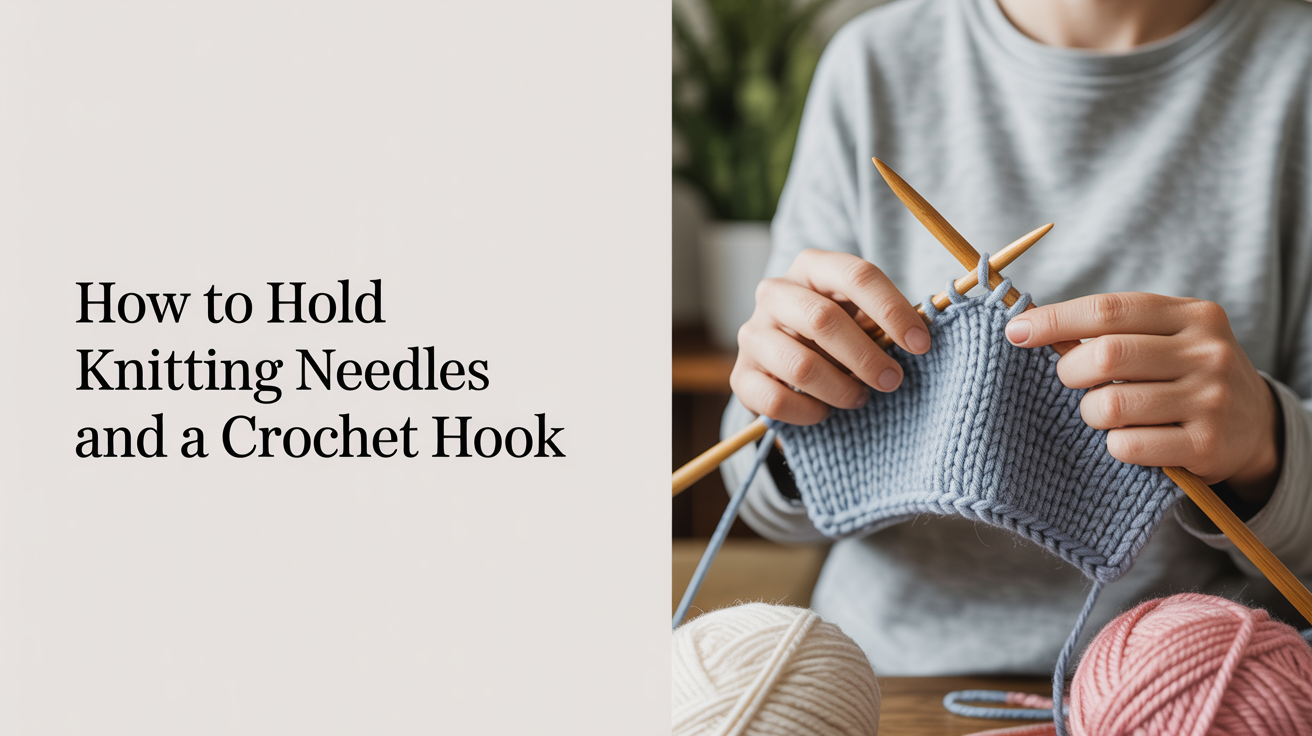
Picking up knitting needles or a crochet hook for the first time can feel surprisingly awkward. Your hands don't know where to go, the yarn keeps slipping, and nothing looks like it does in the tutorial video. That's completely normal. Grip is a skill your hands learn gradually, and most experienced crafters will tell you their hold evolved over months, sometimes years.
This guide walks you through the two main ways to hold knitting needles, the two main crochet hook grips, and how to run the working yarn through your fingers so your stitches come out even. There's no single "right" method. The goal is to find what's comfortable for your hands.
How to Hold Knitting Needles
Knitters generally fall into one of two camps: English (throwing) or Continental (picking). Both produce the same fabric. The difference is in which hand controls the working yarn and how the yarn wraps onto the needle.
English Style (Throwing)
Hold both needles loosely, one in each hand, with the points facing each other. Your right hand controls the working yarn, the strand connected to the ball. To make a stitch, you "throw" or loop the yarn around the right needle with your right hand before pulling the new stitch through.
Many beginners in the US start here because most beginner resources teach it. It can feel a little slow at first since your right hand lets go of the needle to wrap the yarn, then picks it back up. With practice, most people find a way to anchor the needle with their palm or ring finger so the throw becomes a small, efficient flick.
Continental Style (Picking)
In Continental knitting, the working yarn is held in your left hand and tensioned over your left index finger. To make a stitch, the right needle tip "picks" the yarn rather than throwing it around. The needle does more of the work; your hands move less.
Many knitters find Continental faster once it clicks, and people who already crochet often take to it quickly since it mirrors how crochet keeps yarn in the left hand. The catch is that purling feels awkward for many Continental knitters at first, there's a slightly different motion involved. Give it a fair trial before deciding.
Knitting Grip Comparison
| Style | Working yarn hand | Motion | Often preferred by |
|---|---|---|---|
| English / Throwing | Right hand | Loop yarn around right needle tip | US beginners, combination knitters |
| Continental / Picking | Left hand | Pick yarn with right needle tip | Crocheters switching to knitting, speed knitters |
Both styles work. Neither is "advanced." Pick the one that makes sense to your hands today, knowing you can always try the other later.
How to Hold a Crochet Hook
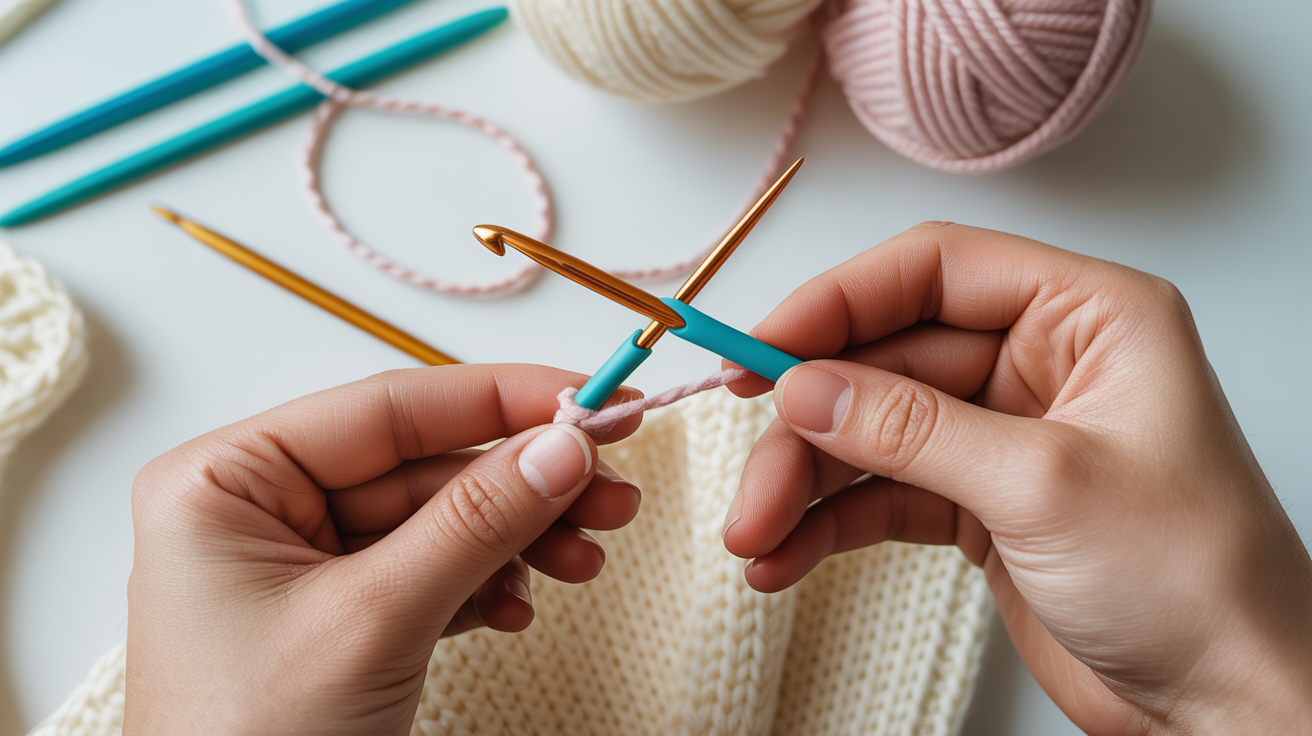
Crochet hooks have one working end (the hook itself) and a handle. Your dominant hand holds the hook; the other hand holds the fabric and manages the yarn. The two common grips are the pencil hold and the knife hold.
Pencil Grip
Hold the hook between your thumb and index finger, resting it against your middle finger, exactly as you'd hold a pencil or pen. The hook faces upward or slightly toward you.
This grip gives precise control over the hook tip, which is useful for fine yarn or detailed stitch work. It can cause finger fatigue on longer sessions, especially if you grip tightly. Beginners with smaller hands or those used to writing with a light touch often prefer it.
Knife Grip (Overhand Grip)
Wrap your hand around the hook handle the way you'd hold a table knife to spread butter. Your thumb rests on the flat grip area (the thumb rest, if the hook has one) and your other fingers wrap around the handle from above.
This grip distributes the work across your whole hand rather than concentrating it in two fingers. Many crocheters find it more relaxed for long sessions and for chunky yarn. If you experience hand tension with the pencil grip, try this one.
Crochet Hook Grip Comparison
| Grip | How you hold it | Feel | Often preferred by |
|---|---|---|---|
| Pencil / Underhand | Between thumb and index finger, hook pointing up | Precise, lighter touch | Detail work, fine yarn, smaller hands |
| Knife / Overhand | Full hand wrapped around handle, thumb on flat | Relaxed, less finger fatigue | Bulky yarn, long sessions, arthritis-friendly |
Some crocheters use a hybrid: pencil grip on the handle but with three or four fingers resting on top, like a modified knife hold. If something in between feels natural, go with it.
Tensioning the Working Yarn Through Your Fingers
Tension is what keeps your stitches consistent. If the yarn runs freely, it'll slip and your stitches will be loose and uneven. If you grip it tightly, stitches become stiff and hard to work. The answer is running the yarn through your fingers to create gentle, consistent friction.
Tensioning for Knitting
With English style: drape the working yarn over your right index finger, under your middle finger, and over your ring finger. The index finger rises and falls slightly to feed yarn to the needle. Experiment with how many fingers you loop it around, more loops mean more tension.
With Continental style: the working yarn comes up over your left index finger, held slightly raised. Your remaining fingers help anchor the yarn against your palm. The index finger height controls how much yarn feeds into each stitch.
Tensioning for Crochet
Hold the working yarn over your left index finger (regardless of which hook grip you use). Your middle finger and thumb pinch the fabric just below the hook to keep it stable. The index finger lifts slightly to feed yarn; lowering it tightens the supply.
A common beginner mistake is to hold the fabric too far from the hook or not at all. Keep your left hand close, an inch or two below where you're working, and let your fingers do a little active steering. Your stitches will even out quickly.
There Is No Single Right Way
It bears repeating: grip is personal. A quick look at any knitting or crochet community will show people holding their tools in all sorts of ways, including hybrid approaches that don't fit neatly into any named style. Some people wrap yarn around four fingers. Some tuck the needle under their arm (a technique from traditional Portuguese and Andean knitting). Some anchor the hook differently for different stitch types.
What matters is that your hands aren't straining, the stitches come out at roughly consistent tension, and you can work for 20–30 minutes without pain. If something hurts, change it. If your stitches look uneven, try adjusting how the yarn runs through your fingers before assuming the grip itself is wrong.
Give any new hold at least a few hundred stitches before judging it. Your hands need repetition to build muscle memory. Awkwardness in the first session doesn't mean the style isn't for you, it usually just means you haven't done it enough yet.
If you're still deciding which craft to pick up first, this breakdown of knitting vs. crochet for beginners covers the key differences in learning curve and cost. And if you're just getting your supplies together, check the beginner supply list so you know what to buy before your first session.
Once you have a comfortable grip and basic tension control, the question shifts from "am I holding this right?" to "how fast will I improve?" The honest answer is in this look at how long it typically takes to learn knitting or crochet.
Frequently Asked Questions
Does it matter which knitting grip I use as a beginner?
Not really. Both English and Continental produce the same stitches and the same finished fabric. Start with whichever feels more natural after a short trial. Many beginners start with English because it's more widely taught in US resources, then discover Continental later and switch. Either path is fine.
My yarn keeps slipping off my fingers. What am I doing wrong?
Usually it means the yarn isn't looped around enough fingers to create friction. Try wrapping it around an extra finger, or wrapping twice around one finger. You can also try starting with a slightly thicker yarn, which is easier to grip than a fine or slippery yarn.
Can I switch grip styles after I've already learned one?
Yes, though it takes some patience. Switching feels awkward at first because your hands have already built muscle memory. Give yourself a week or two of consistent practice with the new style before deciding whether to keep it. Many experienced crafters use more than one style depending on the project.
Which crochet grip is better for preventing hand pain?
The knife grip tends to be easier on the fingers for long sessions because it distributes the load across the whole hand. If you already experience hand or wrist fatigue, also look at ergonomic crochet hooks, which have wider, cushioned handles designed to reduce strain.
How do I know if my tension is right?
Check your gauge against the pattern you're following, or compare your stitches to photos. Stitches that look consistent in size and spacing, and fabric that lies flat without curling or bunching, are both good signs. If your fabric feels stiff and hard to pull stitches through, loosen your grip on the yarn. If stitches slide around loosely, tighten the tension by adding another finger wrap.