Getting Started
Knitting vs. Crochet: Which Should a Beginner Learn First?
Trying to choose between knitting vs crochet? We break down the key differences, which is easier to fix, and which craft suits what you want to make.
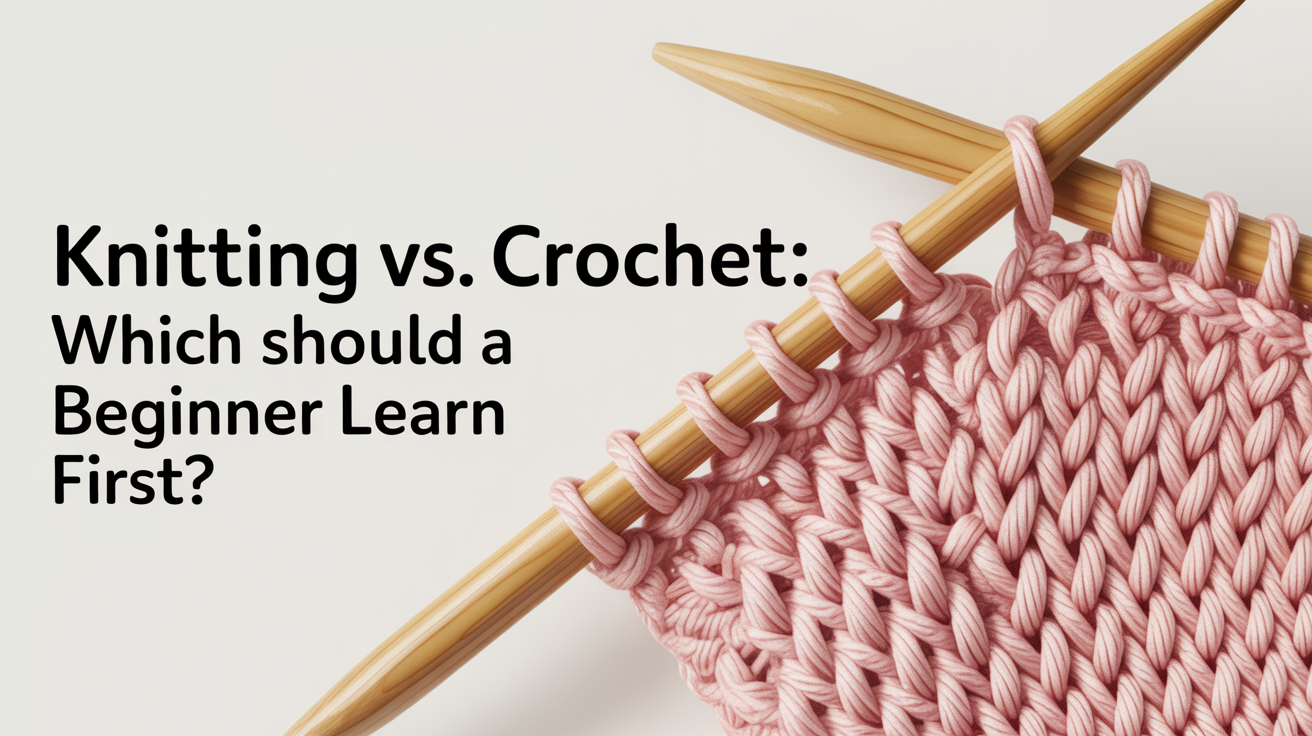
Picking up a new fiber craft is exciting, and a little overwhelming. The honest answer to "knitting or crochet for beginners?" is: both are learnable by anyone, but they feel very different in your hands, suit different projects, and have different error-recovery experiences. This guide walks through the real differences so you can make a choice that sticks.
How Each Craft Actually Works
Understanding the mechanics is the fastest way to know which one will click for you.
Knitting uses two needles and keeps many loops active at once. Each stitch sits on a needle, and you work yarn through those live loops one by one. Drop a needle, and every loop on it can unravel. The fabric that results is stretchy, fine, and drapey, ideal for garments like sweaters, socks, and hats that need to move with a body.
Crochet uses a single hook and only ever has one live loop on it at a time. You pull yarn through that loop to form a new stitch and move on. The rest of the fabric is locked in place. Drop the hook, and the work just sits there waiting. The resulting fabric is thicker and more structured, which makes it great for amigurumi (stuffed toys), bags, blankets, and home décor.
That single-live-loop rule is the most important practical difference between the two crafts. Almost everything else follows from it.
Which Is Easier to Learn: Knitting or Crochet?
Neither is hard, but crochet tends to feel less fragile in the first few weeks.
With crochet, if you make a mistake, you simply pull the hook out and pull the yarn back ("frogging") to the error. Because only one loop is ever live, nothing runs or unravels while you do that. You can rip back two rows in thirty seconds and carry on.
With knitting, mistakes require more care. You either "tink" (knit spelled backward, undoing stitches one at a time) or carefully put dropped stitches back onto the needle. It is absolutely doable, but it asks more of your hands and eyes in the beginning. The payoff is fabric that is almost impossible to match in crochet for lightness and drape.
Most people who have tried both will say crochet is quicker to produce a visible result. A single crochet stitch is taller than a knit stitch, so a blanket row in crochet covers more ground per minute of work. That visible progress helps a lot when you are still building confidence.
That said, knitting has two things crochet lacks: a massive back catalog of sweater and garment patterns, and colorwork techniques (like stranded colorwork/Fair Isle) that produce fabric with motifs and pictures running through it. If those are your goals, learning to knit pays off fast.
Tools and Supplies You Will Need
Getting set up for either craft is affordable. For a detailed breakdown of what to buy, see Knitting and Crochet Supplies Every Beginner Needs.
For knitting, you need a pair of needles (start with straight needles in a US size 7 or 8, which is roughly 4.5–5 mm) and a smooth, medium-weight yarn labeled "worsted" or "aran" on the ball band. Avoid anything fuzzy or textured at first, you need to see each stitch clearly.
For crochet, you need a single hook (a US size H-8 / 5 mm is a good all-purpose starter) and the same type of smooth, medium-weight yarn. Crochet hooks are color-coded by size at most craft stores, so it is easy to pick the right one.
Both crafts also benefit from a tapestry needle (for weaving in yarn ends) and a pair of small scissors. That is genuinely the whole list to start.
Holding the Tools
Both crafts ask your hands to do something new, and that takes a week or two to feel natural regardless of which you pick. For an illustrated walkthrough, check How to Hold Knitting Needles and a Crochet Hook.
In knitting, your two hands share the work: one hand holds the needle with the existing stitches, the other maneuvers the working needle and the yarn. The most common yarn-tension styles are "English" (yarn held in the right hand) and "Continental" (yarn held in the left hand). Neither is wrong; try both and use whichever feels looser and more relaxed.
In crochet, one hand holds the hook and the other controls yarn tension. Many beginners find crochet grip easier because the hook gives you a natural reference point, there is only one thing to keep track of rather than two needles full of live loops.
Side-by-Side Comparison
| Factor | Knitting | Crochet |
|---|---|---|
| Tools | 2 needles, many live loops | 1 hook, 1 live loop |
| Starter learning curve | Moderate | Slightly easier |
| Fixing mistakes | Trickier (multiple live loops) | Easier (rip back freely) |
| Fabric feel | Thin, stretchy, drapey | Thicker, more structured |
| Speed | Slower per inch of height | Faster per inch of height |
| Yarn use | Uses less yarn for same area | Uses ~30% more yarn |
| Best for | Garments, socks, colorwork | Blankets, toys, bags, décor |
| Pattern availability | Enormous library | Large and growing library |
What Do You Actually Want to Make?
This is the question that should settle it for most beginners.
Choose crochet if you want to make: granny-square blankets, amigurumi stuffed animals, market bags, dishcloths, pot holders, chunky scarves, or home décor items. These projects all benefit from crochet's structured fabric and forgiving learning curve.
Choose knitting if you want to make: fitted sweaters, lightweight shawls, colorwork mittens, socks, or anything with a fine, drapey drape. Knitting's thinner fabric and massive garment-pattern library are hard to beat for wearables.
If you genuinely can't decide: start with crochet. The error-recovery experience is friendlier, you will finish your first project faster, and the win will keep you motivated. You can always pick up knitting next, and many crafters end up doing both, using each for different projects.
How Long Will It Take to Feel Confident?
Most people produce something they are proud of within a few weeks. The first project is awkward no matter what, because your hands are learning a new physical skill. By the third or fourth small project, tension starts to even out and the movements feel automatic. For a realistic timeline, see How Long Does It Take to Learn to Knit or Crochet.
A good first crochet project is a simple dishcloth or a small square, cast on (foundation chain) 20 stitches and just practice single crochet rows until the fabric looks even. A good first knitting project is the same idea: a swatch or a garter-stitch (all knit stitches) scarf in chunky yarn.
Give yourself four to six sessions of 20–30 minutes each before judging how it is going. The first session is almost always frustrating. The fifth usually feels like a breakthrough.
Frequently Asked Questions
Is crochet easier than knitting for absolute beginners?
For most people, yes, crochet is somewhat easier to pick up at the start. The main reason is that only one loop is live at a time, so mistakes are simple to fix and nothing unravels accidentally. That said, both crafts are learnable and beginner-friendly within a few weeks of practice.
Which is easier: knitting or crochet, for making a blanket?
Crochet is usually the better choice for blankets. The taller stitches cover more area quickly, the thicker fabric is cozy and holds its shape well, and classic blanket styles like granny squares are almost exclusively a crochet tradition.
Can I learn both at the same time?
You can, but most people find it cleaner to get comfortable with one first. The hand positions and rhythm are different enough that mixing them early can slow progress in both. Pick one, finish two or three small projects, and then add the other.
Do knitting and crochet use the same yarn?
Yes, completely interchangeable. Any yarn you buy at a craft store works for either craft. Just match the yarn weight to the needle or hook size listed on the ball band label. Medium-weight (worsted) yarn with a size 7–8 knitting needle or an H-8 crochet hook is the standard starting combination.
Which craft is cheaper to start?
Both are inexpensive. A pair of bamboo knitting needles and a skein of yarn can cost under ten dollars total. A crochet hook is often even cheaper, sometimes under two dollars. The real cost over time is yarn, which is the same for both crafts.