Getting Started
Knitting and Crochet Supplies Every Beginner Needs
A plain-English guide to knitting and crochet supplies for beginners — what to buy first, what to skip, and how to start without overspending.
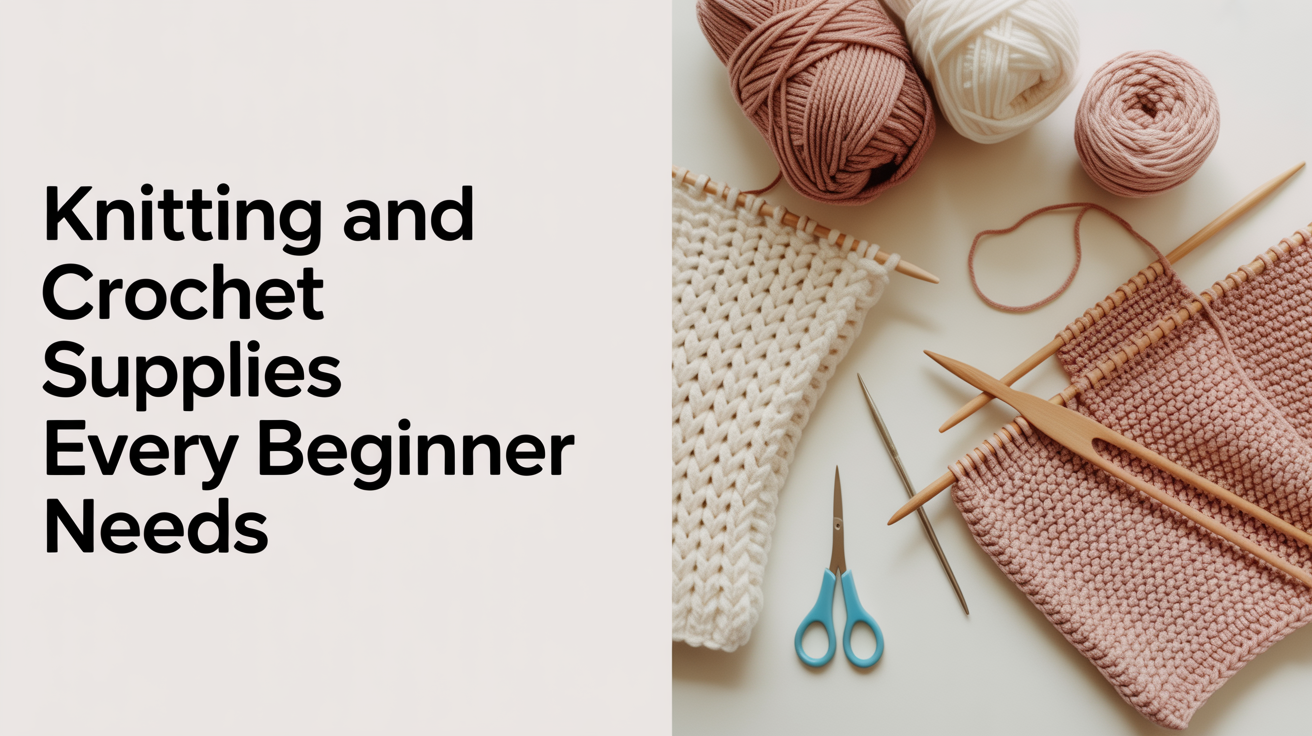
The good news: you don't need much to get started. A pair of needles or a hook, a skein of yarn, and maybe a tapestry needle, that's genuinely it for your first project. This guide walks through exactly what to buy (and what to ignore) so you can cast on or chain up without wasting money on gear you won't touch for months.
Your Knitting Starter Kit
New knitters do best with smooth yarn and mid-size needles. Both forgive wobbling tension and let you see each stitch clearly.
Needles
Start with a pair of US 8 (5mm) straight needles, about 9 inches long. Bamboo or wood grips yarn lightly and helps stitches stay put while you find your rhythm, slippery metal needles can feel like herding cats at first. Once you're comfortable, you can explore circular needles and other sizes.
Avoid sets of 50 different sizes right away. One pair at the right size beats a sprawling kit you won't understand yet.
Yarn
Choose a smooth, worsted-weight yarn in a light or medium color. Worsted is labeled "4" on the skein (look for the small skein symbol). Light colors let you see exactly where your needle is going; dark yarn hides stitches and makes counting painful.
Avoid fuzzy, textured, or novelty yarns for your first project. They look fun on the shelf but make it nearly impossible to see mistakes or correct them. A simple acrylic like Lion Brand Pound of Love or Cascade 220 is perfect.
A Basic Pattern
Pick something flat and simple: a swatch, a dishcloth, or a simple scarf in garter stitch. Not a hat, not a sweater, not yet. Choosing between knitting and crochet is also worth a quick read if you're still deciding which craft to start with.
Your Crochet Starter Kit
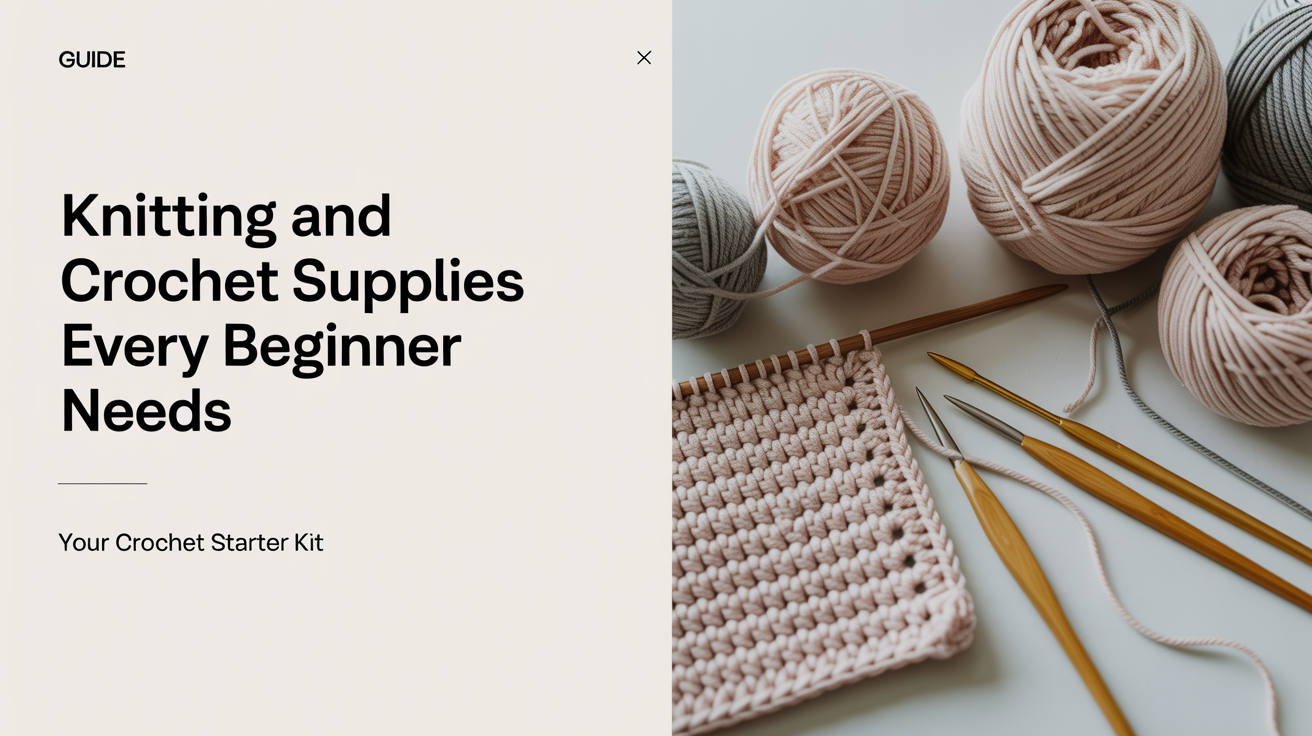
Crochet requires just one hook and some yarn, which makes it an easy, low-cost entry point.
Hook
Start with a US H/8 (5mm) crochet hook. Ergonomic handles (the kind with a rubber or soft grip) reduce hand fatigue if you plan to sit and practice for a while, but a basic aluminum hook works fine too. Avoid very small hooks (like a C or D) until you have comfortable tension control.
Yarn
Same advice as knitting: smooth, worsted-weight (size 4), light-colored. You'll be staring at your chain and stitches a lot in the beginning, and light yarn makes that much easier.
Your first project might be a chain-practice piece, a simple square, or a dishcloth in single crochet. The point is repetition, not the finished object.
Learning Your Hook Hold
There's more than one way to hold a crochet hook, and neither is wrong. See how to hold knitting needles and a crochet hook for a visual breakdown of the two most common grips and how to choose what feels natural.
Notions You'll Actually Use (for Both Crafts)
A few small tools show up in almost every project, regardless of whether you knit or crochet.
| Item | Why you need it | Knitting / Crochet / Both |
|---|---|---|
| Tapestry needle (blunt) | Weave in yarn ends; seam pieces together | Both |
| Sharp scissors | Cut yarn cleanly | Both |
| Stitch markers | Mark a spot in your work, row starts, increase points | Both |
| Tape measure | Check your gauge and finished dimensions | Both |
| US 8 (5mm) straight needles | Learn basic knit and purl stitches | Knitting |
| US H/8 (5mm) crochet hook | Learn chains, single and double crochet | Crochet |
| Worsted-weight yarn (size 4) | Visible stitches, forgiving tension | Both |
| Row counter (optional) | Track rows without losing count | Both |
A tapestry needle is the one item beginners most often forget to buy. You'll need it the moment you finish anything and want to hide those yarn tails.
Stitch markers can be as simple as a scrap of contrasting yarn looped through a stitch. You don't need a set of 50 fancy markers. A few locking markers (they look like tiny safety pins) are the most versatile.
What to Skip at First
Craft stores are full of gadgets marketed to beginners that mostly collect dust. Here's what you can safely ignore until you've finished a few projects.
Needle gauges and blocking mats. You'll care about these eventually, but not for your first dishcloth or swatch. A needle gauge is useful only once you have several needles and need to identify them. Blocking is a finishing technique for more complex pieces.
Interchangeable needle sets. These are genuinely useful once you know what sizes you reach for. Buying a full set before you've knit a single row is a $60 to $150 guess. Start with one pair.
Yarn swifts and ball winders. These make working from a hank of yarn much easier. But most beginner yarn comes in a skein that you can use directly from the outside. You won't need a swift until you start buying hanks from indie dyers.
Fancy project bags. A zip-lock freezer bag keeps your yarn clean and tangle-free. Done.
The main thing that slows beginners down isn't missing equipment, it's stopping before the repetition clicks. Most people feel awkward for the first hour or two, and then something shifts. If you're wondering how long it takes to learn to knit or crochet, the honest answer is: the basics come within a single afternoon for most people. Consistent practice over a few weeks gets you to comfortable.
Putting It All Together
Your ideal beginner shopping list looks like this:
- 1 skein of worsted-weight (size 4) yarn in a light color
- US 8 (5mm) straight needles or a US H/8 (5mm) crochet hook (or both, if you want to try each)
- 1 blunt tapestry needle
- Small scissors
- 3 to 5 stitch markers
Total cost: roughly $15 to $25, depending on the yarn brand. That's enough to finish several practice projects and figure out which craft you want to invest in further.
The most important thing is to start. A $10 setup that you actually use beats a $150 kit sitting in a closet.
Frequently Asked Questions
What yarn is best for a beginner?
A smooth, worsted-weight (size 4) acrylic or wool-blend yarn in a light or medium color. It's easy to see your stitches, forgiving of tension inconsistencies, and inexpensive enough that mistakes don't feel costly. Avoid anything fuzzy, stretchy (like pure cotton for very first projects), or heavily textured.
Do I need both knitting needles and a crochet hook?
Not right away. Most people find it easier to get comfortable with one craft before adding the other. Both are worth learning, but starting with one set of tools keeps things simple. If you're genuinely unsure which to try first, crochet tends to have a slightly faster learning curve for basic stitches.
Can I learn from YouTube instead of buying a pattern?
Absolutely. Free video tutorials are excellent for beginners, especially for learning cast-on, knit stitch, purl stitch (knitting) or chain, single crochet, double crochet (crochet). A pattern gives you a goal and structure, but it's optional for the very first session.
What size needles or hook should a complete beginner use?
US 8 (5mm) for knitting needles, US H/8 (5mm) for a crochet hook. Both sizes work well with worsted-weight yarn and give you enough room to see what you're doing without being so large that stitches feel sloppy.
How much should I expect to spend to get started?
Realistically $15 to $30 for a basic setup (one skein of yarn, one pair of needles or a hook, a tapestry needle, and scissors). You can spend more on higher-end yarn or ergonomic tools, but nothing in that range is necessary for learning. Start modest, then invest in what you actually enjoy using.