Stitches & Techniques
What Is Blocking and How Do You Block Your Projects?
Learn what blocking is in knitting and crochet, why it matters, and step-by-step instructions for wet, spray, and steam blocking.
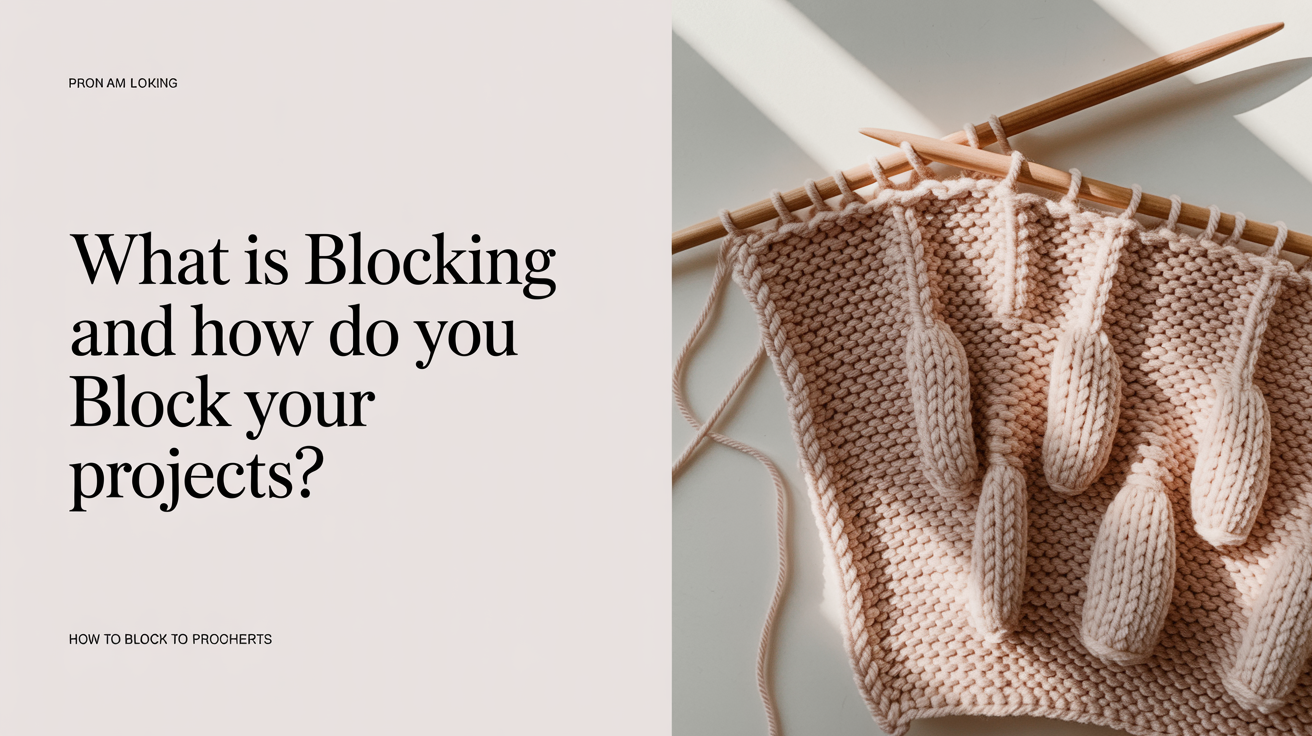
Blocking is the process of wetting, shaping, and drying your finished knit or crochet piece so the stitches even out and the item holds its intended dimensions. If you have ever finished a project and thought the fabric looked uneven or the edges were curling up, blocking is often the fix. It does not require special skills, but it does require a little patience while your work dries.
Most beginners skip blocking because no one told them it existed. Once you try it, you will probably add it to every project. Even simple items like scarves and dishcloths look more polished after a good block.
What Blocking Actually Does to Your Yarn
When you knit or crochet, the yarn gets pulled and tensioned in different directions with each stitch. By the time you cast off or fasten your last stitch, the fibers are holding a kind of memory of all that movement. Blocking relaxes those fibers, lets them settle into their natural position, and then locks that position as the piece dries.
The most visible result is that stitches become more uniform. Lace patterns, in particular, can look like a jumbled mess off the needles and then open up beautifully once blocked. Stockinette panels lie flat instead of rolling inward. Seams sit neatly. Pieces knitted or crocheted in separate sections match each other more closely when you join them.
Blocking also affects size. Most pieces grow slightly in length and width during blocking. This is exactly why gauge swatches should always be blocked before you measure them. If your swatch grows or shrinks by even half an inch, that difference multiplied across a full garment can mean something that fits versus something that does not.
Which Fibers Block Well
Not all yarn responds to blocking the same way. Knowing your fiber content saves you from ruining a project.
Animal fibers (wool, alpaca, mohair, cashmere): These block very well. The fiber scales absorb water, the protein structure relaxes, and the yarn holds its new shape once dry. Superwash wool (treated to be machine-washable) blocks too, but it tends to relax more aggressively and can grow quite a bit with wet blocking, so watch your dimensions.
Plant fibers (cotton, linen, bamboo): These wet-block well, though they do not have the same elastic memory as wool. They tend to drape more after blocking and take longer to dry.
Synthetic fibers (acrylic, nylon, polyester): Standard wet blocking does very little for these. The fibers are not changed by water. Steam blocking can work on some acrylics, sometimes called "killing" the acrylic, but the change is permanent and the fabric can go limp, so always test on a swatch first.
Blends: Read the label and treat the blend according to its most delicate fiber. A 75% wool / 25% nylon blend blocks much like wool. A cotton/acrylic blend responds mainly to the cotton portion.
The Three Main Blocking Methods
Wet Blocking
This is the most thorough method and works well for wool and plant fibers.
- Fill a basin or clean sink with lukewarm water. Add a small amount of wool wash or a drop of gentle soap if you like, then let it dissolve before adding your piece.
- Submerge the knitting or crochet and gently press it down. Do not agitate or wring. Let it soak for at least 15 minutes so the water reaches the core of every strand.
- Lift the piece carefully (it will be heavy with water) and support it from underneath. Lay it on a dry towel, roll the towel up with the piece inside, and press down firmly to squeeze out water. Do not twist.
- Unroll the towel and transfer the piece to a blocking mat or a clean dry surface that pins can go into. Foam interlocking mats work well and are easy to find cheaply.
- Gently stretch the piece to the measurements listed in your pattern, or to the dimensions you want. Use rust-proof T-pins or blocking wires to hold the edges in place.
- Leave it flat until completely dry. This can take anywhere from a few hours to overnight depending on fiber and thickness.
Spray Blocking
Spray blocking is faster and works well for pieces that only need a light refresh rather than a thorough soak.
- Lay the dry piece on your blocking mat and pin it to the correct measurements.
- Fill a clean spray bottle with water and mist the piece evenly until damp, not soaking wet.
- Pat gently to help the moisture settle in, then leave to dry.
This method is handy for pieces with delicate or textured yarn that might felt with too much handling in water. It is also the right choice for ribbing, since soaking and pinning ribbing out flat can pull out its natural stretch.
Steam Blocking
Steam blocking works on some fibers that wet blocking cannot change, and it is faster because you are not waiting for a fully wet piece to dry.
- Pin the dry piece to your blocking mat at the intended measurements.
- Hold a steam iron a few centimetres above the surface without pressing down on the fabric, then let the steam penetrate the fibers. Move slowly and evenly across the piece.
- Let the piece rest without disturbing the pins until it has cooled completely.
Steam is the most practical approach for some acrylics, but test a swatch first. It is not suitable for mohair or very open lace, where the heat can flatten delicate texture or damage the halo.
Blocking Round Items vs. Flat Pieces
If you have worked in the round, blocking works the same way, but you will be shaping a tube rather than a flat panel. Socks fit over sock blockers, which are small foot-shaped forms. Hats go over a head-shaped form or an inflated balloon. Seamless sweater bodies can be stuffed lightly with dry towels to hold their shape while drying.
For ribbing, be careful not to overblock. The elasticity of knit 1 purl 1 and similar rib patterns comes from the interplay of the two stitch types. If you pin ribbing out wide and flat, it can lose some of its spring and not bounce back the way it should. Block ribbing gently with spray only, or block it in its natural relaxed state.
For shaped pieces with increases and decreases, blocking helps the shaped edges lie flat and makes the shaping lines cleaner and more visible. Pin carefully around any curved or angled sections, placing pins close together so the edge does not develop a scalloped look.
What You Need to Get Started
You do not need much to block your first project:
- A blocking mat or several layers of clean, dry towels
- Rust-proof T-pins (ordinary pins leave rust marks on wet fiber)
- A measuring tape to check dimensions against your pattern
- A spray bottle or basin for water
Blocking wires are a useful addition once you start working with lace. They thread along straight edges so you only need pins at the corners, which gives you a perfectly straight edge with far less effort.
Frequently Asked Questions
Do I have to block every project?
No. Blocking matters most for items where fit, stitch definition, or flat edges are important: garments, lace, colorwork, and anything seamed together. Casual projects like dishcloths or simple cowls still look better blocked, but it is not essential for them to function.
My yarn label says machine wash. Can I still block it?
Yes. Superwash wool and cotton can both be wet-blocked. Keep the water temperature lukewarm and avoid agitating the fiber. The main thing to watch with superwash wool is that it can grow more than non-superwash wool during wet blocking, so always block your gauge swatch before you measure it.
How do I know when the piece is dry enough to unpin?
Press your hand flat on the thickest part. If it feels even slightly cool or damp, leave it longer. Unpinning too early can let the piece shrink back before it has fully set.
Will blocking fix a mistake in my stitch count?
No. Blocking evens out tension and sets shape, but it cannot correct a row where you accidentally added or dropped stitches. It is a finishing step, not a repair tool.
Can I block crochet the same way I block knitting?
Yes. The methods are identical. The main practical difference is that crochet fabric tends to be denser than most knitting, so it absorbs more water and takes longer to dry after wet blocking. Spray blocking is often enough for most crochet projects unless you are joining motifs or working with lace.