Projects & Patterns
Easy Knitting Projects for Absolute Beginners
Five beginner knitting projects that only need basic stitches, plus tips on yarn and needle size so your first make actually turns out.
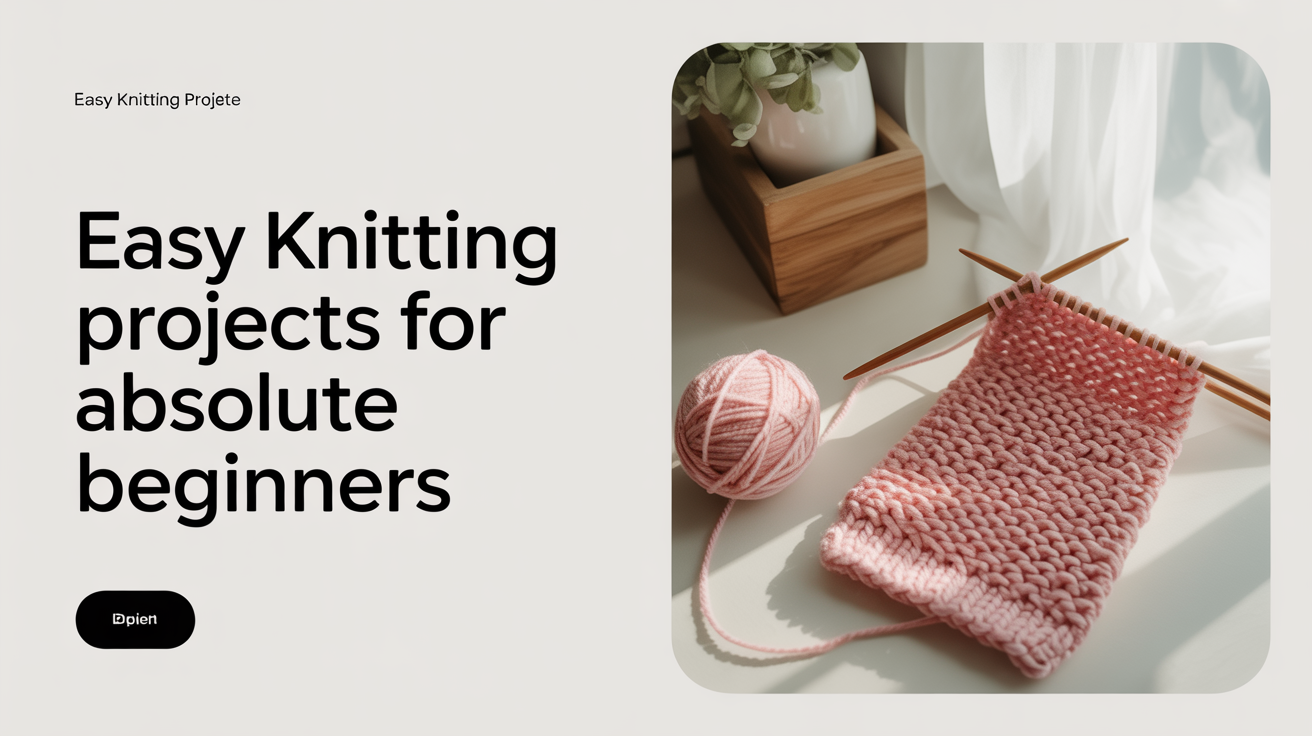
Picking a first knitting project is harder than it sounds. You want something small enough to finish before the enthusiasm runs out, but interesting enough that you actually want to make it. The good news is that even the simplest knitting stitches produce things people genuinely use and keep.
This guide walks through five projects that work well as first knitting projects, explains what makes each one manageable, and covers the yarn and needle choices that give you the best chance of a good result.
What Makes a Project Good for Beginners
A project earns the beginner label when it limits the number of new skills you need at once. The best first knitting projects share a few traits:
- Flat rectangles. Working back and forth in rows is simpler than shaping or knitting in the round. A rectangle with no increases, decreases, or seams is exactly what a new knitter needs.
- Worsted or bulky weight yarn. Thicker yarn is easier to see, easier to hold, and works up faster. Thin yarn on small needles amplifies every tension inconsistency.
- Consistent stitch patterns. If you do the same thing on every row, you have one less thing to track. Garter stitch (knitting every row) is the classic choice.
- Forgiving materials. Smooth, lightly plied yarn in a medium or light color shows your stitch structure clearly so you can spot a dropped stitch before it travels. Fuzzy or highly textured yarn hides mistakes but also makes them harder to fix.
- A short or adjustable length. Projects where you can stop when it looks right (a washcloth, a cowl, a dishcloth) remove the pressure of hitting a precise measurement on your first try.
Five Simple Things to Knit First
1. Garter Stitch Dishcloth or Washcloth
A square cloth is the single most beginner-friendly thing you can knit. Cast on around 30 to 40 stitches with worsted weight cotton, knit every row until the piece is roughly square, then bind off. That is the whole pattern. Cotton is especially good here because it holds its shape, washes well, and costs very little, so you have no anxiety about wasting expensive yarn. The finished cloth is also immediately useful, which matters when you are building the habit of finishing things.
You can start with any number of stitches divisible by whatever looks good to you. A count of 36 stitches on US 7 (4.5 mm) needles with worsted weight cotton gives a cloth about 8 inches square.
2. Knit Scarf
A scarf is the traditional first project for a reason. It is just a long rectangle, and the length is entirely up to you. Cast on 20 to 30 stitches, pick any stitch pattern you like (garter stitch works; so does a simple knit-2-purl-2 rib once you have learned the purl stitch), and knit until the scarf reaches your preferred length. Bind off, weave in your ends.
If a 60-inch scarf feels too long for a first project, make a shorter cowl instead. The math is identical; you just stop sooner. A full guide to the process is at how to knit a scarf for beginners.
3. Chunky Headband or Ear Warmer
A headband is even faster than a cloth. Cast on enough stitches to give you a strip about 3 to 4 inches wide, knit in garter until the strip is long enough to wrap around your head (usually 18 to 22 inches), then seam the short ends together with a tapestry needle. Bulky or super bulky yarn works particularly well here because the project finishes in an evening or two.
The seam at the join is a good introduction to sewing knit pieces together. You are working on something small where a slightly uneven seam barely shows once it is worn.
4. Simple Coaster or Mug Rug
If a dishcloth feels big, start even smaller. A coaster is roughly 4 inches square, which you can finish in a single sitting. Cotton or wool works well. Because the project is tiny, you can try a slightly different needle size or yarn weight with almost no cost in time. Making a set of four identical coasters is also good practice in keeping your cast-on consistent from one piece to the next.
5. Seed Stitch Bookmark or Plant Marker
For something genuinely tiny, cast on 5 to 7 stitches and alternate knit and purl stitches across each row. This is seed stitch, and it produces a firm, flat fabric with a pebbly texture. A strip 6 to 8 inches long makes a good bookmark. It takes about 30 minutes, forces you to practice both the knit and purl stitches in the same project, and produces something concrete you can use straight away.
Yarn and Needle Choices That Help
The materials you choose matter more than most beginners expect. A few guidelines:
| Yarn weight | Suggested needle size | Best for |
|---|---|---|
| Worsted (4) | US 7-9 (4.5-5.5 mm) | Cloths, scarves, headbands |
| Bulky (5) | US 10-10.5 (6-6.5 mm) | Headbands, cowls, quick scarves |
| Super bulky (6) | US 13-15 (9-10 mm) | Ultra-fast scarves and coasters |
For your first project, pick a smooth yarn in a solid or semi-solid color and a medium value (neither very dark nor very pale). Dark yarn in dim light makes it hard to count stitches; very pale yarn shows dirt before you have had a chance to practice. A yarn labeled "easy care" or "machine washable" is practical for items you plan to actually use.
Avoid novelty yarns with bobbles, loops, or high fuzz on your first project. They catch on needles, hide stitch structure, and make it nearly impossible to see what you are doing.
Reading the Pattern and Keeping Track
Even the simplest beginner patterns use abbreviations. "K" means knit, "P" means purl, "CO" means cast on, "BO" or "BO" means bind off. A full breakdown of how to decode written instructions is at how to read a knitting or crochet pattern for beginners.
For the projects above, the only tracking tool you might need is a row counter or a tally on paper if you want your finished piece to reach a specific size. Otherwise, just knit until it looks right and you are happy with the length.
A note on tension: your first swatch or first few rows will almost always feel awkward. Your grip on the yarn changes as you build muscle memory, which means row 30 often looks noticeably different from row 3. This is normal and improves on its own. If you are making a fitted garment later, a gauge swatch is how you check that your tension matches the pattern. For the projects in this guide, an exact gauge is not critical.
If you find yourself curious about crochet as an alternative first project, a dishcloth works equally well in that craft. See how to crochet a dishcloth: an easy first project for a straightforward walkthrough.
Frequently Asked Questions
How many stitches should a complete beginner cast on?
For a first project, 20 to 40 stitches is a good range. Fewer than 20 stitches and the piece feels so narrow that every inconsistency is obvious. More than 40 stitches on a first attempt can feel unwieldy before you have a comfortable grip. Start with 30 stitches and adjust from there.
What is the easiest knitting stitch for beginners?
Garter stitch, which means knitting every single row, is the place to start. You never have to switch between knit and purl, you never have to worry about which side is the "right" side, and the fabric does not curl. It is also very forgiving of slight tension differences between rows.
How long does a beginner project take?
A small dishcloth or coaster might take two or three hours spread over a couple of sessions. A full-length scarf could take a week or two of evening knitting. Your speed will increase noticeably after the first few projects as your hands stop working against you.
Can I fix mistakes in a beginner project?
Yes, and you should expect to. Dropped stitches are the most common problem and can be picked back up with a crochet hook or the tip of a knitting needle. If you drop a stitch and it unravels down several rows before you notice, the safest fix is usually to carefully unravel ("frog") back to the problem row and reknit. For a small project this takes maybe ten minutes and is much less stressful than it sounds.
Do I need expensive yarn for my first project?
No. A basic acrylic worsted weight yarn is a perfectly reasonable choice for learning. It is inexpensive, machine washable, and available in most craft stores. Once you have a feel for the process and know what kind of projects interest you, you can explore other fibers. But starting with an affordable yarn means you can practice freely without worrying about the cost of the materials.