Projects & Patterns
How to Crochet a Dishcloth: An Easy First Project
Learn to crochet a beginner dishcloth using single crochet stitch. Full written pattern, materials list, and tips to keep your edges straight.
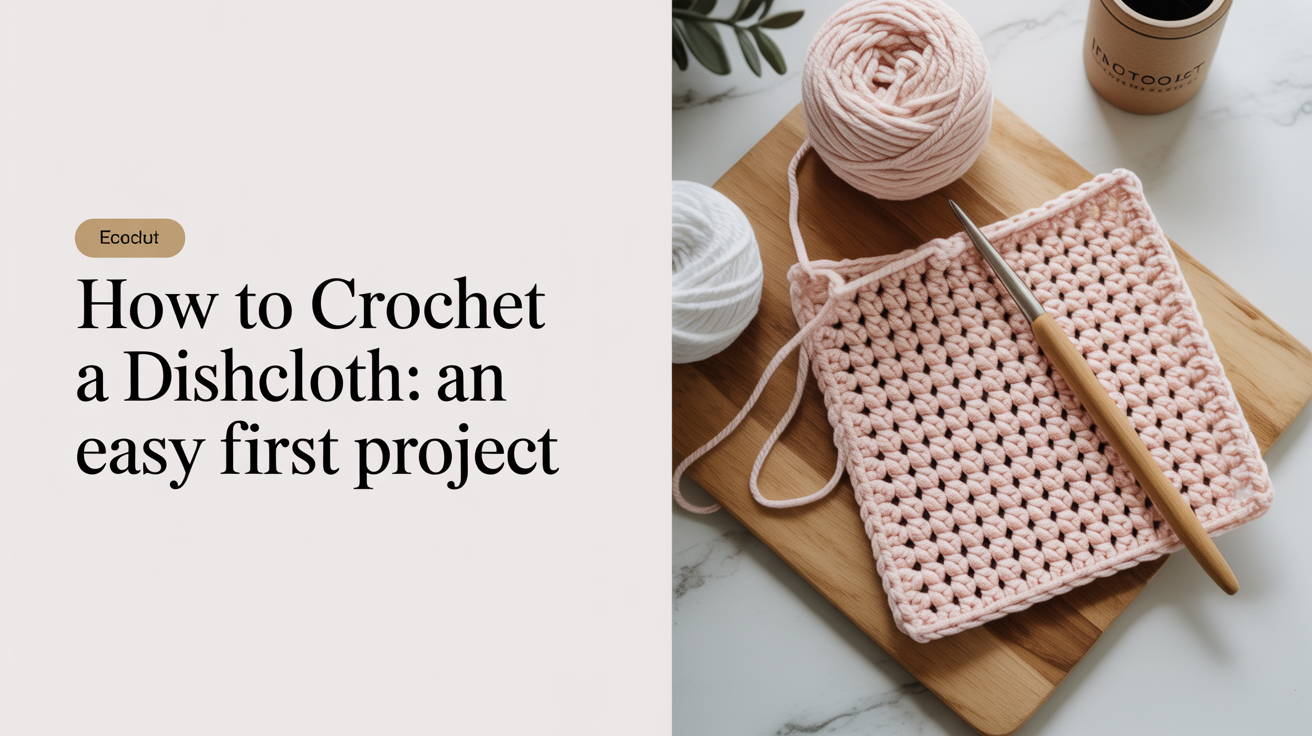
A dishcloth is one of the best first crochet projects you can make. It's small enough to finish in one or two evenings, it uses only one stitch, and when you're done you have something genuinely useful sitting on your kitchen counter. No gauge pressure, no seaming, no fuss.
This pattern makes a roughly 8-inch square using single crochet (the shortest, sturdiest stitch). Cotton yarn is the right choice here: it's absorbent, holds up to washing, and doesn't stretch out of shape the way acrylic does. If you've never crocheted before, you may want to read through how to read a knitting or crochet pattern for beginners first so the abbreviations feel familiar before you cast on.
What You Need
- Cotton yarn: worsted weight (size 4), about 75–100 yards. Any 100% cotton kitchen cotton works, Lion Brand 24/7 Cotton and Paintbox Simply DK are popular choices, though you want a labeled weight of 4/worsted rather than DK if you're using the hook size below.
- Crochet hook: H/8 (5mm). This is the size called for on most worsted cotton labels and gives a firm, dense fabric good for scrubbing.
- Scissors
- Yarn needle (also called a tapestry needle or darning needle) for weaving in ends
That's it. No stitch markers, no notions. If you have leftover cotton from another project, this is a perfect use for it.
Understanding the Abbreviations
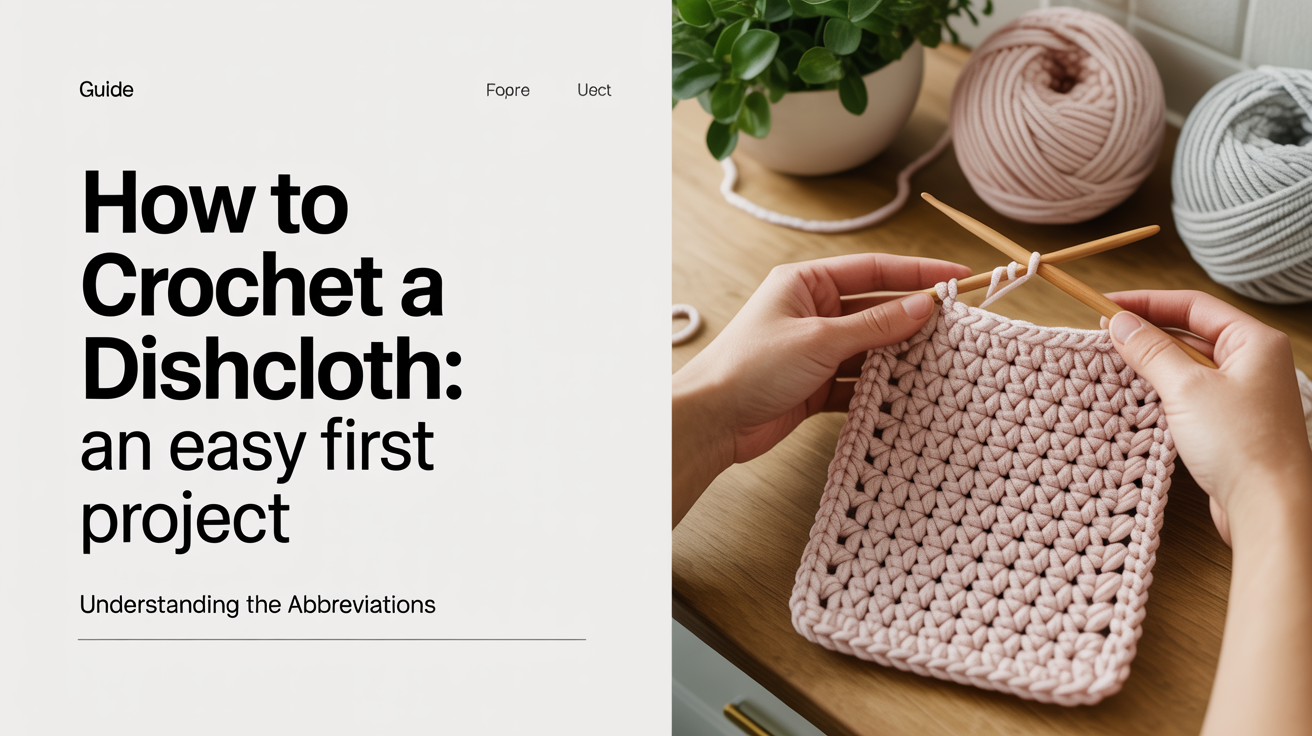
Crochet patterns use shorthand. Here are the only two you need for this project:
- ch = chain. The foundation chain is a row of interlocked loops you make before you start the actual fabric.
- sc = single crochet. The stitch you'll use for every row.
If terms like "yarn over" or "insert hook" are new to you, a quick look at how to crochet a scarf: a simple beginner pattern covers the mechanics of those hand movements before you start.
The Pattern: Single Crochet Dishcloth
This produces a square approximately 8 × 8 inches. Exact size depends on your tension, but anywhere from 7 to 9 inches is perfectly usable.
Finished size: approx. 8 × 8 in (20 × 20 cm) Yarn: worsted weight cotton, ~85 yards Hook: H/8 (5mm)
Foundation Chain
- Make a slip knot and place it on your hook.
- Chain 31. (You should have 31 loops on a line, count them by the V shapes on the front of the chain, not counting the loop on the hook.)
The starting chain of 31 gives you 30 working stitches, which is the target stitch count for every row.
Row 1
- Single crochet into the second chain from the hook (skip the very first chain, it acts as a turning chain).
- Single crochet in each remaining chain across., 30 sc total.
- Chain 1, turn your work.
Rows 2 Through 30
- Single crochet in the first stitch of the row. (The chain 1 you just made does NOT count as a stitch, go right into that first sc below it.)
- Single crochet in each stitch across., 30 sc.
- Chain 1, turn.
- Repeat steps 6–8 until you have completed 30 rows total.
After 30 rows of 30 stitches each, the piece should be roughly square. If it looks taller than it is wide, you can stop at 28 rows; if it looks wider, add a couple more rows until the sides match.
Finishing
- At the end of your last row, do not chain 1. Cut the yarn leaving a 6-inch tail.
- Pull the tail all the way through the last loop on your hook to fasten off.
- Thread the tail onto your yarn needle and weave it under four or five stitches on the back of the fabric. Weave the starting tail in the same way.
- Trim both tails close to the fabric.
Your dishcloth is finished. Toss it in the washing machine on cold and it will come out soft and slightly compacted, that's normal with cotton, and the fabric actually becomes denser and more absorbent after the first wash.
Tips for Keeping Edges Straight
Wonky edges are the most common beginner problem. Here's what causes them and how to fix each one.
Count Every Row
Before you turn, count your stitches. You should always have 30. If you have 31, you probably crocheted into your turning chain by accident. If you have 29, you likely skipped the first stitch of the row (which is easy to miss because it sits right below the chain-1). Both mistakes are invisible at first but create a slant over time.
The First Stitch Is the Sneaky One
At the start of every row, after you chain 1 and turn, the first stitch of the previous row is directly below the chain. It can look like the chain 1 is the first stitch, it isn't. Insert your hook into the actual stitch, not the chain space. This keeps your count at 30 and your edges vertical.
The Last Stitch Is Equally Sneaky
At the end of a row, the last stitch is the first stitch you made on the row below. It can be loose and easy to miss. Tug the fabric gently to open it up and make sure you're crocheting into it, not just under the top loops of the edge.
Tension Matters More Than Speed
If your fabric is puckering or your yarn keeps splitting, slow down. Crochet works best with a relaxed, consistent pull, not too tight, not too loose. Cotton is less forgiving than wool (it doesn't have the same elasticity), so even tension pays off quickly.
What to Do With Your Dishcloth
Use it at the kitchen sink, of course. But dishcloths also make good face cloths, pot scrubbers, or small gift-wrap alternatives. If you make a few in the same color and stack them, they look surprisingly nice as a housewarming gift.
Once you're comfortable with this pattern, the natural next step is a longer, rectangular project. A scarf uses the same motion scaled up, see how to knit a scarf for beginners if you want to try the knitted version, or stay in crochet and simply chain 51 instead of 31 for a wider piece.
Frequently Asked Questions
Can I use acrylic yarn instead of cotton?
You can, and it will still work as a crochet project. But acrylic isn't absorbent the way cotton is, so the finished cloth won't be very useful at the sink. For a practice swatch before you start your cotton ball, acrylic is fine. For the actual dishcloth, stick with cotton.
What if my dishcloth doesn't come out square?
Add or subtract rows until the height matches the width. Since every row is 30 stitches, the only variable is how many rows you work. Check the shape every five rows, once the height equals the width, stop and fasten off.
My edges are curling in. Is that normal?
A small amount of curl at the edges is normal before washing. A machine wash and dry (or a gentle hand wash with a block dry flat) will even it out. If the curl is extreme, your tension is probably too tight, try going up to an I/9 (5.5mm) hook.
How do I know when to fasten off?
When you've completed row 30 (or whichever row makes your piece square), simply don't chain 1 at the end. Cut the yarn, pull the tail through the last loop, and you're done. "Fastening off" just means securing that final loop so it can't unravel.
Can I make this bigger for a washcloth or bath cloth?
Absolutely. For a hand-sized washcloth, chain 41 (giving you 40 stitches per row) and work 40 rows. For a bath cloth, chain 51 and work 50 rows. The only rule is that rows and stitches match so the piece stays square. You'll need roughly 150–200 yards for the larger sizes.