Projects & Patterns
How to Crochet a Scarf: A Simple Beginner Pattern
Learn how to crochet a scarf with this easy beginner pattern using double crochet stitch, worsted yarn, and a 5mm hook. Full instructions included.
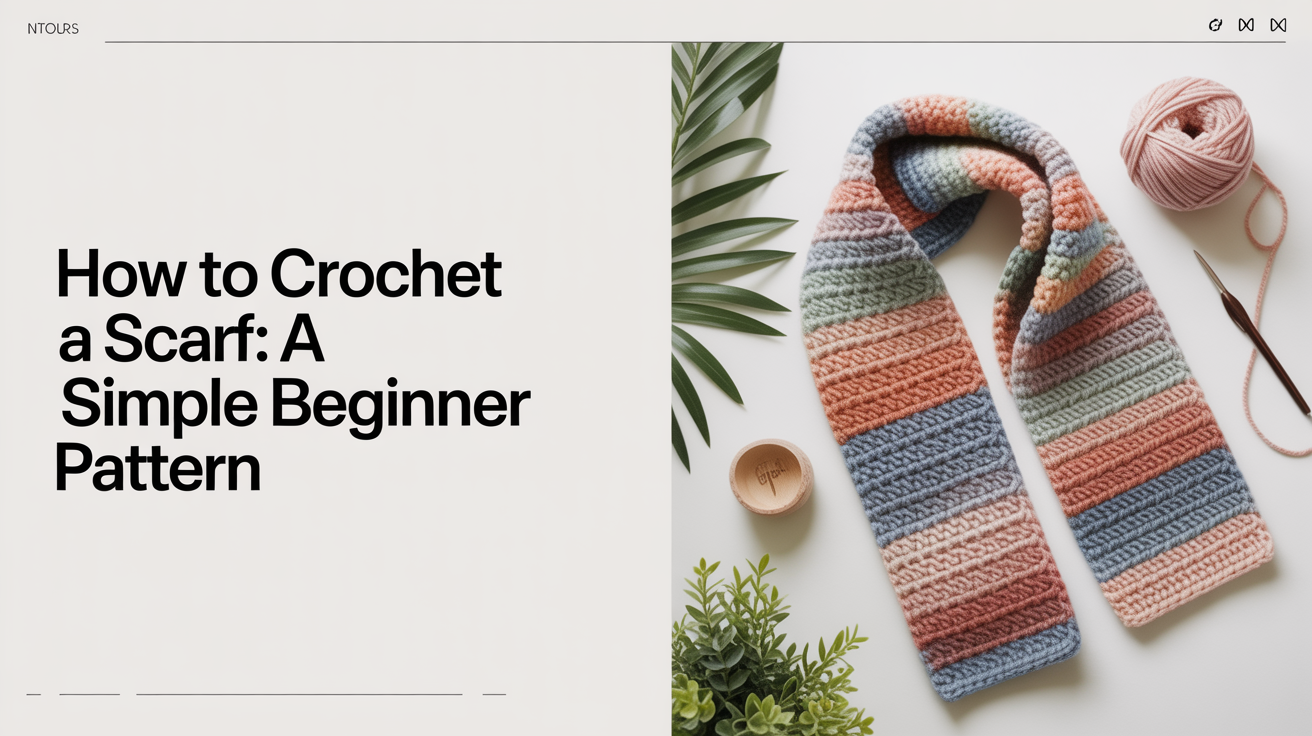
A scarf is one of the best first crochet projects you can make. It's a straight rectangle, which means no shaping, no counting complicated stitch patterns, and no sewing pieces together. You just chain, turn, and repeat until it's long enough to wrap around your neck. By the end of this tutorial, you'll have a real, wearable scarf, and a solid foundation in the double crochet stitch (dc) that shows up in hundreds of other patterns.
What You'll Need
You don't need much to get started. Here's the full materials list:
- Yarn: 2 skeins of worsted weight yarn (also labeled "4" or "medium" on the skein). A smooth, light-colored yarn is easiest for beginners because you can see your stitches clearly. Each skein should be around 200 yards.
- Hook: Size H-8 / 5mm crochet hook
- Scissors
- Yarn needle (also called a tapestry needle) for weaving in ends
- Measuring tape
A note on yarn choice
Acrylic yarn in a worsted weight is the most forgiving option for beginners. It's affordable, machine-washable, and available at any craft store. Avoid fuzzy or textured yarn for your first scarf, the stitches become hard to see and count.
Understanding the Stitch: Double Crochet (dc)
This scarf uses only one stitch: the double crochet (dc). Before you start the pattern, practice the dc a few times on a small swatch so your hands get used to the motion.
How to work a double crochet
- Yarn over (wrap yarn over your hook from back to front).
- Insert your hook into the stitch.
- Yarn over again and pull up a loop. You now have 3 loops on your hook.
- Yarn over and pull through 2 loops. You now have 2 loops on your hook.
- Yarn over and pull through the remaining 2 loops. One dc complete.
The turning chain
At the start of each row, you'll chain 3 (ch 3) before turning your work. This ch-3 counts as your first dc of the row. That detail matters: it means you skip the first actual stitch at the base of the row, and you work a dc into the top of the ch-3 at the end of the previous row. Missing that last stitch is the most common beginner mistake, and it's what causes scarves to shrink on the sides over time.
The Pattern: Simple Double Crochet Scarf
Finished dimensions: Approximately 6 inches wide × 60 inches long
Gauge: 13 dc × 8 rows = 4 inches in dc with H/5mm hook and worsted yarn. Gauge isn't critical for a scarf, but being significantly off will change the final size.
Foundation chain
- Make a slip knot and place it on your hook.
- Chain 27. (This gives you 25 working chains plus 2 for your first turning chain.)
- To check your width: the foundation chain should measure about 6 inches. If it's much shorter or longer, adjust your tension before continuing.
Row 1
- Work 1 dc into the 4th chain from your hook. (The 3 skipped chains count as your first dc.)
- Work 1 dc into each chain across. You should end with 25 dc total across the row, counting the ch-3 as dc #1.
- Turn your work.
Rows 2 onward
- Ch 3. Turn.
- Skip the first stitch at the base of the ch-3.
- Work 1 dc into each stitch across, including into the top of the ch-3 from the previous row at the very end. You should always have 25 dc across every row.
- Turn and repeat.
How long to make it
Keep repeating rows until your scarf reaches 60 inches. This typically takes around 120 rows with worsted yarn and a 5mm hook, though your personal tension may vary, measure as you go rather than counting rows. A shorter scarf (around 50 inches) works fine for a cowl-style drape; 65–70 inches is good for a long wraparound look.
Finishing
- At the end of your final row, cut the yarn leaving a 6-inch tail.
- Pull the tail through the last loop on your hook to fasten off.
- Thread the tail onto your yarn needle and weave it in and out of nearby stitches on the back side of the work. Do the same with the tail at the other end.
- Trim any excess yarn close to the fabric.
Keeping Your Edges Even
Uneven edges are the #1 frustration for beginners learning to crochet a scarf. Here's why they happen and how to fix them.
Watch the first and last stitch every row
- First stitch: After you ch-3 and turn, do NOT work into the stitch right at the base of the ch-3. Skip it. The ch-3 is standing in as that stitch.
- Last stitch: Look for the top of the ch-3 from the row below. It looks like a small "V" of two loops. Work your final dc into both loops of that V. If you miss it, your stitch count drops by one.
Count your stitches
For the first several rows, count your dc after every row. You should always land on 25. If you have 24, you missed the last stitch. If you have 26, you accidentally worked into the ch-3 AND the first real stitch. Catching errors right away, before they travel through several rows, makes fixing them quick and painless.
Consistent tension
Try to keep your yarn at a steady tension as you pull through each loop. Stitches that are too tight will make the scarf stiff and narrow; too loose and it will be floppy and wide. Most beginners start tight and loosen up naturally as their hands relax. If your tension is very uneven from row to row, take a break, shake out your hands, and come back to it.
Adding Fringe (Optional)
Fringe gives a scarf a finished, intentional look and takes only a few minutes to add. You'll need the second skein of yarn for this if you used most of the first on the scarf body.
How to make fringe
- Cut yarn into pieces about 14 inches long. You'll need around 50 pieces total (25 per end, one per stitch).
- Fold one piece in half.
- Using your crochet hook, pull the folded loop through the first stitch along the short end of the scarf.
- Pull the two tail ends through the loop and tighten. This is a larks-head knot.
- Repeat across all 25 stitches on that end, then do the same on the other end.
- Trim the fringe so all pieces are the same length.
If you prefer a cleaner look, skip the fringe entirely. A plain finished edge looks tidy and professional without any extra work.
If you want to try another beginner-friendly project once you've finished your scarf, a simple crochet dishcloth is a great next step. And if reading pattern notation still feels a little unfamiliar, this guide to reading a knitting or crochet pattern for beginners walks through all the abbreviations in plain language. Knitters in your life might also enjoy this beginner knitted scarf pattern, same cozy result, different tool.
Frequently Asked Questions
How long does it take to crochet a scarf for a beginner?
Most beginners finish a scarf like this in 6–10 hours of actual hook time, spread across several sessions. If you're brand new to crochet, plan for more time at the start as your hands figure out how to hold the hook and tension the yarn. Things speed up considerably after the first 20 rows.
What size crochet hook is best for a beginner scarf?
An H-8 / 5mm hook with worsted weight yarn is the most common beginner pairing. The hook is large enough to see what you're doing easily, and worsted yarn is thick enough that the project doesn't feel endless. If your stitches feel very stiff and hard to pull through, try going up one hook size to a 5.5mm or 6mm.
How do I fix a mistake in my crochet scarf?
The easiest fix is to simply pull your hook out and unravel (or "frog") back to just before the mistake, then reinsert your hook into the last good stitch and continue. Crochet is forgiving about this, you can undo rows without the whole thing falling apart, unlike knitting. If you notice a dropped stitch several rows back, a crochet hook can sometimes be used to catch and fix it without unraveling.
My scarf is getting narrower as I go. What's happening?
You're likely missing the last stitch of each row (the top of the turning chain). This is extremely common. After your next row, count your stitches. If you're losing one per row, make a point of finding that final ch-3 top before you turn, and work your last dc there.
Can I make this scarf wider or narrower?
Yes. The width is determined by your starting chain. For every extra stitch of width you want, add one chain to your foundation. To go narrower, subtract chains. Just make sure your foundation chain total is always an odd number (like 27 for 25 dc, or 23 for 21 dc) so the math stays clean.