Knitting Basics
How to Bind Off (Cast Off) in Knitting
Learn how to bind off (cast off) in knitting with clear step-by-step instructions. Keep your edge stretchy and tidy every time.
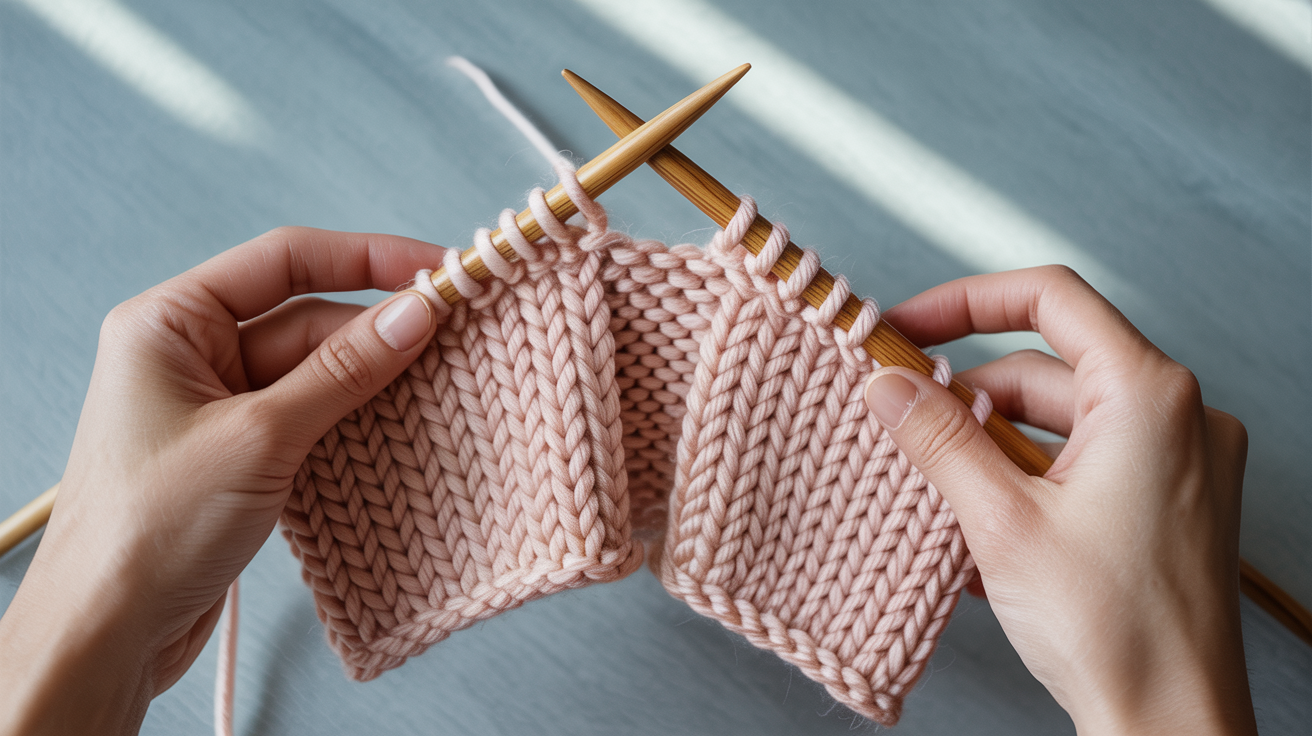
Bind off and cast off mean exactly the same thing. American knitters tend to say "bind off," British knitters say "cast off," and both describe the final step that locks your stitches in place so the work doesn't unravel when you take it off the needle. Once you know the basic method, it takes less than a minute to finish most small projects.
What the Bind Off Actually Does
Every stitch on your needle is, technically, a live loop. If you simply pulled the needle out right now, those loops would run and your work would fall apart. Binding off closes each loop by passing it over the next one in a chain, creating a neat edge of interconnected stitches that can't escape.
The bound-off edge is also called the "cast-off edge" or just the "top edge" of a piece. You'll see it at the cuff of a hat, the shoulder of a sweater, or the end of a scarf. It sits there forever, so it's worth doing it well.
One technique, two names
Because patterns come from all over the world, you'll encounter both terms. If your pattern says "cast off 10 stitches at the beginning of the next row," it means exactly what an American pattern means when it says "bind off 10 stitches." Same action, different accent.
The Standard Bind Off, Step by Step
This method works for almost every project. You only need your knitting needle and a pair of scissors.
- Knit the first two stitches the way you normally would. You now have two stitches sitting on the right needle.
- Insert the left needle tip into the first stitch you knitted (the one farther from the tip on the right needle).
- Lift that first stitch up and over the second stitch, pulling it completely off the right needle. One stitch now sits on the right needle; one stitch has been bound off.
- Knit one more stitch from the left needle. You're back to two stitches on the right needle.
- Repeat steps 2 through 4 across the entire row until only one stitch remains on the right needle.
- Cut your yarn, leaving a tail of about 6 inches (15 cm).
- Pull the tail through the last loop and tug gently to close it.
That's the whole thing. The motion becomes automatic surprisingly fast. After a few stitches, most beginners find a rhythm without having to think about it.
What "knit-wise" means here
The standard bind off uses the knit stitch to close each loop. If your pattern calls for a "purl bind off," you would purl each stitch instead of knitting it. The lifting-over step is identical either way. Learn the knit stitch first if you haven't yet; it's the foundation of this technique.
After cutting the yarn
Once the last stitch is closed, you'll have a 6-inch tail hanging from the edge. Thread it onto a blunt tapestry needle and weave it through the surrounding stitches on the wrong side of your work. Go back and forth a few times, then trim any excess. That tail is now invisible and permanently secured.
Keeping the Edge Loose Enough
A too-tight bind off is the most common beginner problem, and it's frustrating because you can't fix it after the fact without ripping out and starting the row again. A tight edge pulls in, makes a project look puckered, and (on something like a hat or sock cuff) can make it impossible to put on.
The fix is simple: go up one needle size for the bind-off row only. If you've been working on 4mm needles, grab a 5mm needle for your right needle as you bind off. The larger needle forces each stitch slightly bigger, giving the edge just enough give to lie flat and stretch when needed.
A quick tension check
Before you finish the last few stitches, lay your work flat and look at the edge forming behind your needles. It should look about the same width as the rows below it, not narrower. If it's pulling in, try to loosen your grip on the yarn, or switch to the bigger needle.
If your finished bound-off edge ends up too tight, the only real fix is to carefully undo those stitches back to live loops (using the same needle you knitted with), then redo the bind off with a larger needle or a looser hand. It's annoying but fast on a short edge.
When You'll Use the Standard Bind Off
This method suits almost any flat or circular project with no special requirements. A few common places you'll encounter it:
- Scarves and dishcloths. Straight ends on both sides. Bind off the last row, weave the tail, done.
- Hat crowns. After decreasing to the last several stitches, you bind off (or, in some patterns, you cut the yarn, thread it through the remaining stitches, and draw up tight, which is slightly different but serves the same purpose).
- Sweater pieces before seaming. Shoulders, armholes, and necklines often require binding off a certain number of stitches at the start of a row, mid-project, to shape the garment.
- Finishing a cast-on practice swatch. If you've just learned to cast on and knit a few rows to practice, binding off gives you a finished little square to keep rather than a pile of loose loops.
Projects where you might want a different method
The standard bind off is firm, which is exactly what you want for most edges. A few exceptions: lace projects often need a very stretchy bind off (like the "yarn-over bind off") so the pattern can open up fully when blocked. Toe-up sock toes use a different technique altogether. Those are beyond beginner territory, but it's good to know they exist so you're not surprised when a lace pattern asks for something unfamiliar. Understanding the purl stitch will also come in handy before you try more complex bind-off methods.
Frequently Asked Questions
Is "bind off" the same as "cast off"?
Yes, completely. The two terms describe exactly the same technique. American patterns use "bind off"; UK and Australian patterns almost always say "cast off." If a pattern switches between them partway through, it's just an editing inconsistency, not two different steps.
Why does my bind-off edge look too tight?
The most common cause is simply working the bind-off stitches with the same tension as the rest of your knitting, which tends to be tighter when you're focused on a finishing step. Try using a needle one size larger for the bind-off row, and consciously loosen your grip on the yarn as you work. A tight bind off is very common among beginners, so don't be discouraged if you need to redo it once before it looks right.
Can I bind off in the middle of a row?
Yes. Patterns call for this when shaping armholes, necklines, or any other curved or angled edge. The instruction usually reads "bind off X stitches at the beginning of the next row." You bind off those stitches, then continue knitting the rest of the row normally. The following row, you'll start working right from the live stitches that remained.
What if I run out of yarn before I finish binding off?
If you notice your yarn is getting short before you start the bind-off row, wind off a separate length about three times the width of your knitting and use that for the bind off. Alternatively, if you run short mid-row, you can join a new length of yarn and continue. The join will be hidden in the bound-off edge.
Do I need to bind off if I'm going to seam two pieces together?
Sometimes no. Some seaming methods (like Kitchener stitch, used for grafting sock toes) work directly with live stitches, giving a seamless join. But for most standard seams on garments, you do bind off each piece first, then sew the edges together. Your pattern will specify if live stitches are needed.