Knitting Basics
How to Knit the Knit Stitch for Beginners
Learn how to knit stitch step by step with this beginner guide. Master the knit stitch, build garter stitch fabric, and fix the most common mistakes.
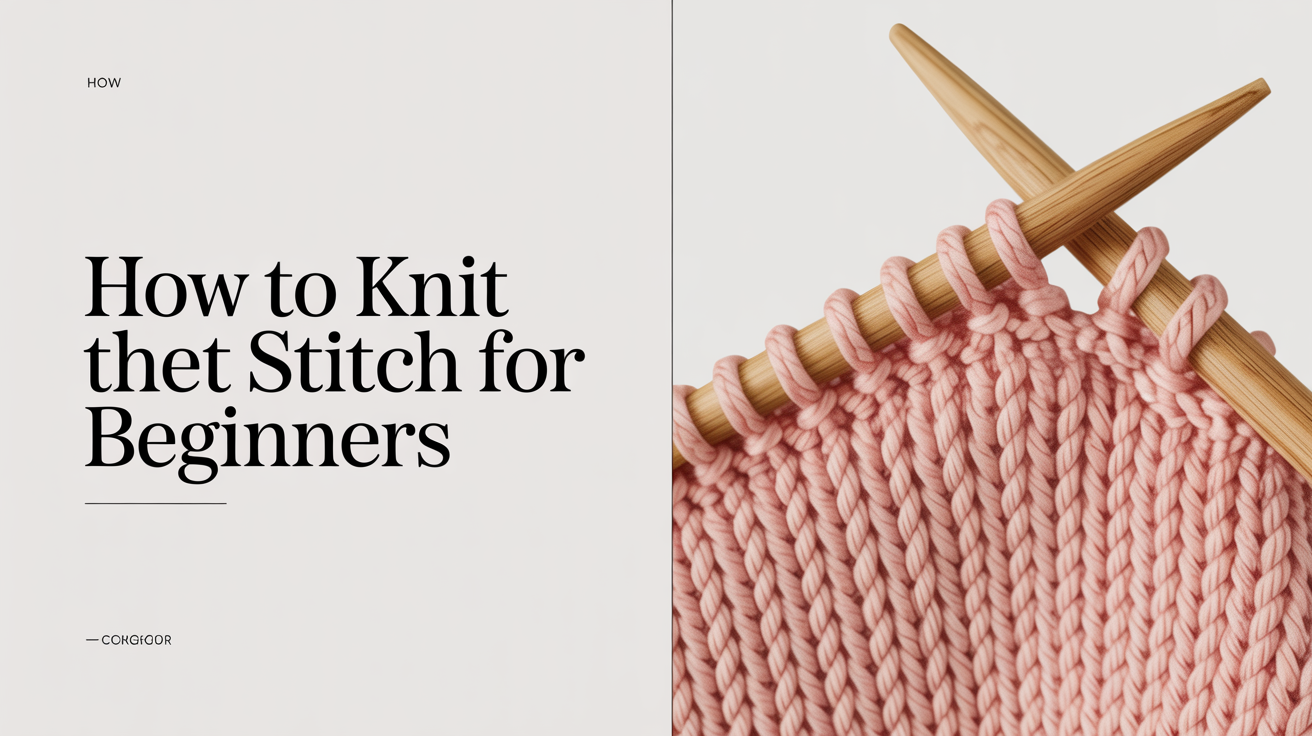
The knit stitch is the first thing you learn, and also the one you'll use most. Once it clicks, you'll have everything you need to make dishcloths, scarves, and plenty of other satisfying projects. This guide walks you through the stitch step by step, explains why knitting every row creates a fabric called garter stitch, and covers the mistakes beginners make most often so you can spot and fix them early.
Before you start, make sure you have some live stitches on your needle. If you haven't cast on yet, this cast-on guide will get you set up in about ten minutes.
What You Need Before You Begin
You don't need much. A pair of straight needles in US size 7 or 8 (4.5–5 mm) and a ball of smooth, medium-weight yarn (worsted or DK) are ideal for learning. Avoid fuzzy or textured yarn for now; it makes it hard to see your stitches.
Cast on 15–20 stitches. That's a comfortable practice swatch: wide enough to get a feel for the rhythm, small enough to finish a row quickly.
Hold the needle with the cast-on stitches in your left hand and the empty needle in your right. The working yarn (the strand connected to the ball) should be hanging at the back of your work.
The Four-Step Method: In, Over, Through, Off
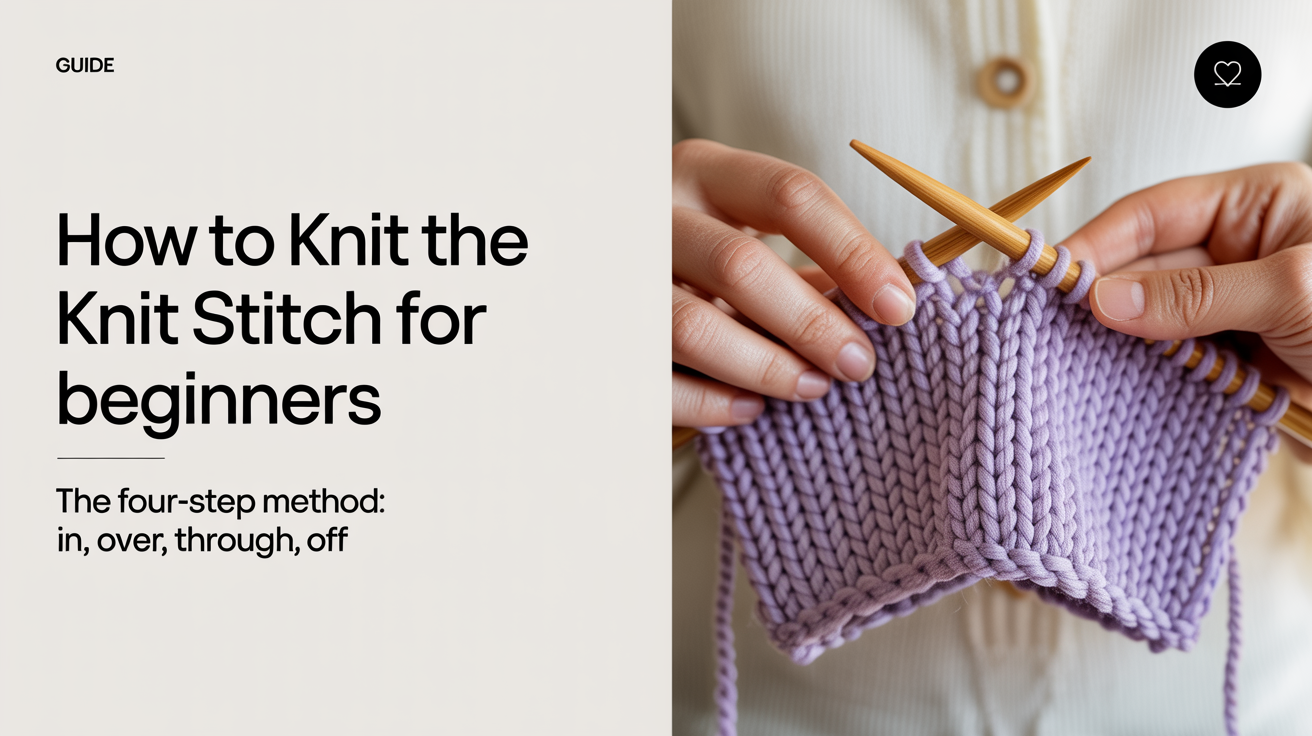
The knit stitch has four movements. Knitters often remember them as in, over, through, off. Here's how each one looks in practice.
Step-by-step: How to Knit One Stitch
- In, Insert the tip of your right needle into the first stitch on the left needle, going in from left to right, front to back. The right needle should form an X shape behind the left needle.
- Over, With your right hand, wrap the working yarn counterclockwise around the right needle tip (coming from the back, going over the top, and ending between the two needle tips).
- Through, Pull the right needle tip back through the stitch, bringing the loop of yarn with it toward you.
- Off, Slide the original stitch off the left needle. You now have one new knit stitch sitting on the right needle.
Repeat these four steps for every stitch on the left needle. When the left needle is empty and all the stitches have moved to the right, you've finished one row.
To start the next row, simply swap the needles: put the full needle in your left hand and the empty one in your right, making sure the yarn is at the back again.
What "English Style" (Throwing) Means
The steps above describe the English method, where you use your right hand to wrap the yarn around the needle. It's the most commonly taught style in North America and a solid place to start. If you later learn Continental style (where the left hand holds the yarn taut and the needle picks it), the four movements are the same; only the mechanics of step two change.
Understanding the Rhythm
After a few rows, you may notice your hands start to move on their own. That's normal. The knit stitch has a predictable rhythm, and muscle memory builds faster than most beginners expect.
A few things that help:
- Keep your tension even. Don't grip the yarn too tightly or let it go completely slack. Aim for a gentle, consistent pull.
- Let the stitches slide. If stitches feel stuck, your tension may be too tight. Try wrapping the yarn a little looser.
- Look at the fabric, not just the needles. Glancing at the fabric forming below the needles helps you recognize whether a stitch looks right before it's too late to fix it.
There's no correct speed. Speed comes naturally over time.
How Garter Stitch Forms
Here's something that surprises new knitters: you're already making a real fabric pattern.
When you knit every single row, the result is called garter stitch. You can recognize it by its horizontal ridges on both sides of the fabric. Each ridge equals two rows of knitting, because the purl bumps from one row nest into the knit stitches of the next.
Garter stitch is a great first fabric because it lies flat, stretches in both directions, and looks the same on both sides. No curling at the edges, no right side vs. wrong side. A 20-stitch garter swatch is a perfectly useful dishcloth or a first scarf.
Counting Rows in Garter Stitch
Count the ridges on your fabric and multiply by two. Five ridges means ten rows. This is the easiest way to track progress without a row counter.
You can also use a small stitch marker or a piece of contrast yarn looped around your needle every ten rows as a checkpoint.
Counting Your Stitches
Count your stitches at the end of every row until you're confident you're not accidentally adding or losing any. Hold the needle horizontally and count each loop. If you started with 20 stitches, you should end every row with 20. A stitch count that keeps growing is the clearest signal that something is going wrong.
Common Beginner Mistakes and How to Fix Them
Most knitting errors in the early stages come down to two habits. Both are easy to correct once you know what to look for.
Accidentally Adding Stitches
This is the most common mistake. Your stitch count grows over time, which means extra stitches are appearing where they shouldn't. Two things usually cause this:
Knitting into the gap. The gap between the first and second stitch on the left needle can look like a stitch to an untrained eye. If you insert your needle there, you create a new stitch. To avoid it, make sure your needle always goes into an actual loop sitting on the left needle, not into empty space below it.
Accidental yarn-overs. If the working yarn ends up in front of the work when you begin a new stitch, wrapping it around the needle pulls it through as an extra loop. Before inserting the needle for each stitch, check that the yarn is at the back. If it has drifted to the front, move it back between the needle tips before continuing.
Twisted Stitches
A twisted stitch is one that sits on the needle rotated 180 degrees from how it should. Instead of having the leading leg (the part of the loop closest to the needle tip) at the front, the trailing leg is at the front.
When you knit a twisted stitch the normal way, it tightens rather than sliding off cleanly, and the resulting stitch looks noticeably tighter and more closed than its neighbors.
How to spot it: a twisted stitch looks like it's crossing itself at the base. The loop will feel resistant when you try to work into it.
How to fix it: untwist it before you knit it. Slip the stitch off the left needle, rotate it back to the correct orientation, and put it back on. Then knit it normally. Alternatively, insert your needle into the back of the stitch instead of the front, which compensates for the twist.
Twisted stitches often happen during the cast-on row or when a stitch is dropped and picked back up. They're not a crisis; once you know what they look like, you'll catch them quickly.
Splitting the Yarn
Some yarns are made of multiple plies (strands twisted together). If your needle tip goes between the plies instead of through the whole stitch loop, you've split the yarn. The stitch becomes difficult to work and the fabric looks uneven.
Use a blunt-tipped needle for practice if this keeps happening. Wooden or bamboo needles also grip yarn more than metal ones, which can help when you're still building consistency.
What to Practice Next
Once you can reliably complete a row of knit stitches with a stable count, two things are worth adding to your repertoire.
The purl stitch. The purl is the mirror image of the knit stitch. Alternating knit rows and purl rows produces stockinette, the smooth V-patterned fabric used in most sweaters and hats. Here's a full guide to the purl stitch when you're ready.
Binding off. Every project needs an ending. Binding off (also called casting off) secures your stitches so they don't unravel when you take the work off the needles. This step-by-step bind-off guide shows you the standard method.
Between now and then, keep working on your garter swatch. A few inches of consistent fabric is real evidence of progress, and it's more instructive than any single row.
Frequently Asked Questions
How do I know if I'm doing the knit stitch correctly?
Your stitch should slide off the left needle easily and sit cleanly on the right needle without twisting. The fabric below will show a consistent texture. If stitches feel sticky or resist coming off, try loosening your tension slightly. If the fabric looks inconsistent with some stitches noticeably tighter or more closed, check for twisted stitches.
Why does my stitch count keep going up?
Almost always, the cause is knitting into the gap between stitches or accidentally doing a yarn-over by leaving the yarn at the front when starting a new stitch. Before inserting your needle, confirm you're going into an actual stitch loop and that the yarn is behind the work. Count stitches at the end of every row until the number stays stable.
What's the difference between garter stitch and stockinette?
Garter stitch is made by knitting every row. The result is a ridged fabric that looks the same on both sides and lies flat. Stockinette is made by alternating knit rows and purl rows. It has a smooth V side (the "right side") and a bumpy purl side (the "wrong side"), and it curls at the edges without a border.
My yarn keeps splitting when I try to knit. What am I doing wrong?
The needle tip is catching individual plies instead of going cleanly through the stitch loop. Slow down and aim the tip through the center of the loop. A blunt-tipped needle helps, as does moving to a tighter-spun or single-ply yarn while you're still learning.
How long does it take to get the hang of the knit stitch?
For most people, the movements start to feel natural within one or two practice sessions. The first row is often the slowest. By the third or fourth row, the rhythm usually begins to settle. Progress varies, and there's no timeline you should feel pressured to meet.
The knit stitch is genuinely simple once your hands know the four moves. Give yourself a full swatch to find your rhythm, count your stitches at the end of every row, and don't worry if the first few rows look rough. They always do. Keep going and you'll see the fabric even out.