Knitting Basics
How to Cast On in Knitting: A Step-by-Step Guide
Learn how to cast on in knitting with clear, beginner-friendly steps. Covers the long tail cast on, backward loop, and tips for keeping your tension loose.
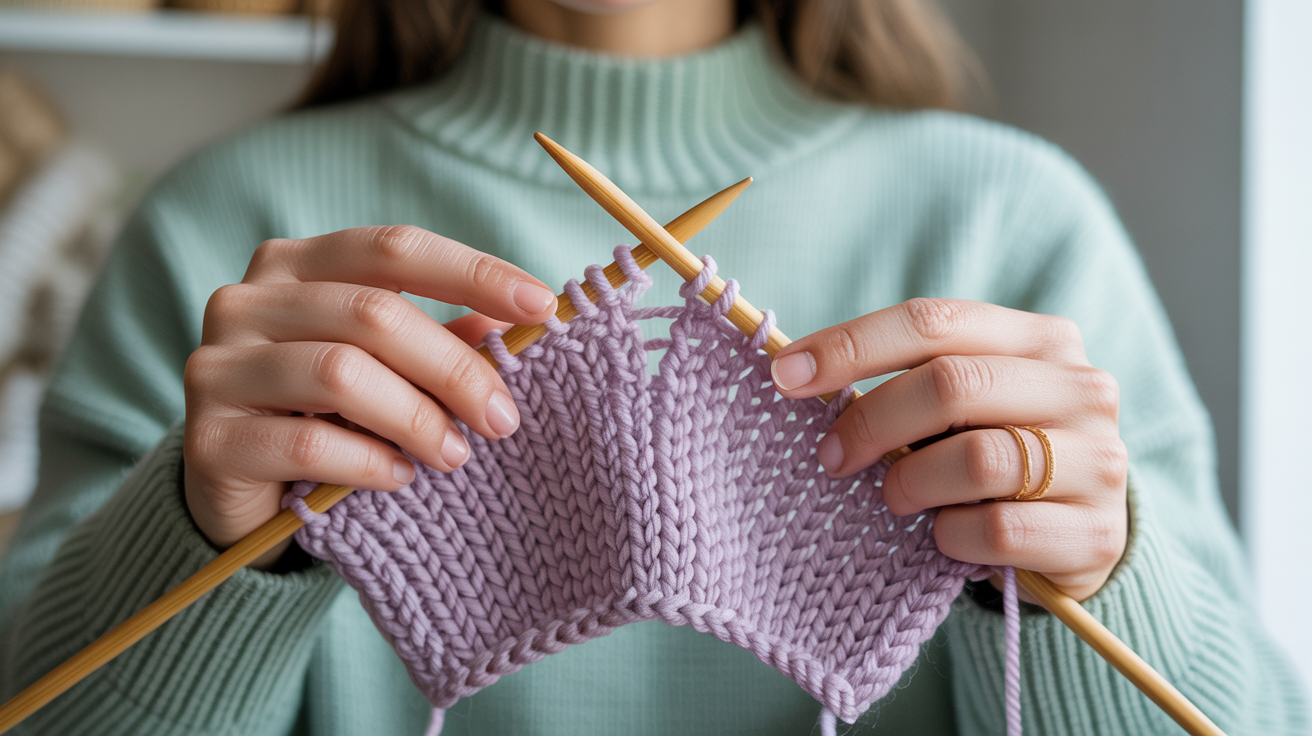
Every knitting project starts the same way: you need stitches on your needle before you can knit a single row. That's what casting on does. It creates a foundation row of loops that your needles can work into. Get this right, and everything else flows from it.
This guide covers the two most beginner-friendly methods, starting with the absolute easiest and moving up to the one you'll probably use for the rest of your knitting life. By the end, you'll have stitches on your needle and a clear picture of how to keep them neat and workable.
What You Need Before You Start
You only need two things: a pair of knitting needles and a ball of yarn. For practicing, any smooth, light-colored yarn (worsted weight is ideal) on a US size 7 or 8 needle makes it easy to see what you're doing. Avoid dark yarns or fuzzy fibers while you're learning. They hide your loops and make it hard to spot mistakes.
Have about an arm's length of yarn free before you begin. You'll use this tail for the long tail method described below.
How to Make a Slip Knot (Your Starting Point)
Almost every cast-on begins with a slip knot. This is the very first loop on your needle.
- Pull out about 12 inches of yarn from the ball. Hold the yarn so the tail hangs on the left and the working yarn (connected to the ball) continues to the right.
- Drape the yarn into a loop, crossing the working yarn over the tail end.
- Reach through the loop from below and pull a small bite of the working yarn up through it. This creates a new, smaller loop.
- Slide this new loop onto your needle. Pull both ends gently to snug it up. It should slide along the needle smoothly. If it's locked in place, loosen it a little.
That's your slip knot. It counts as your first cast-on stitch.
A note on tightness: a slip knot that's too tight will make the whole cast-on stiff and your first row will be a struggle. Aim for a loop that moves freely on the needle but doesn't slide off on its own.
Method 1: The Backward Loop Cast On (Easiest)
This is the fastest cast-on to learn. It's also called the "thumb cast on" or "e-wrap." It has a few limitations (the stitches can be floppy and hard to work into), but it's perfect for your very first attempt or for adding a few stitches mid-project.
Steps
- Make a slip knot and place it on your needle. Hold the needle in your right hand.
- Drape the working yarn over your left thumb from front to back, creating a loop.
- Insert the needle tip up through that thumb loop, from bottom to top.
- Slide your thumb out while keeping the loop on the needle. Tug the working yarn gently to snug the stitch.
- Repeat steps 2 through 4 until you have the number of stitches your pattern calls for.
Each loop you add is one stitch. Count them including your slip knot.
The main thing to watch: these loops tend to be very loose or very tight depending on your thumb tension. Practice keeping them consistent. Loose is better than tight here.
Method 2: The Long Tail Cast On (The One to Learn for Life)
This is the gold standard for beginners and experienced knitters alike. It creates a firm, stretchy, beautiful edge that's easy to knit into. It feels tricky for the first few minutes, then becomes automatic.
How Much Tail Do You Need?
This is the part that trips people up. The tail (the end not attached to the ball) gets used up as you cast on, so you need to leave enough before you start.
A reliable estimate: allow about 1 inch of tail per stitch, plus an extra 6 inches to tie in at the end. So for 30 stitches, leave roughly 36 inches (3 feet) of tail. If you're casting on 100 stitches with chunky yarn, add more.
Another approach: cast on 10 stitches, measure how much tail you used, then multiply. Unravel and start fresh with the right amount.
Running out of tail mid-cast-on is frustrating. It's always better to have too much than too little.
Setting Up Your Hand
- Make a slip knot and place it on your needle. Hold the needle in your right hand.
- Hold both strands of yarn in your left hand. The tail goes over your thumb; the working yarn (from the ball) goes over your index finger.
- Splay your remaining fingers out to hold the two strands taut. Your left hand should look like a slingshot.
Step-by-Step Long Tail Cast On
- With the needle pointing up, swing it down and scoop under the loop around your thumb, going from below.
- Swing the needle tip up and over the strand on your index finger, catching it and pulling it through the thumb loop.
- Slip your thumb out of its loop and gently tug the tail end to snug the new stitch onto the needle.
- Reposition your thumb under the tail strand to re-form the slingshot.
- Repeat steps 1 through 4 until you have the right number of stitches.
Each completed scoop-and-pull adds one stitch. Count your slip knot as stitch number one.
Keeping Your Tension Loose
A too-tight cast on is the single most common beginner mistake. When your stitches are crammed tightly on the needle, inserting the needle tip for row one becomes a fight. Your hands get sore, the fabric puckers at the edge, and sometimes stitches even split.
Two things help:
- Cast on over two needles held together. This forces each stitch to be big enough to work into comfortably. Pull one needle out before you start row one.
- Try to keep your thumb and finger loops relaxed. Think "snug but slideable," not "clamped."
If you notice your cast-on edge is visibly tighter than the rest of your knitting, this is almost certainly the cause. Ripping back and recasting with looser tension will save you grief on every single row.
Comparing Common Cast-On Methods
Different projects call for different cast-ons. Here's a quick look at the main options:
| Method | Difficulty | Best For | Edge Feel |
|---|---|---|---|
| Backward Loop | Easiest | Quick starts, adding mid-project stitches | Loose, stretchy |
| Long Tail | Easy-Medium | Most projects, especially scarves and hats | Firm, stretchy, tidy |
| Knitted Cast On | Easy-Medium | When you need a sturdy edge with no tail math | Firm, less stretchy |
| Cable Cast On | Medium | Buttonholes, adding stitches at edges | Very firm, structured |
For your first project, the long tail cast on handles almost anything. The knitted cast on is worth knowing as a backup when you've run out of tail.
The Knitted Cast On (Backup Method)
This one uses both needles and builds stitches by literally knitting them onto the left needle. You don't need to estimate a tail. If you haven't learned the knit stitch yet, come back to this after reading our guide to how to knit the knit stitch for beginners.
- Make a slip knot on your left needle.
- Insert the right needle into the slip knot as if to knit.
- Wrap the yarn around the right needle and pull a loop through.
- Instead of sliding the old stitch off, transfer the new loop onto the left needle. You now have two stitches.
- Insert the right needle into the last stitch on the left needle and repeat.
It's slower than the long tail method, but it uses only the working yarn and gives you a solid edge.
How to Count Your Stitches
After casting on, count your stitches before you start knitting. It's easy to lose count mid-cast-on, and discovering a mistake on row five is more annoying than catching it immediately.
Look at each loop on the needle. Count from right to left (or left to right, consistently). The slip knot counts as stitch one. If your pattern says cast on 20 stitches and you have 21, just slip the extra one off.
Place a stitch marker every 10 stitches if you're casting on a large number. This makes recounting much faster.
What Comes After Casting On
Once your stitches are on the needle, you're ready to knit your first row. Hold the needle with the cast-on stitches in your left hand and your empty needle in your right. The working yarn (attached to the ball) should hang from the last stitch on the left needle.
From here, you'll work into each stitch using the knit stitch or the purl stitch. Most beginner patterns start with a few rows of garter stitch (knit every row) because it requires only one technique and lies flat naturally.
Once you've worked through your project, you'll need to close off the stitches so they don't unravel. That process is called binding off, and you can find a full walkthrough in our guide to how to bind off in knitting.
If you're curious about the purl stitch (the other foundational technique), head over to how to purl: the purl stitch explained once you've got a few rows of knitting under your belt.
Practice Makes the Difference
Casting on is one of those things that feels awkward for the first 10 minutes and then suddenly clicks. Most knitters remember the exact moment it stopped feeling like a puzzle. If you find yourself dropping the tail or losing the slingshot position, slow down and reset your hand before each stitch.
Cast on 20 stitches, knit a few rows, and bind them off. Then do it again. By the third time, your hands will start to remember the motion on their own.
Frequently Asked Questions
How many stitches should I cast on as a beginner?
Start with 20 to 30 stitches for practice swatches. This gives you enough stitches to feel the rhythm without taking forever. For your first real project, a dishcloth or scarf typically calls for 20 to 40 stitches on a worsted-weight yarn, which is very manageable.
What if I run out of tail during the long tail cast on?
You have two options. You can unravel everything and start over with a longer tail (the most reliable fix). Or you can switch to the knitted cast on for the remaining stitches by simply continuing with the working yarn only. The edge will look slightly different, but it's functional.
Why is my cast-on edge so tight?
Almost always this comes down to tension. Try casting on over two needles held together, or consciously relax your grip after placing each stitch. Some knitters also size up one needle for the cast on only (cast on with a US 9, knit the body with a US 7), then switch back for row one.
Does it matter which method I use?
For most beginner projects, no. The long tail cast on is a safe default for hats, scarves, dishcloths, and simple blanket squares. Patterns that require a specific cast on (such as a stretchy ribbing cast on for socks) will say so explicitly.
Can I use the backward loop cast on for a whole project?
You can, but it's not ideal. Backward loop stitches are harder to knit into cleanly because they tend to twist and lie flat against the needle. For anything longer than a few added stitches, the long tail or knitted cast on will make your first row much easier.