Crochet Basics
How to Double Crochet for Beginners
Learn how to double crochet step by step. This beginner guide covers the dc stitch, turning chains, and counting rows so you can start crocheting faster.
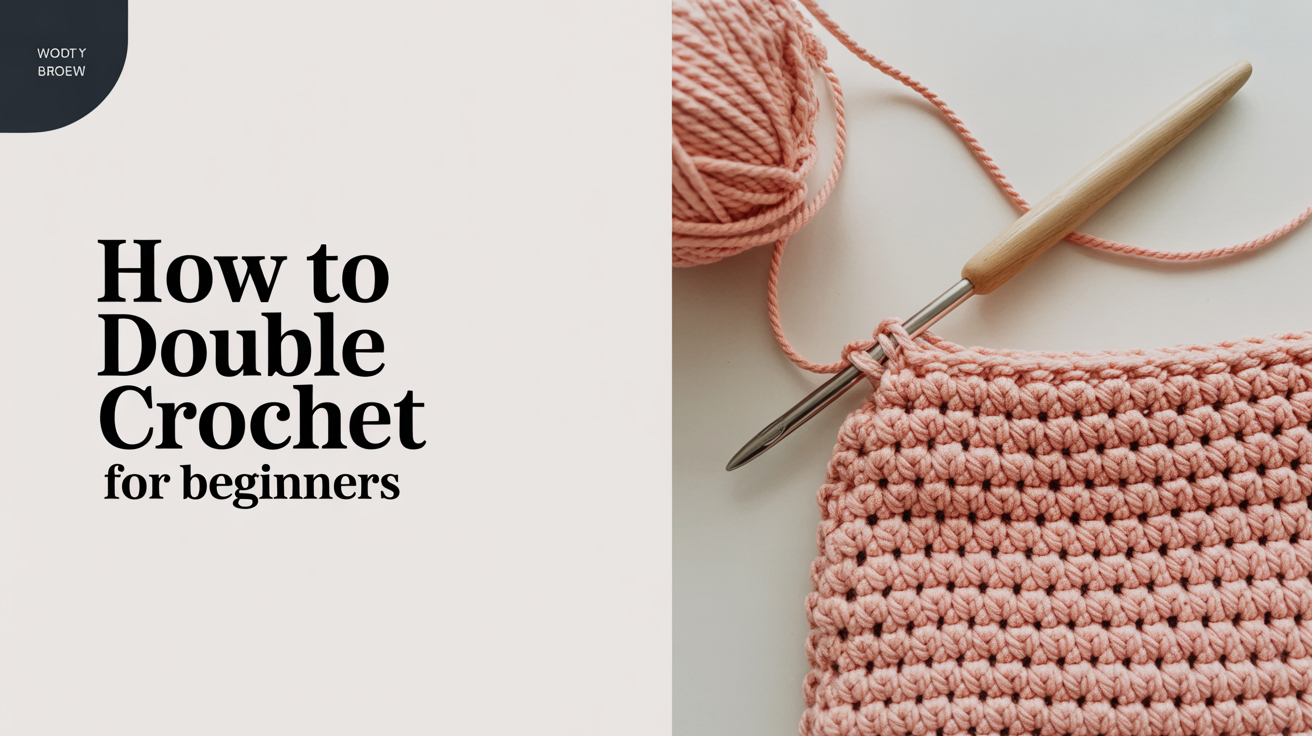
The double crochet stitch is where most crochet projects really start to feel exciting. It's roughly twice as tall as a single crochet, so your fabric grows quickly and the resulting texture is open, slightly drapey, and very satisfying to work. Once you can do a double crochet (abbreviated dc), scarves, dishcloths, and blanket squares are all within reach.
If you haven't yet learned to make a slip knot and foundation chain, start with that guide first. And if single crochet is still new to you, our single crochet tutorial is a good warmup before tackling this stitch. Already comfortable with both? Great. Let's get into it.
What Makes the Double Crochet Different
The key difference between single crochet (sc) and double crochet (dc) is an extra yarn-over at the start. That one move adds height. Where a single crochet stitch is short and dense, a double crochet stands taller, which means each row covers more ground.
A quick note on terminology: US double crochet = UK treble crochet. Patterns specify which system they use, but if you ever see a US pattern say "dc" and a UK pattern say "tr," they're describing the same stitch. Throughout this guide we use US terms.
What You Need to Get Started
- A skein of worsted-weight yarn (medium weight, label says "4")
- A 5 mm (H/8) crochet hook
- Scissors and a yarn needle for finishing
That's it. Cast on a foundation chain of about 16 stitches so you have a comfortable practice swatch.
How to Double Crochet, Step by Step
Start with your foundation chain. Before inserting your hook into any stitch, you need to work a turning chain of 3 chains (abbreviated ch 3). This chain-3 acts as your first double crochet of the row, giving the stitch enough height to sit level with the rest of the row.
After the turning chain, skip the very first stitch directly below (because the ch-3 already fills that spot) and insert your hook into the second stitch.
Here are the steps for every double crochet stitch:
- Yarn over (YO). With the hook in your right hand (or left, if you're left-handed), wrap the yarn over the hook from back to front before you insert it anywhere. You now have two loops on your hook.
- Insert the hook. Push the hook through the stitch from front to back. You now have three loops on the hook.
- Yarn over and pull up a loop. Wrap the yarn over the hook again and pull it through the stitch. You now have three loops on your hook.
- Yarn over and pull through 2 loops. Wrap the yarn over once more and draw it through the first two loops on the hook. Two loops remain.
- Yarn over and pull through the last 2 loops. One final wrap, pull through both remaining loops. One loop stays on the hook. That's one completed double crochet.
Repeat steps 1 through 5 in each stitch across the row. When you reach the end, look at where the turning chain sits. That ch-3 at the start of the row counts as a stitch, so you should work your last dc of the next row into the top of that chain.
A Tip for Keeping Your Tension Even
New crocheters often grip the yarn too tightly or too loosely. If your stitches are hard to insert the hook into, ease up a little. If the fabric looks loose and loopy, try tensioning the yarn a bit more through your fingers. A few practice rows and your hands will find their own rhythm.
Counting Your Stitches
Counting is one of those habits that saves a lot of frustration. At the end of each row, count your stitches before you turn.
For a foundation chain of 16:
- Your usable stitches are 16 (the chain itself) minus the turning chain you just added.
- After your first dc row, you should have 16 stitches total, counting the ch-3 at the beginning as stitch number one.
If your count is off, it's almost always one of two things: you either worked into the very first stitch when you should have skipped it (giving you one too many), or you forgot to work into the top of the turning chain at the row's end (giving you one too few). Both are easy fixes once you know to look for them.
Marking the Turning Chain
A stitch marker is helpful here. When you complete your ch-3 at the start of a row, clip a marker to the top chain. When you arrive at that end of the next row, the marker shows you exactly where to put your last stitch.
Working Multiple Rows
Turn your work at the end of each row (rotate the whole piece), make your ch-3, skip the first stitch, and work dc across. The ch-3 always goes at the start, and the last stitch always goes into the top of the previous row's ch-3.
After three or four rows, you'll see a neat, even fabric developing. Double crochet creates a slightly open grid of stitches, which is part of why it works so well for blankets, market bags, and lightweight shawls.
How Double Crochet Compares to Single Crochet
Side by side, dc rows are visibly taller. A 10-row dc swatch covers about twice the length of a 10-row sc swatch made with the same yarn and hook. If a pattern is taking forever to grow, switching from sc to dc (where the design permits) is a common fix.
The trade-off is that dc fabric has slightly more drape and a bit less structure than sc. For dense, firm pieces like pot holders, sc is usually the better choice. For anything you want soft and flowy, dc shines.
Common Mistakes and How to Fix Them
Accidentally adding stitches each row. This usually means you worked into the first stitch instead of skipping it. Remember: the ch-3 at the start fills that slot, so skip it.
Losing stitches each row. The most common cause is missing the top of the turning chain at the end of the previous row. Stitch markers fix this reliably.
Tight, hard-to-work stitches. Relax your grip. Try pulling your loops up a little taller when you yarn over — slightly looser loops are much easier to work through.
Uneven height across the row. This typically evens out with practice. Make sure each dc's starting yarn-over goes over the hook before the hook enters the stitch. Skipping that first yarn-over produces a shorter, mishapen stitch.
If you're just getting started with crochet and want a full orientation to holding the hook and yarn, our absolute beginner's guide covers all of that from scratch.
Frequently Asked Questions
Why does my double crochet look shorter than the ones in photos?
You may be skipping the initial yarn-over before inserting your hook. That first yarn-over is what gives the stitch its height. Without it you're making something closer to a single crochet. Go back through the five steps above and make sure step one (yarn over before inserting) happens every time.
Does the turning chain of 3 always count as a stitch?
In most patterns, yes. The ch-3 at the start of a dc row is treated as the first dc of that row, which is why you skip the stitch directly below it. Some modern patterns are written so the ch-3 does NOT count (they use a "chainless" start instead), and they'll say so explicitly. When in doubt, check the pattern notes.
What's the difference between US and UK crochet terms for this stitch?
In US terminology the stitch is called a double crochet (dc). UK patterns call the same stitch a treble crochet (tr). Confusingly, the UK term "double crochet" refers to what Americans call a single crochet. Always check which system a pattern uses before you start.
Can I use double crochet for a beginner project right away?
Yes. A simple dc rectangle — just rows of double crochet back and forth — makes a great first scarf or dishcloth. Keep the stitch count the same every row and you'll have a clean, usable project without needing to learn anything else yet.
My last stitch of the row doesn't look right. What's happening?
The last dc of each row should go into the top of the ch-3 from the row below. That chain has three loops at the top; insert your hook under the top two loops, just as you would for any regular stitch. If you're working into something that feels odd or buried, you're probably in the wrong spot. Look for the chain that sits at the same height as all the other stitches in the row.