Crochet Basics
How to Single Crochet for Beginners
Learn the single crochet stitch step by step. This beginner guide covers hook placement, yarn over, pulling up a loop, and keeping tidy edges.
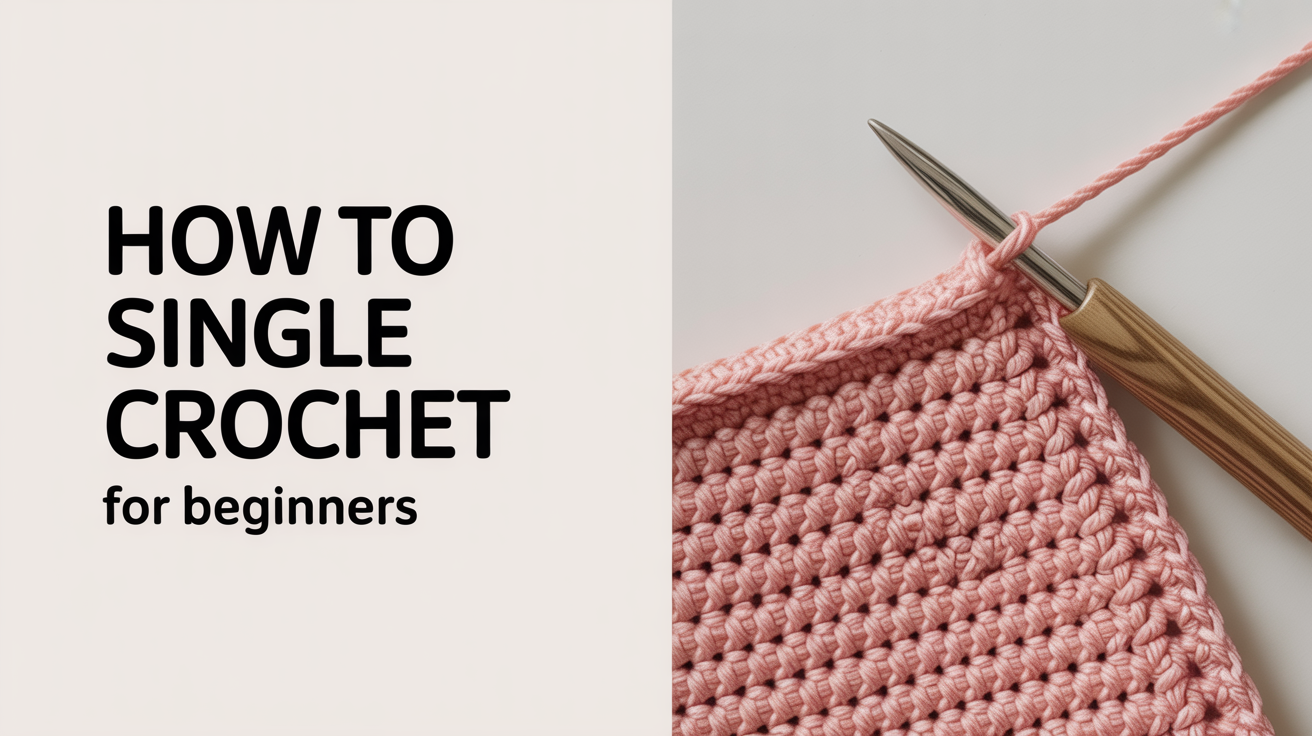
The single crochet stitch is the shortest stitch in US crochet terms, and it's the first one most beginners learn. Once you can do it consistently, you can make dishcloths, bags, scarves, and hundreds of other projects. This guide walks you through every part of the stitch, including where to insert your hook on the foundation chain and how to keep your edges straight as you work row after row.
A quick terminology note before we start: this guide uses US crochet terms. In UK patterns, "single crochet" is called "double crochet" (dc). If you're following a UK pattern and it says dc, it means what this guide calls sc. Always check which terminology a pattern uses at the top.
What You Need Before You Start
You don't need much. For practicing the single crochet stitch, grab:
- A smooth, light-colored yarn in a worsted weight (the label may say "4" or "medium")
- A crochet hook sized to match, a 5 mm (US H/8) is a good all-around starter
- Scissors
- A yarn needle for weaving in ends later
Light colors make it much easier to see your stitches. Dark yarn hides the structure, which makes counting harder until you have more experience.
If you haven't made a slip knot or foundation chain yet, start with the guide on how to make a slip knot and foundation chain and come back here once you have a chain of about 15 to 20 stitches. That chain is your foundation row, the base on which your single crochet stitches will sit.
Understanding the Foundation Chain
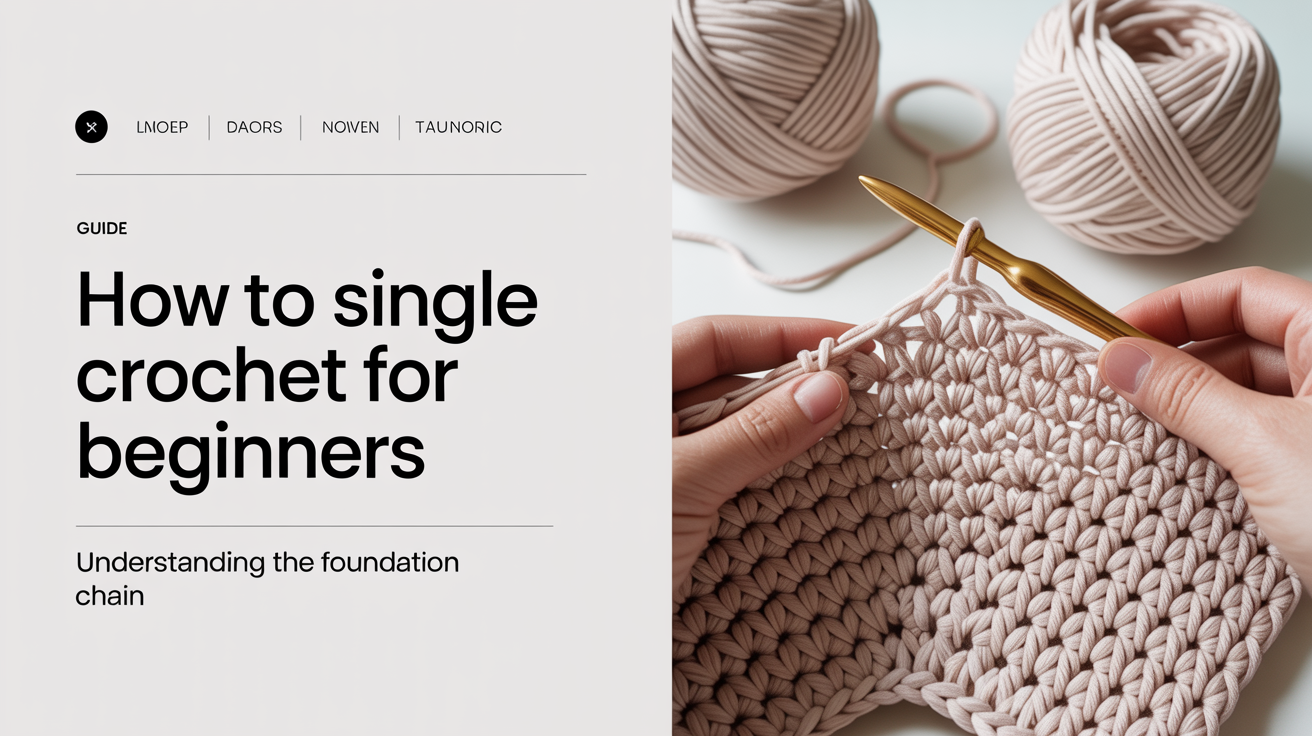
Hold your foundation chain with the front side facing you. Each chain stitch has a little "V" shape on the front. Flip the chain over and you'll also see a small bump (a back loop) running along the spine of the chain.
For your first row of single crochet, you'll skip the first chain closest to your hook and insert into the second chain from the hook. That skipped chain acts as a turning chain, it gives your row enough height to sit straight. Single crochet has the shortest height of any stitch, so it only needs one turning chain.
Identifying the Right Hole
When you look at the front of the chain, you can insert your hook through:
- Both loops of the V (most common for beginners, creates a tidy edge)
- The back bump only (gives a neat, defined bottom edge, worth trying once you're comfortable)
For now, go through both loops of the V. That's the standard starting point.
How to Single Crochet: Step by Step
Here's the full stitch from start to finish. Each step is small, so take them one at a time.
- Insert your hook into the second chain from the hook (skip the chain sitting right against the hook). Push the hook through the stitch from front to back.
- Yarn over (abbreviated YO): wrap the working yarn over your hook from back to front. The yarn goes counterclockwise around the hook shaft.
- Pull up a loop: draw the yarn back through the chain stitch. You now have two loops sitting on your hook.
- Yarn over again: wrap the working yarn over the hook a second time, the same way as before.
- Pull through both loops: draw the yarn through both loops on the hook in one smooth motion. One loop remains on the hook. That's one complete single crochet stitch (sc).
Repeat steps 1 through 5 in each remaining chain stitch across the row. When you reach the last chain, you'll have worked one sc into every chain except the first one you skipped.
Common Mistakes at This Stage
A loose grip makes the yarn over slip. Hold the yarn with gentle tension by draping it over your index finger and controlling it with your other fingers, not squeezing, just guiding. If your loops feel too tight to pull through, your tension is too tight. Try loosening your grip on both the hook and the yarn.
The Turning Chain and Starting a Second Row
At the end of the first row, you need to turn your work so you can crochet back across. Here's the sequence:
- Make one chain stitch (ch 1). This is the turning chain for single crochet.
- Rotate your work so the last stitch you made is now on the right (if you're right-handed).
- Do not work into the turning chain itself. This is the most common mistake. The turning chain for sc does NOT count as a stitch, skip it entirely.
- Insert your hook into the first real stitch of the row below (the one directly below where your hook is after turning).
- Work a single crochet stitch (steps 1–5 from above). Continue across the row.
That turning chain rule is different from taller stitches like double crochet, where the turning chain does count. For single crochet, always go straight into the first stitch.
Keeping a Straight Edge and Counting Stitches
Beginners often end up with rows that taper or flare. Both problems come from accidentally adding or losing stitches at the edges.
The Last Stitch Problem
The stitch at the end of each row is the hardest to see. It tends to hide against the turning chain from the previous row. After you work across and reach what feels like the end, look at the last stitch carefully. You should see two loops sitting at the top, one slightly to the front and one slightly to the back. Insert your hook under both of those loops and work your sc. If you skip it, your piece gets narrower row by row.
Counting Your Stitches
Count your stitches at the end of every row, especially while learning. If you started with 15 chains, you should have 14 single crochet stitches at the end of your first row (one sc for each chain except the skipped first). Every row after that should also have 14 stitches. If you count 13, you skipped the last stitch. If you count 15, you accidentally worked into the turning chain.
A stitch marker clipped into the first stitch of each row helps a lot. It anchors your count and marks where the row starts, so you always know exactly where to stop at the end.
Keeping Even Tension
If some stitches look tighter or looser than others, that's tension variation, totally normal in the first few projects. It evens out with practice. Try to keep your non-hook hand moving along the work so you're always holding the yarn close to where you're stitching, rather than letting a long tail of working yarn dangle loose.
Building Your First Swatch
Once you're comfortable with the sc stitch and your edges are staying straight, make a small swatch: chain 16, then work single crochet across (14 stitches), turn, chain 1, and repeat until you have about 10 rows. Count your stitches at the end of each row.
A swatch isn't just a practice piece, it also shows you your gauge (how many stitches and rows fit in a given measurement). Pattern instructions often list a gauge like "14 sc = 4 inches." Your swatch tells you if you need to adjust your hook size to match.
For a next step, the how to crochet for absolute beginners guide covers choosing your first project, reading a pattern, and finishing techniques. And once the single crochet feels natural, try the how to double crochet for beginners guide, the double crochet (dc) is the most-used stitch in crochet patterns and works up about twice as fast.
Frequently Asked Questions
Why do I insert into the second chain from the hook, not the first?
The first chain acts as the turning chain, it gives the row enough height to look even. If you worked into the very first chain, the edge of your piece would pull inward. So you skip it and start in the second chain. That skipped chain is built into the pattern; it's not a mistake.
My stitch count keeps changing. What am I doing wrong?
Usually it's one of two things. Either you're accidentally crocheting into the turning chain at the start of a row (adds a stitch) or you're missing the last stitch at the end of a row (loses a stitch). Count after every row and fix the habit early. Stitch markers on the first and last stitch of each row make both easier to spot.
How do I know if my tension is right?
Your stitches should be snug but not so tight that the hook struggles to go through them. If pulling a loop through feels like a battle, loosen up. If your stitches look floppy and uneven, try holding the yarn with a little more tension. There's no perfect rule, it's a feel you develop over a few projects.
What does "sc2tog" mean in a pattern?
It's a decrease: single crochet two stitches together. You insert your hook into the first stitch, pull up a loop, then insert into the next stitch, pull up another loop, three loops on the hook, then yarn over and pull through all three. The result is one stitch instead of two, which makes the piece narrower. You'll use it in amigurumi and shaping.
Can I use any yarn for the single crochet stitch?
Yes. The stitch works in any yarn. For learning, stick to smooth worsted weight, it's easy to see each stitch and forgiving of small tension variations. Once you're comfortable, you can try thinner yarns (with a smaller hook) or bulkier yarn (with a larger hook). Avoid fuzzy or textured yarn to start; it obscures the stitches and makes counting harder.