Crochet Basics
How to Fasten Off and Weave in Ends in Crochet
Learn how to fasten off crochet and weave in ends so your finished project stays neat, secure, and survives the wash.
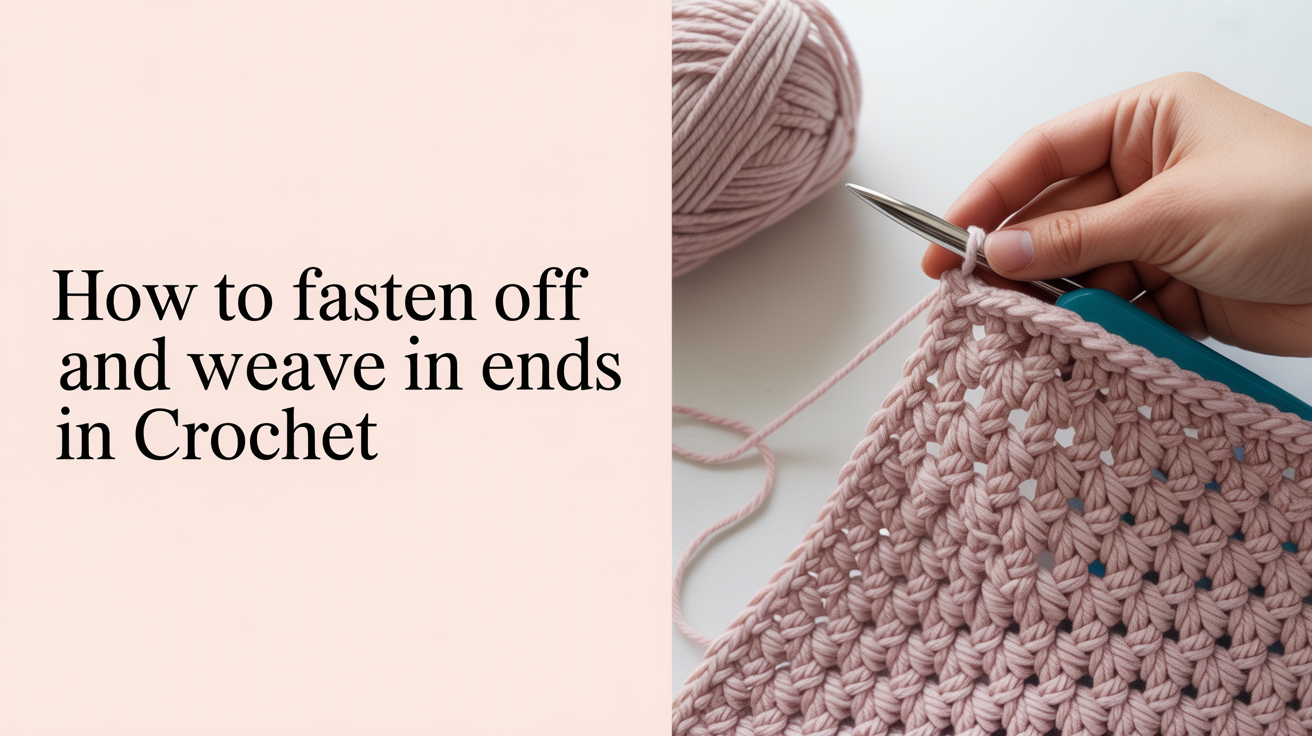
Getting to the last stitch of a crochet project feels like a small victory. Then you look at the loose yarn tail hanging off the edge and wonder what to do next. Fastening off and weaving in ends are the two finishing steps that turn a working piece into a finished object, and both are much simpler than they look.
This guide walks through how to end a crochet project cleanly, how to weave in ends so they do not come loose after washing, and answers the questions beginners ask most often about finishing crochet.
What Fastening Off Means
Fastening off is the step that locks your last stitch so the whole piece cannot unravel. When you work in crochet, the live loop on your hook is held in place only by tension. If you simply pull the hook out and walk away, that loop will come undone and the fabric will unravel back. Fastening off creates a secure knot at the end of that loop.
You will also need to fasten off every time you join a new color or cut the yarn mid-project, so it is worth learning once and knowing it applies in many situations. If you are still building your foundational crochet knowledge, the guide on learning crochet from scratch covers the full picture from setup through your first rows.
How to Fasten Off in Crochet
You need only scissors and your hook for this step. Leave a tail of about 6 inches (15 cm) when you cut the yarn. Shorter tails are harder to weave in without slipping out, and longer ones are wasteful but not harmful.
Step-by-step instructions
- Work your last stitch as normal so you have one loop left on the hook.
- Cut the yarn, leaving at least a 6-inch tail.
- Yarn over with the tail, meaning pull the tail through the loop on your hook. You will have a small loop forming.
- Pull the tail all the way through that loop until it is snug. Do not yank hard, just firm enough to close the knot.
- Give the tail a gentle tug to make sure the knot is secure. It should not slide open.
That is it. The stitch is locked. The yarn tail now needs to be hidden inside the fabric, which is what weaving in does.
If your project begins with a foundation chain and you have a starting tail there as well, that tail gets woven in separately using the same process below. For a refresher on the foundation chain itself, see the guide on making a slip knot and foundation chain.
How to Weave in Ends with a Tapestry Needle
A tapestry needle (also called a yarn needle or darning needle) has a blunt tip and a large eye wide enough for yarn. You can find them at any craft store for very little money, and they usually come in a small pack of two or three.
What you need
- Tapestry needle
- Scissors
Step-by-step instructions
- Thread the yarn tail through the eye of the tapestry needle.
- Turn your work to the wrong side if the project has one. Most woven ends live on the back where they are not visible.
- Insert the needle under the back loops or posts of nearby stitches, running it in one direction for about an inch (2.5 cm).
- Change direction and run back the opposite way for another inch. Doubling back is the key step that locks the end in place. Going only in one direction leaves it free to migrate over time.
- Change direction once more and run a short distance back the first way.
- Pull the needle through so the tail is fully hidden in the fabric. Do not pull so tight that the fabric puckers.
- Trim the remaining tail close to the fabric, leaving about 2 mm. Trimming completely flush can cause the tip to pop through later.
For stretchy fabric, like anything worked in single crochet (sc), weave in a diagonal path rather than straight lines. The diagonal follows the natural movement of the stitch and is less likely to work loose when the fabric stretches. You can get more practice with the sc stitch in the guide to single crochet for beginners.
Tips to Keep Ends from Coming Loose After Washing
Washing and wearing are when woven ends get tested. Here is what helps them stay put.
Weave in two directions. Straight-line weaving can work free under repeated stress. The back-and-forth method above creates friction in both directions and holds much more reliably.
Match the weaving path to your stitch. In solid crochet fabric, weave under complete stitches or posts rather than just the surface fibers. Surface weaving pulls free more easily.
Use a split path for slippery yarn. Acrylic and cotton yarns are smoother than wool and more prone to slipping. Split the plies of the yarn when you insert the needle, so the tail locks around individual strands of the fabric rather than sitting alongside them.
Leave a slightly longer tail when starting. If you are working with a notoriously slippery yarn, cut 8 inches (20 cm) instead of 6. The extra length lets you make more passes.
Block before trimming. When a project will be wet-blocked, block it first and trim your tails after it dries. Blocking shifts the stitches, and an end trimmed before blocking can pull back and poke through the front.
Avoid tying knots inside the fabric. It is tempting to tie a small knot at the end of the tail before weaving, but knots create a small lump inside the work, can loosen over time, and are noticeable in lighter or thinner fabrics.
Frequently Asked Questions
Do I have to use a tapestry needle, or can I just pull the tail through loops with my hook?
You can use your crochet hook in a pinch, but a tapestry needle gives better control. A hook tends to split the yarn of nearby stitches or catch them unevenly. The needle's blunt tip glides under whole stitches cleanly, which is why most crocheters keep a few needles in their project bag.
How long should I leave my yarn tail before weaving in?
About 6 inches (15 cm) is the standard starting point for most projects and yarns. Very slippery yarns or open-stitch fabrics benefit from a slightly longer tail, around 8 inches (20 cm), so you have more length to make additional passes.
Can I just tie a knot to finish instead of weaving in?
A single knot at the base of the last stitch is not a reliable finish on its own. Knots loosen under washing and wear, especially with smooth or synthetic yarns. Weaving in locks the tail through friction across multiple stitches, which holds far better long-term. You can add a tiny knot at the very end of your woven tail as an extra precaution, but the weaving itself should be the main method.
What if my end pokes out through the front of my work?
This usually happens when the tail is woven too close to the surface rather than into the body of the fabric. Thread it back onto the needle, gently pull it through to the wrong side, and re-weave it deeper into the stitch posts. Trimming to 2 mm rather than flush also helps the tip stay hidden.
Does it matter which direction I start weaving?
Direction matters less than changing direction. The back-and-forth action is what holds the end in place. That said, for consistent results many crocheters weave diagonally along the same angle that stitches naturally sit. Try both on a small swatch and see what looks cleanest in your particular yarn and stitch pattern.