Knitting Basics
How to Fix a Dropped Stitch in Knitting
Learn how to fix a dropped stitch in knitting step by step. Pick up dropped stitches with or without a crochet hook and get back on track fast.
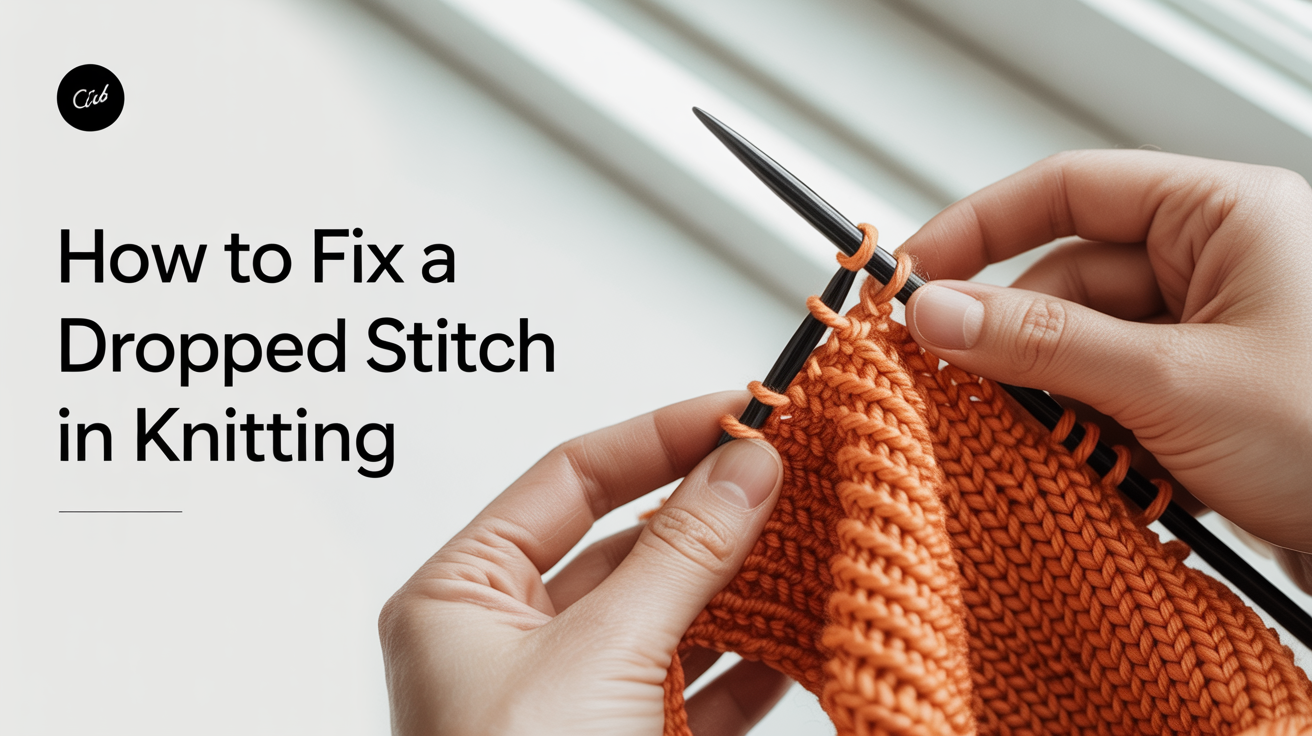
Dropped a stitch? Take a breath. Picking up a dropped stitch is one of the most useful skills you can learn as a beginner, and once you have done it a couple of times it becomes almost automatic. The key is to catch it before the stitch has unraveled down several rows.
This guide walks you through what a dropped stitch looks like, what tools you will need, and exactly how to ladder a stitch back up using a crochet hook. There are also tips for knit fabric and purl fabric, since the method is slightly different for each.
At a Glance
- A dropped stitch shows up as a gap on the needle with a horizontal "ladder" strand running down the fabric below it.
- A crochet hook one to two sizes smaller than your knitting needle is the right tool for the repair.
- Knit-side and purl-side repairs use the same logic in opposite directions: hook the ladder, pull it through the loop, repeat up to the needle.
- Count stitches every few rows so you catch a drop before it ladders down more than a row or two.
- The repaired stitch always goes back on the left needle with its leading edge facing forward, the same as every other stitch.
- A dropped stitch and a yarn over look similar but are opposites: one is a hole you didn't want, the other is a hole you made on purpose.
What a Dropped Stitch Looks Like
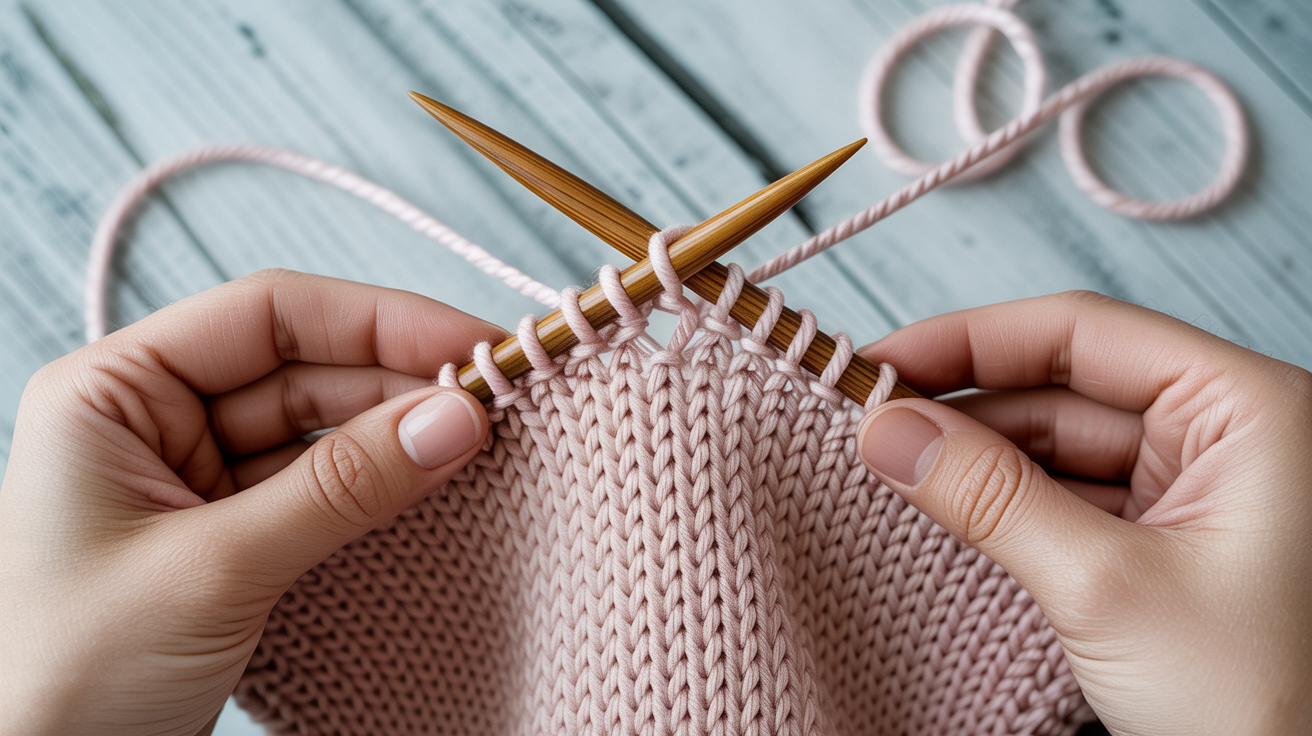
A dropped stitch is a loop that has slipped off your needle without being worked. On the needle it shows up as a gap where a stitch should be. Below the gap you will see a horizontal strand of yarn, called a ladder, running across the fabric. If the stitch has only dropped one row, there is one ladder. If it has dropped several rows, you will see several ladders stacked up.
The longer you knit after dropping a stitch, the more ladders appear and the harder the repair becomes. A stitch dropped for 2 rows takes seconds to fix; the same stitch left for 20 rows can mean unpicking a sizeable section of fabric to reach it safely. Check your needle every few rows to count your stitches so you catch problems early. If you need a refresher on how stitches form in the first place, the guide on how to knit the knit stitch for beginners covers the basics clearly, and knowing what a properly formed knit V versus a purl bump looks like makes it much easier to spot when one has gone missing.
Tools You Will Need
You do not need much to fix a dropped stitch in knitting:
- Crochet hook in a size close to your knitting needle size (a hook one or two sizes smaller than your needle works well for most yarn weights)
- Knitting needle to hold live stitches while you work
- Stitch marker (optional) to mark the spot so you can find it easily
- Good lighting so you can see each horizontal ladder clearly
| Yarn weight (per the Craft Yarn Council system) | Typical knitting needle | Crochet hook for repair |
|---|---|---|
| Fingering / Sock (1) | US 1–3 (2.25–3.25 mm) | US B/1–D/3 (2.25–3.25 mm) |
| DK (3) | US 5–7 (3.75–4.5 mm) | US E/4–7 (3.5–4.5 mm) |
| Worsted (4) | US 7–9 (4.5–5.5 mm) | US 7–I/9 (4.5–5.5 mm) |
| Bulky (5) | US 9–11 (5.5–8 mm) | US I/9–K/10.5 (5.5–6.5 mm) |
A crochet hook is the standard tool for this repair because the hook grabs the ladder strand and pulls it through the loop cleanly. If you do not have one, a spare knitting needle can work in a pinch, but it takes longer.
How to Fix a Dropped Knit Stitch
This method works when the dropped stitch is on the knit side of the fabric. Work with the knit side of your piece facing you.
Step 1: Locate the dropped stitch
Find the loose loop on your needle or on the fabric below the needle. Make sure you can see all the ladder strands above it clearly.
Step 2: Insert the crochet hook
Push the crochet hook through the dropped loop from front to back. The hook end should be pointing upward toward the ladder strands.
Step 3: Catch the lowest ladder
The lowest ladder is the horizontal strand directly above the dropped loop. Hook the crochet hook under that strand.
Step 4: Pull the strand through the loop
Draw the ladder strand through the dropped loop by pulling the hook toward you. You now have a new loop on the hook. This is the repaired stitch for that row.
Step 5: Repeat for each ladder
Continue catching the next ladder up and pulling it through the current loop, working one row at a time, until you reach the top. The repaired stitch should sit at the level of your working needle.
Step 6: Place the repaired stitch back on the needle
Slip the loop from the crochet hook onto your left-hand knitting needle. Make sure the leading edge of the loop (the side that faces you) sits in front of the needle, the same way your other stitches do.
How to Fix a Dropped Purl Stitch
Fixing a dropped purl stitch follows the same logic, but you work with the purl side facing you. The ladder strand sits in front of the loop instead of behind it.
Step 1: Turn the work or identify the purl side
Hold the fabric so the purl side (the bumpy side) faces you. The dropped loop should be visible with the ladders in front of it.
Step 2: Insert the hook from back to front
Push the crochet hook through the dropped loop from back to front so the hook end faces downward toward you.
Step 3: Catch the ladder from the front
Hook the lowest ladder strand from the front side of the loop.
Step 4: Pull through
Pull the ladder strand through the dropped loop away from you. You have now purled one row of the repair.
Step 5: Work up through the remaining ladders
Repeat with each ladder in turn until you reach the needle level, then place the repaired stitch back on the left-hand needle the same way you would for a knit stitch repair.
If you are still getting comfortable with how purl stitches form, the guide on how to purl the purl stitch explained is a good reference before you tackle the repair.
Catching a Dropped Stitch Before It Unravels
Sometimes you will spot a dropped stitch right away, before it has unraveled at all. In that case the repair is even simpler.
If the stitch is still in the same row you are working, just slip it back onto the left-hand needle and knit or purl it as normal. Make sure the loop is oriented correctly (leading edge in front of the needle) before you work it so you do not end up with a twisted stitch.
If you notice the gap but the stitch is sitting safely on the needle at a weird angle, correct the orientation first. A stitch twisted on the needle will knit up tighter than its neighbors and leave a small pucker in the fabric.
When to Ladder Up and When to Rip Back Instead
Laddering a stitch back up with a crochet hook is the right call most of the time, but it isn't always the fastest or safest fix. Use this rule of thumb:
- 1 to 6 rows dropped, plain stockinette or garter: ladder it up. This is the classic use case for the crochet hook method above, and it's usually done in under a minute.
- More than 6 to 8 rows dropped: consider ripping back to the row where the stitch was dropped and reworking from there instead. Laddering that many rows by hand is slow and easy to get wrong, and a rip-back (unraveling to a stitch marker or a lifeline, if you placed one) is often faster overall.
- Cables, lace, or textured stitch patterns: rip back rather than ladder in almost every case. Laddering assumes a plain knit or purl column; a dropped stitch inside a cable twist or a yarn-over lace repeat won't ladder up cleanly, because the stitches above it aren't uniform columns.
- Colorwork (stranded or intarsia): ladder carefully one row at a time and check the color sequence matches as you go, since a dropped stitch here can pull the wrong color through if you're not paying attention.
If you knit lace or cables regularly, placing a lifeline (a length of smooth waste yarn threaded through a full row of live stitches every 10 to 20 rows) makes the rip-back decision much less stressful, since you always have a safe row to return to.
Tips for Preventing Dropped Stitches
Fixing knitting mistakes is a skill worth having, but a few habits can reduce how often you need it.
Count your stitches regularly. After every few rows, count the loops on your needle and compare with your starting number. Catching a missing stitch early means fewer ladders to ladder back up; a drop caught within a row or two is a 30-second fix, while one left for a full project session can mean laddering down through 15 or more rows.
Use stitch markers at regular intervals. Place a marker every 10 or 20 stitches. If your count is off in one section, you know immediately where to look.
Avoid setting down your knitting mid-row. When you put your work down with the needle half-worked, the unworked stitches can slide off the tip. If you have to stop, move all stitches to the center of the needle first.
Use needles with a grip. Bamboo and wood needles are less slippery than metal, which helps stitches stay put while you are learning. If you are still picking out your first needles, the getting-started guides on Purl & Hook can help. Start with how to cast on in knitting if you are working on the very beginning of a project.
Frequently Asked Questions
What if the dropped stitch has run down many rows?
The repair is the same process; you just have more ladders to work through. Take it one ladder at a time. If the fabric has become loose and the ladders are hard to see, lay the piece flat on a table and use a pin or stitch marker to hold the dropped loop in place while you work. Work slowly and check that each repaired row sits at the correct tension before moving to the next.
Can I fix a dropped stitch without a crochet hook?
Yes. Use a spare knitting needle, a safety pin, or even a toothpick in a pinch. The technique is the same: catch the ladder and pull it through the loop. A crochet hook is just faster because the hook grabs the strand without fumbling, especially when the ladders are tight. The reference table above shows roughly which hook size pairs with your needle size if you're buying one specifically for repairs.
Why does my repaired stitch look looser than the others?
The ladder strands are the same yarn that formed the original rows, so there should be enough length. If the repaired area looks loose, gently tug the fabric around the repair from all four directions to redistribute the yarn. If it looks tighter and puckered, the stitch may be twisted; drop it and re-ladder it with the hook oriented the other way.
What is the difference between a dropped stitch and a yarn over?
A yarn over (YO), one of the standard knitting abbreviations used across patterns, is an intentional extra loop created by wrapping yarn around the needle between stitches. It is used in lace patterns and other decorative techniques, and it creates an eyelet hole on purpose. A dropped stitch creates an unintentional hole with a loose ladder hanging below it. If you see a hole and a ladder, it is almost certainly a dropped stitch rather than a yarn over.
My stitch ran all the way to the cast-on row. What now?
This happens occasionally if a stitch is dropped and the knitting is not checked for a while. The repair is the same, just tedious: ladder the stitch back up one row at a time from the cast-on edge. If the cast-on loop itself has come undone, you may need to pick up the strand with a crochet hook and re-anchor it before you begin laddering up. In the worst case, you can drop a stitch intentionally from the needle and ladder it down to the problem area to fix a mistake in a previous row, then ladder back up cleanly.
Is a dropped stitch a sign I'm knitting incorrectly?
Not usually. Even experienced knitters drop stitches; it's typically caused by loose tension at the edge of a needle, a slippery yarn or needle combination, or setting work down mid-row rather than a flaw in your technique. Treat it as routine maintenance rather than a mistake to feel bad about, the same way you'd treat catching a loose thread on a sewn seam.