Crochet Basics
How to Half Double Crochet for Beginners
Learn how to half double crochet step by step. This beginner guide covers the hdc stitch with clear instructions, tips, and an FAQ.
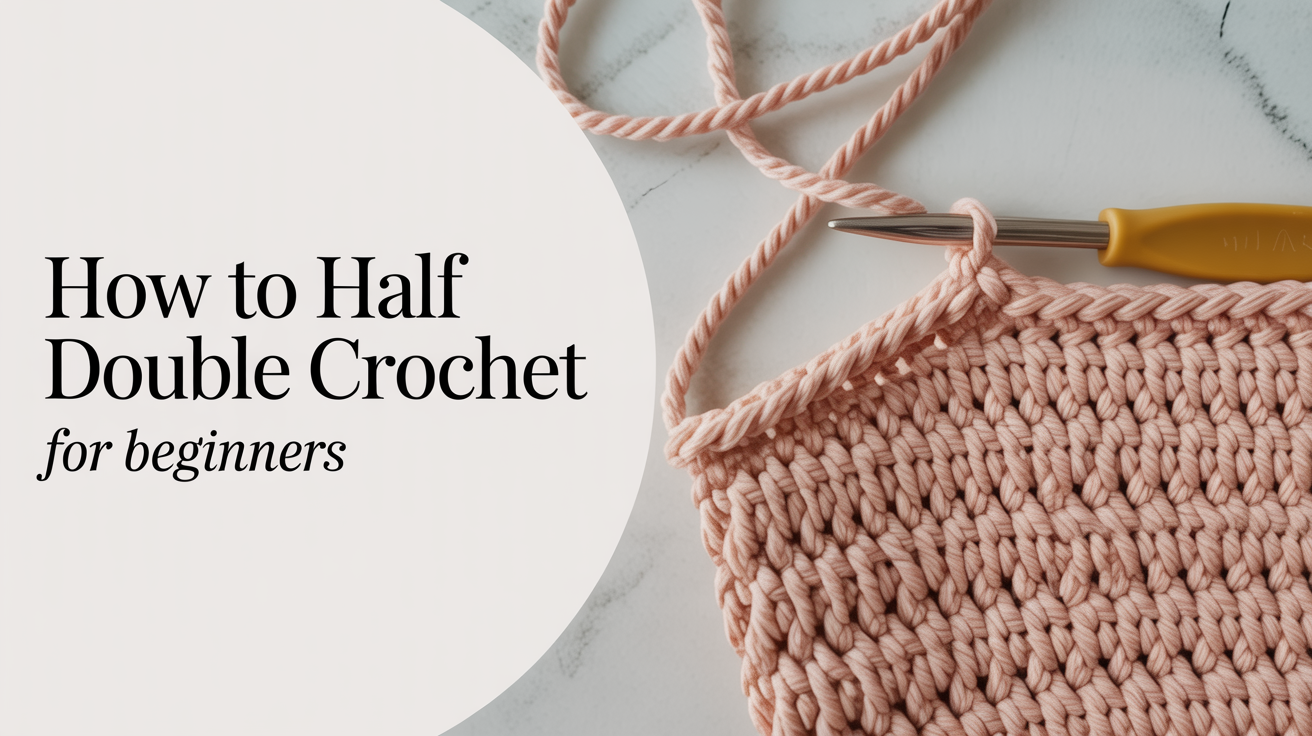
The half double crochet (abbreviated hdc in US terms) sits right between the single crochet and the double crochet in height. It produces a fabric that has a little more drape than single crochet but stays denser and warmer than double crochet, which makes it a go-to stitch for hats, cowls, and baby blankets.
If you have already worked through how to single crochet for beginners, you will pick this one up quickly. The only new move is an extra yarn over at the start of each stitch, and the finish is a single pull-through instead of two separate pulls. That small difference gives the hdc its distinctive third loop and its slightly taller profile.
What You Need Before You Start
You do not need much to practice the hdc stitch.
Yarn: A medium-weight yarn, labeled 4 or "worsted" on the skein band, is the easiest to learn with. The stitches are big enough to see clearly and the yarn slides smoothly on most hooks.
Hook: A 5 mm (US H/8) hook pairs well with worsted weight. Check your yarn label; it usually lists a recommended hook size.
A foundation chain: The hdc is worked into a row of chain stitches. If you need a refresher on making a chain, see how to make a slip knot and foundation chain.
A yarn needle and scissors: You will need these to weave in ends when you finish your practice swatch.
Hook and Yarn Size Reference
| Yarn weight | Suggested hook (US) | Suggested hook (mm) |
|---|---|---|
| Fingering / sock (1) | B/1 to E/4 | 2.25 to 3.5 mm |
| Sport / DK (2-3) | F/5 to G/6 | 3.75 to 4.25 mm |
| Worsted (4) | H/8 to I/9 | 5 to 5.5 mm |
| Bulky (5) | K/10.5 to L/11 | 6.5 to 8 mm |
UK note: In UK terminology, the half double crochet is called the half treble (htr). The yarn over and stitch count are identical; only the name changes.
How to Half Double Crochet Step by Step
Work a foundation chain of 15 to 20 stitches to give yourself a practice row. Then follow these steps for each hdc stitch.
-
Yarn over (yo). Wrap the yarn over your hook from back to front before you insert the hook into any stitch. This is the move that separates hdc from single crochet, where you insert the hook first.
-
Insert the hook. Push the hook into the next stitch (or chain space) from front to back. On your foundation chain, work into the third chain from the hook to account for the turning chain.
-
Pull up a loop. Yarn over again and draw the yarn through the stitch. You now have three loops sitting on your hook.
-
Yarn over one more time. Wrap the yarn over your hook again.
-
Pull through all three loops at once. Draw the yarn through all three loops on the hook in one smooth motion. One hdc stitch is complete and one loop remains on your hook.
Repeat steps 1 through 5 across the row. At the end of the row, chain 2 and turn your work. That chain-2 counts as the turning chain (though some crocheters prefer a chain-1 for a tighter edge; try both and see which looks neater with your tension). Work your first hdc into the first stitch of the previous row, not into the turning chain itself.
Common Mistakes on the First Row
- Skipping the first yarn over. If you forget to yarn over before inserting the hook, you will make a single crochet by accident. The resulting stitch is shorter and the fabric will pucker.
- Only two loops on the hook before the final pull-through. This usually means you pulled through the stitch without counting. Pause at step 3 and confirm you see three loops before moving on.
- Uneven tension. New crocheters often grip the hook tightly. Try holding the hook the way you would a pencil and let the yarn flow loosely through your fingers.
Understanding the Third Loop
One reason crocheters love the hdc stitch is its third loop. When you look at a completed row of hdc from the back, you will see an extra horizontal bar at the base of each stitch sitting behind the usual two loops at the top. This is the third loop.
You can insert your hook under that third loop instead of the standard two top loops to create a ribbed texture. This technique is common in hat brims and cuffs because the resulting fabric stretches horizontally, which is useful for anything that needs to fit snugly around a wrist or head.
To work into the third loop: turn your work so the back faces you, then insert your hook under only that back horizontal bar before completing your hdc as usual.
Gauge and Swatching
Gauge tells you how many stitches and rows fit into a 4-inch (10 cm) square. A typical hdc gauge with worsted yarn and a 5 mm hook is around 13 to 14 stitches and 10 to 11 rows per 4 inches, but your gauge will vary with your personal tension.
For a dishcloth or a simple square, gauge does not matter much. For a hat, a garment, or anything that needs to fit a specific measurement, make a swatch first. Here is a simple method.
- Chain 20 and work 15 rows of hdc.
- Fasten off and weave in your ends.
- Lay the swatch flat without stretching it.
- Count how many stitches fit in 4 inches across the middle of the swatch.
- Count how many rows fit in 4 inches down the middle.
If your stitch count is higher than the pattern calls for (meaning your stitches are smaller), try a larger hook. If it is lower, try a smaller hook. Adjust until your swatch matches the pattern gauge before you begin the actual project.
Practicing With a Simple Hdc Swatch
A plain rectangle is the best way to build muscle memory for any new stitch. Try this.
- Chain 16.
- Row 1: Hdc in the 3rd chain from hook and in each chain across. (14 stitches)
- Rows 2 to 20: Chain 2, turn. Hdc in each stitch across.
- Fasten off and weave in ends.
After 20 rows you will have a small square suitable for a coaster or a patch pocket. More importantly, you will have worked the stitch enough times that your hands start to move without much thought, which is when crochet starts to feel smooth and enjoyable.
If you are brand new to crochet and have not yet learned the chain or slip knot, start with how to crochet for absolute beginners: a step-by-step guide before coming back here.
Frequently Asked Questions
What is the difference between hdc and sc?
Single crochet (sc) uses two loops on the hook after pulling up a loop, and you pull through both of them in one step. Half double crochet begins with a yarn over before inserting the hook, so you have three loops on the hook, and you pull through all three at once. The hdc stitch is roughly half a loop taller than sc and has a softer drape.
Why does my hdc row look shorter than the pattern picture?
You may be working into the turning chain instead of the first real stitch of the row, which loses a stitch. Count your stitches at the end of every row while you are learning. If the count is right but the fabric still looks different, your tension may be tighter than the pattern sample; try loosening your grip or moving up one hook size.
Can I substitute hdc for double crochet?
You can in some patterns, but the finished item will be shorter and denser. If a pattern calls for dc and you want to use hdc instead, you may need to add more rows to reach the same length. Work a gauge swatch with hdc and compare it to the pattern's dc gauge before committing to the full project.
How do I count hdc stitches?
Each completed stitch leaves two loops at the top (plus the third loop at the back). Count the V-shapes along the top of your row, one V per stitch. If your pattern has a turning chain-2 that counts as a stitch, include it in your total count.
What projects work well with the hdc stitch?
Hats are the most popular choice because hdc gives a fabric dense enough to hold its shape but with enough drape to stretch over a head. It also works well for baby blankets, cowls, dishcloths, and mittens. Any project that benefits from a middle ground between single crochet's firmness and double crochet's openness is a good candidate.