Knitting Basics
How to Join a New Ball of Yarn in Knitting
Learn how to join a new ball of yarn in knitting without knots or holes. Four beginner-friendly methods, plus tips for weaving in ends and changing colors.
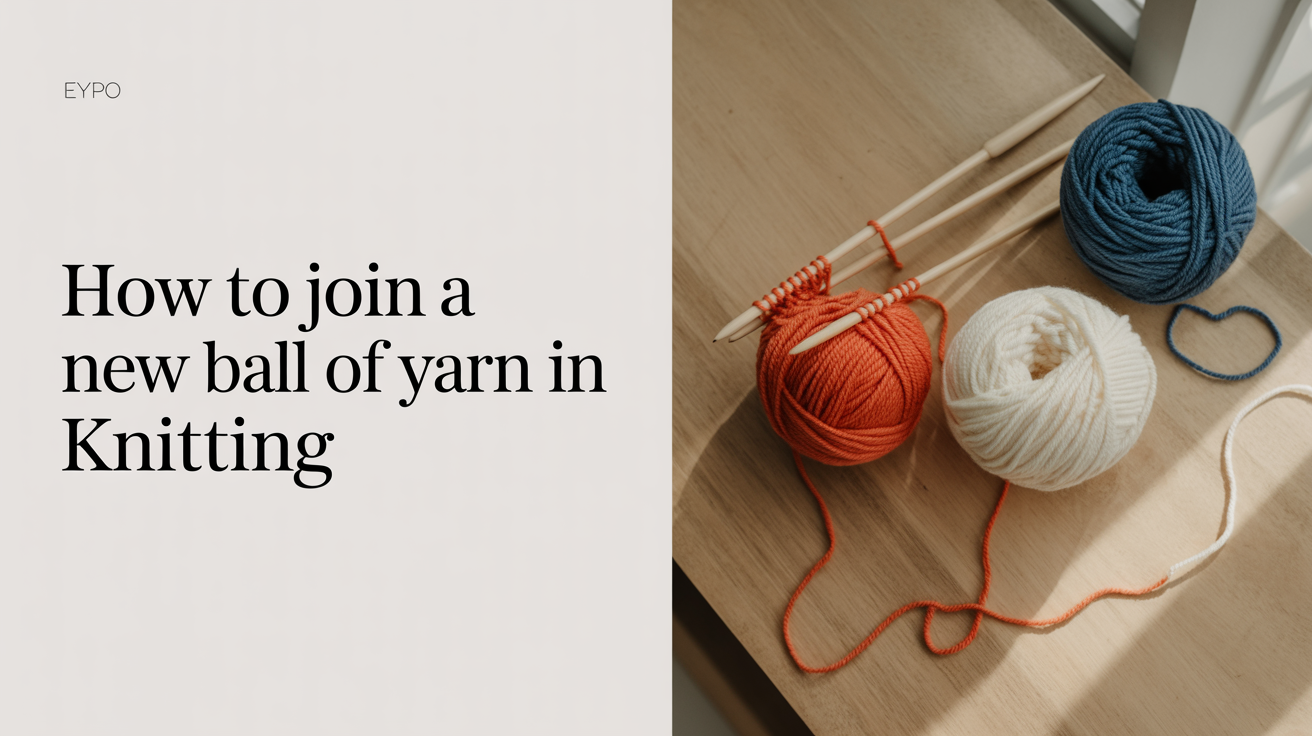
Running out of yarn mid-project is one of those moments that stops new knitters cold. The good news: adding a new ball is straightforward once you know a few reliable methods. The joins shown here will be nearly invisible, and none of them require a knot in the middle of your fabric.
At a Glance
- Join at the beginning of a row whenever possible. Tails end up on the edge, not in the middle of your fabric.
- Never tie a knot. A well-woven tail holds better and stays invisible; a knot creates a hard lump and can work loose.
- Simple drop-and-start works for every yarn and every project. It's the default method to reach for.
- Spit splice only works on non-superwash animal fiber (wool, alpaca, mohair). It will not work on acrylic, cotton, or superwash-treated wool.
- Russian join is the most reliable seamless option for slippery synthetic yarns like acrylic.
- Leave at least a 6-inch tail on every join, longer for bulky yarn, so you have enough length to weave in cleanly.
When to Join New Yarn
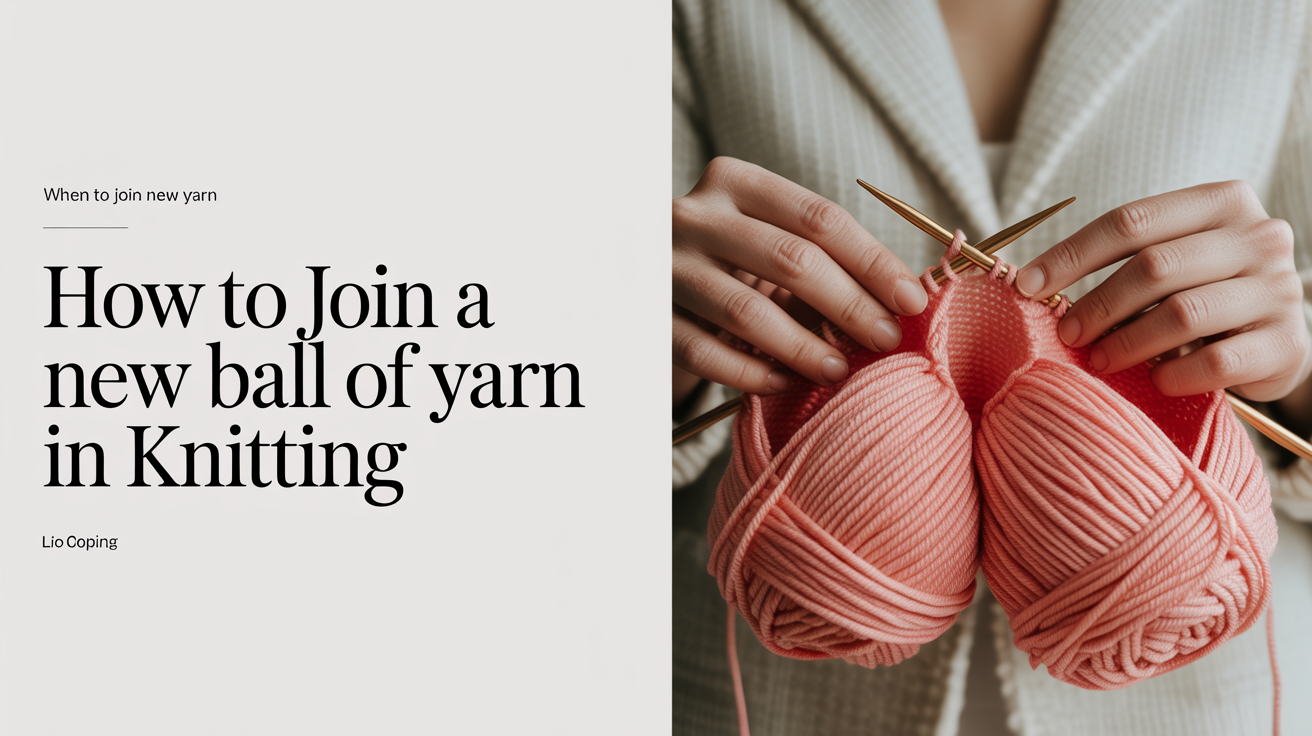
The single best piece of advice for joining yarn: do it at the beginning of a row, not in the middle.
Joining at the edge gives you two advantages. First, the loose tails end up on the side seam or selvage, where they are easy to weave in and completely hidden from the front. Second, you skip the risk of a bumpy join sitting right in the center of your work.
How to tell when it is time to join: Hold the remaining yarn up to your needle. If you have less than three times the width of your knitting plus about 6 inches, start a new ball at the beginning of the next row. That rule is not perfect, but it saves most mid-row surprises. For a wider piece, like a blanket panel 20 inches across, that means switching balls once you have less than roughly 66 inches (about 1.8 meters) of yarn left, so build the habit of checking at the start of every row once a ball starts looking thin.
If you are knitting in the round (like a hat or sock), there is no clean "beginning of row," so aim for the least visible spot: an underarm, a side panel, or the start of a ribbing section.
Before you start any new project, it helps to be comfortable with the basics. If you are still working on your foundation, check out this guide on how to cast on in knitting before going further.
Four Methods for Joining New Yarn
Each method below suits different fiber types and comfort levels. Pick the one that fits your yarn and your patience.
| Method | Best for | Notes |
|---|---|---|
| Simple drop-and-start | Any yarn, any project | Fastest; leaves two tails to weave in |
| Overlap / hold-double | Any yarn; thicker projects | Slightly bulkier for 3-4 stitches |
| Spit splice | Non-superwash wool and other feltable animal fibers ONLY | No tail to weave in; truly seamless |
| Russian join | Any yarn; slippery acrylic or cotton especially | Takes a minute to set up; very secure |
Method 1: Simple Drop-and-Start
This is the most common approach and perfectly fine for virtually every project.
- At the start of a new row, stop knitting with the old yarn. Leave a tail of about 6 inches.
- Pick up the new yarn and leave a 6-inch tail on that end too.
- Knit the first stitch with the new yarn, holding both tails loosely out of the way.
- After a few stitches, give the tails a gentle tug to close any gap at the join point.
- Later, weave in both tails.
That is genuinely it. Do not tie a knot. Knots create a hard lump, and they can work loose over time. A well-woven tail is more secure.
Method 2: Overlap (Hold-Double)
If you want a bit more security at the join, you can hold the old and new yarn together for a few stitches.
- Start a new row normally. About 3 stitches before you run out, begin holding the new yarn alongside the old one.
- Knit 3 to 4 stitches with both strands held together. This creates a brief doubled section.
- Drop the old yarn and continue with the new one alone.
The doubled section will be slightly thicker, so this method works better in bulky or textured yarns where a little extra density is invisible. Avoid it in laceweight or very fine yarn.
Method 3: Spit Splice
The spit splice produces a join with zero tails to weave in, because the two yarn ends actually fuse together. The catch: it only works on natural animal fibers (wool, alpaca, mohair) that have NOT been treated as superwash. Superwash treatments coat the fiber scales so they cannot felt. Acrylic, cotton, and linen will not splice.
That fiber requirement isn't a craft superstition, it comes down to how animal fiber is actually built. Wool and similar fibers are covered in microscopic overlapping scales; moisture, heat, and friction make those scales lock together permanently, which is the same mechanism that felts a wool sweater in a hot wash by accident. Synthetic and plant fibers like acrylic and cotton have no scale structure, so there is nothing for the splice to grab onto. If you're not sure what's in your yarn, check the label: fiber content on US yarn packaging is a regulated disclosure under the rules the Federal Trade Commission enforces for textile products, so "100% wool" or "wool blend" on the label is a reliable place to start, though it won't tell you whether that particular skein has been superwash-treated.
- Unravel the last 3 to 4 inches of the old yarn into its individual plies. Do the same with the start of the new yarn.
- Trim away half the plies from each end, so the combined thickness at the overlap equals one strand.
- Overlap the trimmed ends by about 3 inches, licking or dampening them lightly.
- Rub the overlap briskly between your palms. The friction and moisture cause the scales to felt together.
- Tug gently. A good splice will not pull apart easily.
Done well, this join is completely invisible and has the same thickness as the rest of your yarn. It is worth practicing on a scrap length before doing it on a project.
Method 4: Russian Join
The Russian join is a bit more involved but creates a very tidy, secure join that works well with slippery yarns like acrylic or silk blends, exactly the fibers that can't take a spit splice.
You will need a blunt tapestry needle.
- Thread the tail of the old yarn onto your needle and loop it back on itself, passing the needle through the strand several times to create a small loop at the end.
- Thread the tail of the new yarn through that loop, then do the same: pass the needle back through the new yarn's strand to create its own loop.
- Pull both loops snug so they interlock, forming a figure-eight join.
- Trim any short tails flush.
The Russian join sits neatly inside the fabric and is particularly useful for colorwork, where loose tails can peek through from behind. It also holds up well in yarn weights from DK through bulky; for very fine fingering or lace weight, the doubled-back section can feel noticeably thicker than the rest of the strand, so test on a scrap first if you're working fine yarn.
How to Weave In Yarn Ends
For any method that leaves a tail (which is most of them), weaving in ends properly is what keeps your join invisible and permanent.
Wait until your knitting is off the needles. Threading a tapestry needle with a tail, weave it through the backs of stitches for about an inch, change direction, and weave back through a different path for another inch. Two passes in slightly different directions creates enough friction to hold the tail without knotting. Trim close to the fabric, give the piece a gentle stretch, and the tail disappears.
A few tips:
- Weave along the natural line of the stitches, not across them, so the woven tail does not pull or pucker.
- Leave just a millimeter or two of tail after trimming. Trimming flush to the woven section can cause the end to slip back out.
- For striped or colorwork pieces, weave each tail into the matching color section so it stays invisible from the front.
- On grippy fibers like wool, one pass of weaving is often enough because the fiber holds itself in place. On slick fibers like acrylic, bamboo, or silk blends, always do two passes in different directions, a single pass is much more likely to work loose after washing.
Once you have a handle on the knit stitch, weaving in ends feels very natural. If you are still building that muscle memory, this walkthrough on how to knit the knit stitch for beginners can help.
Joining a New Color
Changing colors follows the same logic as joining a new ball, with one small adjustment: timing matters for color transitions.
Join the new color at the beginning of a row. Drop the old color, leaving a 6-inch tail, and start the new color with its own 6-inch tail. Knit across. On the return row, you will see a clean color break at the edge.
For a sharper color line (no "bleed" of the old color into the new row):
- Knit to the last stitch of the last row in the old color.
- Insert your needle into that stitch as usual.
- Wrap the new color around the needle to complete the stitch.
- Continue knitting in the new color.
This technique is sometimes called "catching the new color on the last stitch." It pulls the new color in a half-stitch early so the transition looks crisp.
Weave in the color tails on the wrong side, keeping each tail in its own color section. If you are doing stripes, you can carry the unused color loosely up the side edge instead of cutting and rejoining every few rows. That reduces the number of tails dramatically on a striped project, a four-color striped scarf can go from a dozen or more tails down to just the two at the start and end if you carry colors up the edge instead of cutting each time.
Once you are comfortable with color joins, the purl stitch opens up a lot of colorwork patterns that alternate knit and purl rows for texture.
Frequently Asked Questions
Can I join yarn in the middle of a row?
You can, but it is worth avoiding if possible. A mid-row join is harder to hide and can create a small hole or bump. If you absolutely must join mid-row (for example, if you only realize your yarn is running out partway through), use the Russian join or spit splice for the tidiest result.
Do I need to tie a knot when joining new yarn?
No. Knots create hard lumps and can work loose with wear and washing. A tail woven in correctly is actually more secure than a knot, because it holds through friction over a longer stretch of yarn rather than a single tight point.
My join looks loose or gappy. What happened?
A gap at a join usually means the first stitch of the new yarn was worked too loosely. After joining, knit the first stitch with a slightly firmer tension than usual. You can also give the tails a careful tug after the first few stitches to close any gap before it gets buried in the fabric.
How long should my yarn tails be?
Leave at least 6 inches. Shorter tails are harder to thread onto a tapestry needle and more likely to pull through during weaving. If you are working with a bulky yarn, err toward 8 inches.
What if my yarn is acrylic and I want a seamless join?
The spit splice does not work on acrylic, but the Russian join is a good alternative for synthetic yarns because the loops interlock mechanically without relying on fiber felting. The simple drop-and-start with carefully woven tails also works well and is invisible once finished.
How do I know if my wool yarn is superwash and won't felt?
Check the label. Superwash-treated yarns almost always say so explicitly, since it's a selling point (machine washable). If the label just says "100% wool" or "merino wool" with no mention of superwash, it's very likely untreated and will felt normally for a spit splice. When in doubt, test the splice technique on a scrap end before committing to your project's actual join point.