Crochet Basics
How to Treble Crochet for Beginners, a Step-by-Step Guide
Learn how to treble crochet with clear, step-by-step instructions, tension tips, and a trick for counting rows so you never lose your place.
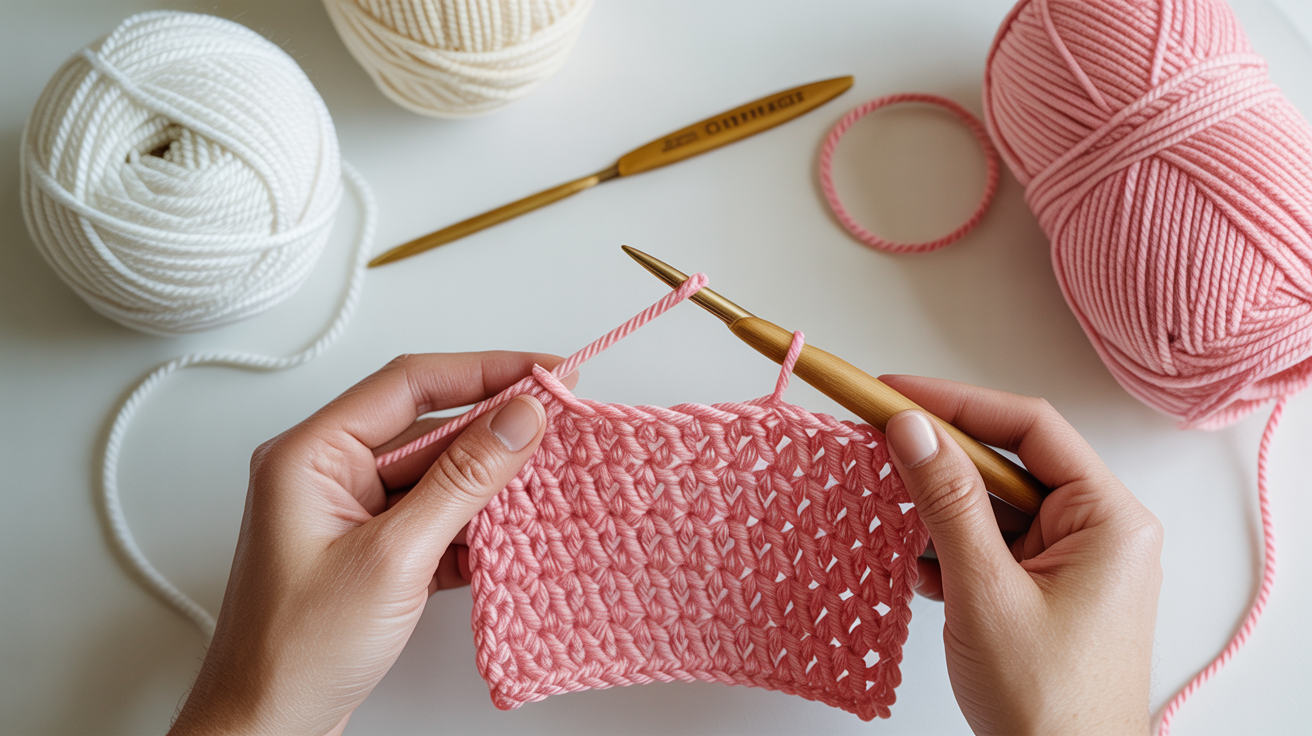
If you have single, half double, and double crochet under your fingers, you are ready for the next step up. Learning how to treble crochet (sometimes called triple crochet, abbreviated tr) opens up taller, more open fabric than anything you have made so far. It looks like a bigger commitment because of the extra yarn overs, but the motion is a direct extension of what you already know.
This guide walks through the treble crochet motion one yarn over at a time, compares it to double crochet, and covers the two things that trip up almost every beginner: keeping tension even and counting rows without losing track.
What Treble Crochet Actually Is
Treble crochet is the next stitch in the height ladder after single, half double, and double crochet. Each of those stitches adds one more yarn over and one more step to the motion, and each one produces taller, looser stitches. Treble starts with two yarn overs before the hook even touches your work, which is what gives it that extra height and airiness.
The stitch abbreviation is tr in most American patterns, and you will often see it paired with a starting chain of 4 at the beginning of a row, since the chain stands in for the first treble stitch. If a pattern calls for turning chains of 3 for double crochet, expect 4 for treble.
How to Treble Crochet, Step by Step
Here is the full motion, broken into the individual moves so you can follow along with yarn in hand.
- Yarn over twice. This is the detail that separates treble from every shorter stitch. Wrap the yarn around your hook, then wrap it again, so you have two loops sitting on the hook before you touch your fabric.
- Insert your hook into the next stitch. Go under both top loops of the stitch, the same target you would use for single or double crochet.
- Yarn over once more and pull up a loop. You now have four loops on your hook: the two from your starting yarn overs, plus the new loop you just pulled through.
- Yarn over and pull through two loops. This drops you down to three loops on the hook.
- Yarn over and pull through two loops again. Two loops remain.
- Yarn over one last time and pull through the final two loops. One loop remains on your hook, and the stitch is complete.
That is three separate "yarn over, pull through two" steps after your initial two yarn overs and pull-up loop, more motions than double crochet, but each one identical to a motion you already use, just repeated an extra time. Work across the row, treble crochet in each stitch, then turn with a chain of 4, which counts as your first stitch of the new row.
If you have not locked in double crochet yet, it is worth reviewing how to double crochet for beginners first, since treble crochet is really double crochet with one more repetition built in.
Where the First Stitch of the Row Goes
New crocheters often get confused about where the first treble stitch of a row lives, since the turning chain of 4 stands in for it. Work your first true stitch into the second stitch from the hook, not the very first one, and at the end of the row, work your last stitch into the top of the previous row's turning chain. Skipping this is a common reason a treble swatch slowly loses stitches, row after row, until the edges pull in.
How Treble Crochet Compares to Double Crochet
Treble crochet and double crochet are close cousins, but the difference in height and drape is noticeable the moment you compare two swatches side by side.
Double crochet produces a fabric that is solid without being stiff, with moderate drape and a fairly dense look worked stitch by stitch. If you have practiced how to double crochet for beginners, you already know that texture.
Treble crochet takes that same idea and stretches it further. Each stitch is noticeably taller, so a treble fabric worked stitch by stitch looks more open and lets more light through between rows. The extra height also means the fabric drapes more loosely, which is part of why treble crochet shows up in shawls and wraps that need to flow rather than hold a firm shape. Where double crochet suits a sturdy tote bag or a warm blanket, treble leans toward pieces where softness and movement matter more than density.
Half double crochet sits on the opposite end of that spectrum, a shorter, denser stitch closer to single crochet in feel. For the full picture of the height ladder, it helps to have practiced how to half double crochet for beginners and how to single crochet for beginners too, so you can feel the progression from tight and dense up to tall and open.
Where Treble Crochet Shows Up in Patterns
Treble crochet earns its place in a lot of project types because of that height and openness.
Lacy shawls and wraps. Treble is a common building block in shawl patterns, often combined with chain spaces to create an open, lace-like mesh that drapes over the shoulders instead of standing away from the body.
Openwork blankets. Many "granny stripe" or filet-style blanket patterns lean on treble crochet, sometimes worked in clusters with chain gaps between them, for a breathable, airy blanket rather than a heavy, solid one.
Tall stitch pattern repeats. Anything described as a "fan stitch," "shell stitch," or "V-stitch" pattern often uses treble as its backbone, since the height gives the shells and fans room to spread out and show their shape.
Edgings and borders. A row or two of treble crochet, sometimes with chain spaces worked in, is a quick way to add a lacy border to a project otherwise worked in a shorter stitch.
You will not usually see treble crochet carry an entire sweater body or a structured bag, since the open, drapey fabric it produces is not the right fit for pieces that need to hold their shape.
Troubleshooting: Tension and Row Counting
Two problems come up again and again once beginners start working treble crochet, and both have simple fixes.
Keeping Tension Even Across the Extra Yarn Overs
Treble crochet has more yarn overs than any stitch you have likely tried before, and that extra handling makes it easy for your tension to drift, usually tightening up as you focus on each step. A few habits help:
- Keep your yarn tension hand relaxed rather than gripping the working yarn tightly between wraps. A death grip on the yarn is the single most common cause of stitches that get progressively tighter through a row.
- Pause after your two initial yarn overs and check that both loops sit loosely on the hook before you insert into the next stitch.
- Work a practice swatch and look at it from the side. Uneven tension shows up as stitches leaning or looking shorter than their neighbors, which is easier to spot from the side than looking straight down at your hook.
Tension evens out with repetition more than with any single trick, so do not expect a flawless row on your first try.
Counting Treble Crochet Rows Correctly
Treble crochet rows are notoriously easy to miscount, mostly because the tall stitches and turning chains can look similar from a distance. A few ways to keep an accurate count:
- Use a row counter or a simple tally on paper rather than trying to keep the count in your head, especially past ten or twelve rows.
- Remember that your starting chain of 4 counts as a stitch in most patterns, so include it when counting stitches across a row, but do not double count it as both a chain and a stitch.
- Place a stitch marker every five or ten rows as you go. It costs a few seconds and saves you from re-counting an entire piece later.
If you ever lose count entirely, measuring your work against a gauge swatch or a target length is a more reliable fallback than guessing at a row number.
Frequently Asked Questions
Is treble crochet hard to learn if I already know double crochet?
No. The motion is the same "yarn over, insert hook, pull through two loops" pattern you already use for double crochet, just with one extra yarn over and one extra repetition. Most crocheters comfortable with double crochet pick up treble within a swatch or two.
What does tr mean in a crochet pattern?
Tr is the standard American abbreviation for treble crochet, sometimes written as "triple crochet." If you are working from a pattern written in UK terms, be aware that stitch names shift by one level between American and UK crochet, so always check which system a pattern uses before you start.
Why does my treble crochet look uneven or loose?
Uneven treble crochet is almost always a tension issue, not a technique mistake. Because there are more yarn overs and pull-throughs in this stitch, small inconsistencies in how tightly you hold your yarn get magnified. Slow down, keep your grip relaxed, and check your loops before each pull-through rather than rushing the stitch.
Can I substitute treble crochet for double crochet in a pattern?
Not directly. Treble crochet is taller, so swapping it in for double crochet will change your gauge, your finished size, and how the fabric drapes. If a pattern calls for double crochet, work double crochet. Save treble crochet for patterns designed around it or your own experiments with a swatch first.
How do I know how many treble crochet rows I need for a project?
Since row-gauge numbers vary by yarn weight, hook size, and personal tension, the most reliable approach is to work a swatch, measure how tall a few rows come out in your own hands, and then calculate how many rows you need for your target length from that swatch rather than relying on a number printed in a pattern written for someone else's tension.