Getting Started
Is Knitting or Crochet Good for Relaxation and Focus?
Discover the real benefits of knitting and crochet for beginners, from calming a busy mind to building focus, without any overhyped claims.
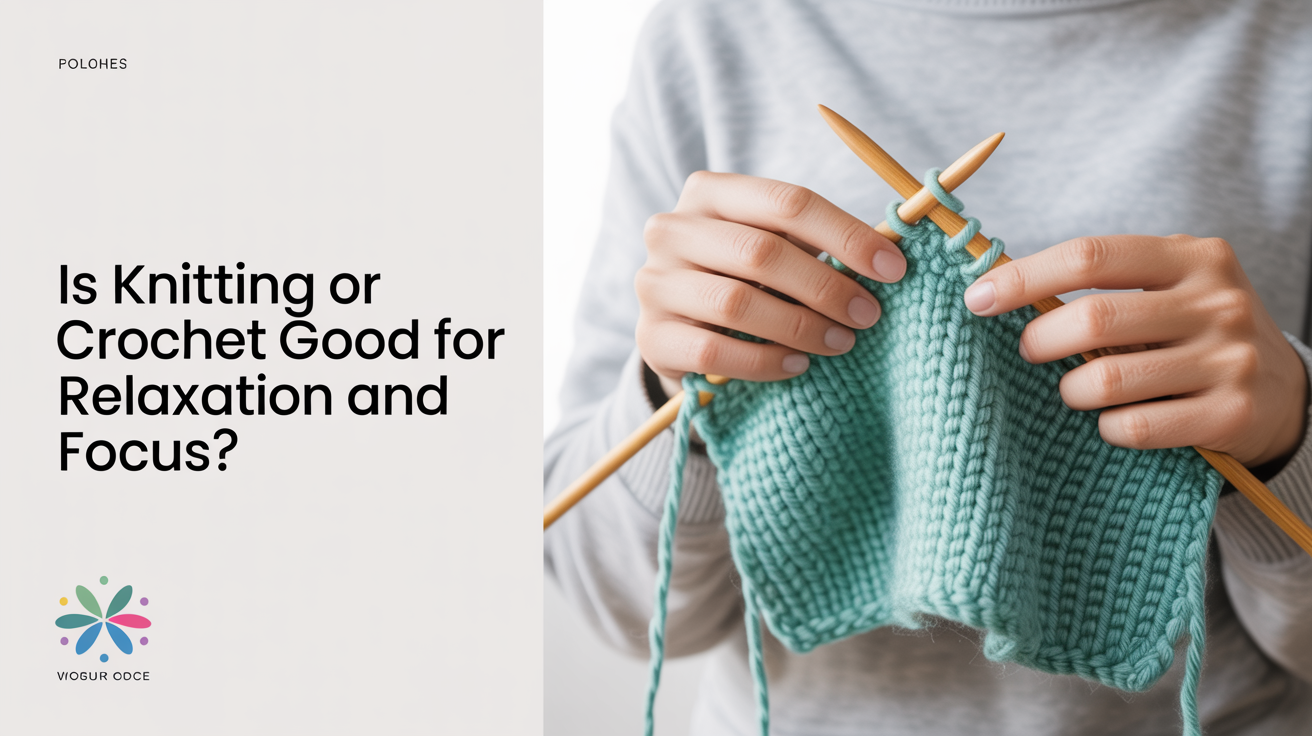
If you have ever watched someone knit or crochet in a waiting room and thought they looked unusually calm, you are not imagining things. There is something about the rhythmic motion of yarn work that a lot of people find genuinely settling. Whether that counts as a full-blown wellness practice or just a pleasant hobby depends on who you ask, but the basic idea holds up: moving your hands in a repetitive, purposeful way tends to slow things down mentally.
This guide looks honestly at what knitting and crochet can offer in terms of relaxation and focus, what the limitations are, and why either craft might be worth picking up even if you have never touched a ball of yarn before.
What Makes Repetitive Hand Work Calming
Both knitting and crochet rely on repeating a small set of movements. In knitting, you are mostly working the same one or two stitches over and over. In crochet, you pull loops through loops in a pattern that quickly becomes automatic. Once the motion is in your hands, your brain does not need to work hard to keep up, and that low-level engagement seems to crowd out the kind of looping, restless thinking that makes it hard to unwind.
A few things contribute to this:
- Rhythm. The click of needles or the pull of a hook creates a steady beat. Many crafters describe it as almost meditative once they find their pace.
- A manageable task. You are not solving an open-ended problem. The goal is right in front of you: complete the next stitch, then the one after. That finite, achievable focus is genuinely different from scrolling a phone or ruminating.
- Tactile feedback. Yarn has texture, weight, and warmth. Keeping your hands occupied with something physical can be grounding when your thoughts feel scattered.
- Slow visible progress. Seeing a piece grow row by row gives a small but real sense of accomplishment. That can lift mood in a quiet, understated way.
None of this is magic, and it works better for some people than others. But the mechanism is simple enough to make sense without reaching for grand claims.
The Benefits of Knitting and Crochet Worth Knowing About
Here is a practical list of what most regular crafters notice over time:
- Reduced sense of restlessness. Having something to do with your hands makes it easier to sit still, whether you are watching television, riding public transit, or waiting for an appointment.
- A lighter phone habit. Many people find they reach for their phone less when their hands are already busy. This tends to happen naturally rather than through willpower.
- Improved patience. Learning a craft that takes time teaches you, slowly, that things do not need to happen instantly. A sweater takes weeks. You get used to that pace.
- A reason to be present. When you are working on a tricky stitch pattern, you have to pay attention. That forced presence can be a relief for people who struggle to stay in the moment.
- Something to show for quiet time. Unlike passive screen time, yarn work produces something tangible. Even a modest dishcloth takes skill and time, and having a finished object matters to a lot of crafters.
- A social thread, if you want it. Knitting circles and crochet groups exist everywhere, online and in person. The craft itself is solitary, but it does not have to be isolating.
These are honest benefits, not a cure for anything serious. If you are dealing with anxiety or depression, yarn work can be a small, useful addition to your day, but it is not a substitute for proper support.
How Knitting and Crochet Build Focus Over Time
Beginners often expect to feel calm right away and are surprised when they do not. At first, learning any new physical skill takes concentration that feels more like work than relaxation. You are thinking about which hand holds what, where the yarn goes, whether the tension is right. That mental effort is normal and temporary.
After a few weeks of regular practice, the movements become automatic. At that point, the craft shifts from a learning task into a flow activity. You can carry on a conversation, listen to a podcast, or simply let your mind rest while your hands keep going. That shift from effortful to easy is the point where most crafters start noticing the focus and relaxation benefits people talk about.
Knitting vs. crochet is a common comparison when beginners are deciding where to start. For relaxation purposes, neither has a clear edge. Crochet tends to be slightly faster to learn in the early stages because you only manage one live stitch at a time instead of a whole row on needles. Some people find that lower mental load easier to get into a rhythm with. Others prefer the two-needle feel of knitting. Try both if you get the chance.
Getting Set Up Without Overthinking It
One thing that stops beginners from experiencing the benefits is spending too long on gear decisions before ever making a stitch. The supplies you need to start are genuinely minimal: yarn, one hook or one pair of needles, and a blunt tapestry needle. That is it.
Medium-weight yarn and a matching hook or needle size make learning easiest. Smooth yarn in a light color shows your stitches clearly, which helps when you are figuring out what went wrong. The basic supplies every beginner needs are modest in cost and easy to find at most craft stores or online.
When you do sit down to practice, give yourself fifteen to twenty minutes rather than trying to push through an hour. Short, regular sessions build the muscle memory faster than long, sporadic ones. The relaxation benefit tends to kick in once a session once the movements feel familiar, so shorter and more frequent practice helps you reach that point sooner.
A Few Realistic Expectations
Crochet for relaxation and knitting for stress relief are genuinely useful framings, but they come with some caveats worth naming.
The first sessions will probably feel frustrating, not calming. That is normal. You are learning a new physical skill, and new skills feel awkward before they feel good.
Tight tension, which is very common in beginners, can cause hand and wrist fatigue. Learning how to hold your needles or hook correctly from the start reduces strain and makes longer sessions more comfortable.
Some projects are more relaxing than others. A simple stockinette scarf in knitting or a granny square in crochet gives your hands something to do without demanding constant attention. A lace shawl with a new pattern on every row is a different experience entirely. Match the project to your energy level on any given day.
Finally, yarn work is not for everyone. If you find it more frustrating than settling after a genuine attempt, that is a reasonable outcome. There is no reason to force it.
Frequently Asked Questions
Can beginners feel the relaxation benefits right away?
Usually not in the very first sessions. The early learning phase takes real concentration, which feels more tiring than relaxing. Most people notice the calming effect after a few weeks of regular practice, once the basic movements feel automatic.
Is knitting or crochet better for anxiety?
There is no clear winner between the two. Crochet has a slight advantage for absolute beginners because managing one live stitch is simpler than managing a whole row on needles. But personal preference matters more than craft type. Pick whichever appeals to you, or try both.
How long does a session need to be to feel the benefit?
Even fifteen or twenty minutes can be enough once you are past the early learning phase. The key is regularity rather than session length. A short daily session tends to be more useful than one long weekly one.
Can yarn work help with focus problems?
It can help some people settle into a task more easily, particularly if restlessness or a wandering mind is the issue. The repetitive, low-stakes nature of basic stitching keeps hands busy without demanding high concentration. That said, it is not a treatment for attention difficulties, and results vary widely between individuals.
What if I find it frustrating instead of relaxing?
That is a normal experience early on, and it does not mean the craft is not for you. Give it a few weeks of short, regular sessions before deciding. If frustration persists past the initial learning curve, it may simply not be the right fit, and that is fine.