Projects & Patterns
How to Crochet a Simple Baby Blanket for Beginners
Learn how to crochet a simple baby blanket for beginners: choosing soft washable yarn, working even rows, keeping straight edges, and adding a border.
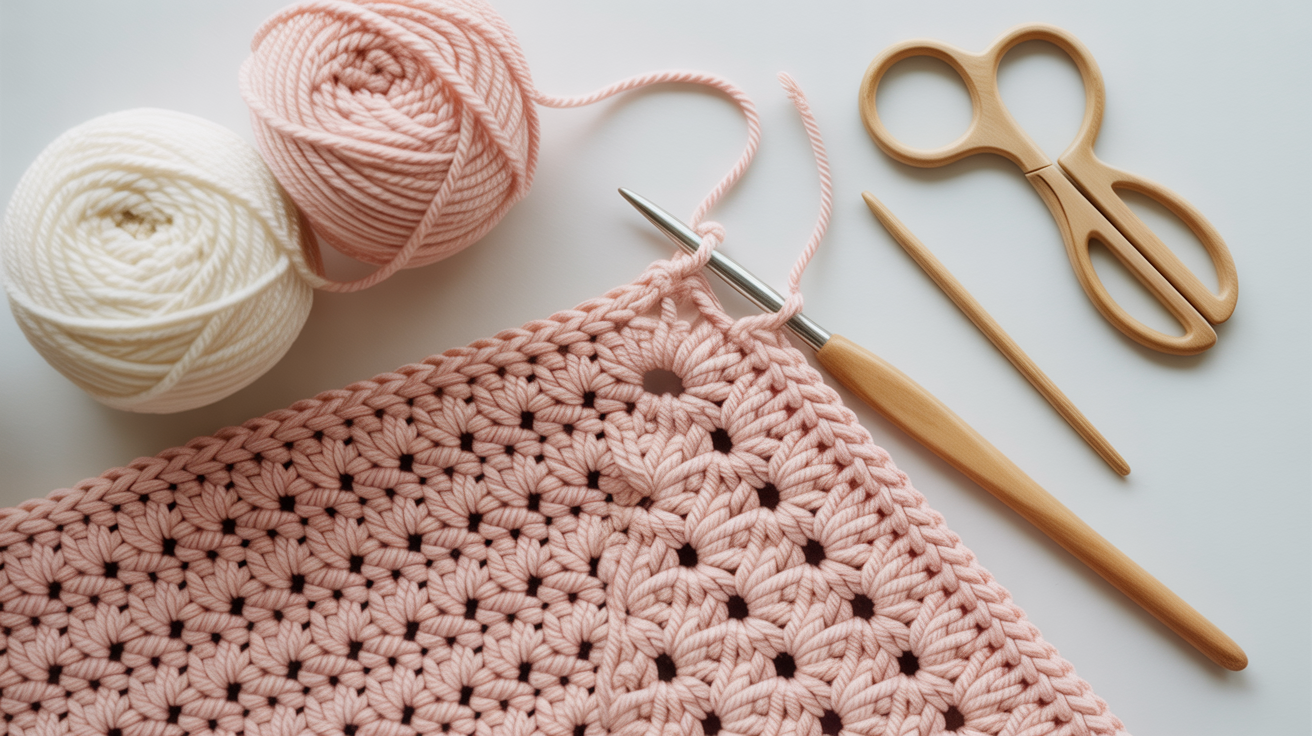
A baby blanket is one of the best first large-scale projects you can take on. There is no shaping, no seaming, and no sizing anxiety. It is a rectangle, and you crochet until it is done. The finished piece also carries real weight as a gift, which makes the time you put in feel worthwhile from the start.
If you have spent a little time practising your basic stitches and want something to actually use or give away, this guide is for you. We will walk through picking the right yarn, setting up your starting chain, working even rows across the blanket, keeping those edges from creeping inward, and finishing with a simple border that makes the whole thing look polished.
Choosing Yarn and Hook for a Baby Blanket
Yarn choice matters more on a baby blanket than almost any other beginner project, because the finished piece will go against sensitive skin and will need to survive repeated washing.
Look for something labelled machine washable and DK or worsted weight. Both weights work well for a baby blanket. DK (Light 3) produces a slightly drapey, lightweight fabric that finishes faster on a 4 mm or 4.5 mm hook. Worsted (Medium 4) works up a little thicker and warmer on a 5 mm or 5.5 mm hook. Either is a solid choice.
Avoid anything scratchy. Superwash wool is soft and holds up well in the wash. Cotton and cotton blends are breathable and good for warmer months. Many beginners reach for acrylic because it is affordable and easy to find, and the softer acrylic yarns work fine for a blanket. The labels to look for are words like "soft," "baby," or "easy care." Avoid regular (non-superwash) wool for a baby item, since it can felt in the wash and may irritate delicate skin.
For a standard receiving-blanket size (roughly 75 cm x 90 cm / 30 in x 36 in), plan on 400 to 500 g of DK or 300 to 400 g of worsted yarn, depending on your tension. If in doubt, buy one extra skein and return it if you do not need it. Running out of a dye lot mid-blanket is genuinely frustrating.
See our guide to the best yarn for beginners and what to avoid for more help reading labels and comparing fibre types.
Setting Up Your Foundation Chain
The foundation chain sets the width of your blanket, so take a moment to get it right before you start the body.
A useful starting point for a lap or receiving blanket in single crochet with worsted yarn is a foundation chain of 90 to 100 stitches. Chain 91, then skip the first chain from the hook and work your first single crochet into the second chain. That gives you 90 working stitches in row one.
For double crochet, you would chain 92 (or however many stitches you want, plus 2 for the turning chain), skip 3 chains from the hook, and work your first double crochet into the 4th chain.
Lay your foundation chain flat and count. If it stretches wider than you want the finished blanket to be, rip it out and chain fewer stitches. If it looks too narrow, chain a few more. Chains are cheap. Getting the width right now saves you from finishing a blanket that is an awkward size.
Keeping your tension even in the foundation chain is also worth a moment of attention. Many beginners chain tighter than they work their rows, which makes it hard to get the hook into those first chain stitches. If that happens to you, try chaining with a hook one size larger, then switching to your working hook for row one.
Working Even Rows Across the Blanket
Single crochet and double crochet are both good choices for a baby blanket, and both produce tidy, even fabric when worked in consistent rows.
Single crochet gives you a dense, sturdy fabric. The stitch is short, so the blanket grows slowly, but the result is firm and cozy. Work to the end of the row, chain 1, turn, and single crochet back across. The chain-1 turning chain does not count as a stitch in single crochet, so your stitch count should stay constant every row.
Double crochet produces a taller stitch and an airier, drapier fabric. The blanket grows faster and uses less yarn for the same area. Work to the end of the row, chain 2 or 3 (a matter of personal preference), turn, and double crochet back across. Skip the first stitch at the base of the turning chain and work into the top of the turning chain from the previous row to close out the row.
Either way, the goal is the same: the same number of stitches in every row. If your count keeps climbing or dropping, something is slipping. Read our guide on why your crochet edges are not straight and how to fix it for the most common causes and simple fixes.
Work until your blanket reaches the length you want. Blocking it flat with a measuring tape every so often is the easiest way to track your progress.
Keeping Your Stitch Count and Edges Straight
The most common beginner problem on a long rectangular project is a count that drifts: the blanket starts at 90 stitches and slowly narrows to 82, or fans out to 98. There are a few easy checks to build in as habits.
At the end of every row, count your stitches before you turn. It takes about fifteen seconds and catches any slip before it compounds. You do not need to count every row forever, but do it often enough that you would notice quickly if something went wrong.
Check both edges. The left edge (or right edge, depending on which hand you hold your hook in) is where most beginners lose stitches by skipping the last stitch before the turn. That last stitch sits right under the turning chain and can be easy to miss. Make a habit of always crocheting into it.
The opposite mistake, adding an extra stitch on the right edge by working into the turning chain when you should not, builds your count up over time. In single crochet, the chain-1 turn is never a stitch. In double crochet, the chain-2 or chain-3 turn counts as the first stitch of the row only if you and your pattern have agreed it does, so pick one approach and stick to it.
Adding a Simple Border
A border is not required, but it tidies the edges and gives the blanket a finished look. Even a single round of single crochet makes a real difference.
Fasten off your last row, join a fresh strand of yarn (same colour or a coordinating one) to any corner, and work single crochet all the way around the outer edge of the blanket. Along the top and bottom, work one stitch into each stitch. Along the sides, work one stitch into the side of each row; for single crochet rows that is roughly one stitch per row, for double crochet it is closer to one stitch every two rows, but the goal is to keep the edge flat rather than ruffling or pulling in.
At each corner, work 3 single crochets into the corner stitch to allow for the turn. Slip stitch to your first stitch to join, then fasten off.
If you want a slightly more decorative finish, a second round of slip stitch or reverse single crochet (also called crab stitch) gives a neat, corded edge. One or two rounds is plenty. A simple border gets used and washed; it does not need to be complicated.
Once you are done, learn how to fasten off and weave in your ends properly so the tails stay secure through many wash cycles. On a baby blanket, weaving in ends well is especially important because babies pull at things, and you want nothing to unravel.
Frequently Asked Questions
How many stitches do I need for a baby blanket? For a standard receiving-blanket size (roughly 75 cm x 90 cm / 30 in x 36 in) in worsted weight single crochet, a foundation chain of 90 to 100 stitches is a good starting point. Crochet a short swatch first and measure your stitch gauge to get a more precise number if the size matters.
Can I use a bulky yarn to make the blanket faster? You can, but bulky yarn produces a stiffer, heavier fabric that may feel less comfortable against a baby's skin. DK and worsted weights give a softer drape and are the most practical choice. If you do use bulky, check that the yarn is specifically described as baby-soft and machine washable.
What is the easiest stitch for a beginner baby blanket? Single crochet is the most forgiving stitch to learn on. It is slow-growing compared with double crochet, but the fabric is dense and the stitch is easy to count. Double crochet is also beginner-friendly and works up faster if you want quicker progress.
My blanket keeps getting narrower. What am I doing wrong? You are most likely skipping the last stitch at the end of the row before you turn. That stitch sits right under the turning chain and is easy to miss. Slow down at the end of each row, locate that last stitch, and crochet into it before you chain and turn.
Do I need to wash the finished blanket before giving it as a gift? It is a good idea. Washing and blocking the blanket after finishing removes any shed fibres, softens the fabric, and lets you confirm that the yarn is truly machine washable before it goes home with a new parent. It also evens out your tension slightly, which makes the finished piece look neater.